x

Handgemaltes Ölgemälde auf Leinwand in Ihrer Wunschgröße und mit Rahmen, auf Bestellung von unseren Künstlern angefertigt. ( Druck bestellen Bild kaufen)
Wählen Sie aus unseren vordefinierten Formaten, die den ursprünglichen Proportionen des Kunstwerks entsprechen.

Sie können Ihre eigenen Maße eingeben, um einen bestimmten Rahmen oder Platz auszufüllen. Wenn die gewählte Größe nicht den Proportionen des Originalbildes entspricht, werden wir das Kunstwerk entweder beschneiden oder das Gemälde durch zusätzliche, handgemalte Elemente erweitern. Ein digitales Mockup wird Ihnen zur Genehmigung zugesandt, bevor die Produktion beginnt.
Bitte beachten Sie, dass die Bildschirmvorschau nicht die tatsächliche Beschneidung oder Erweiterung widerspiegelt. Nur das Mockup zeigt die endgültige Komposition exakt an.
Obwohl Sondermaße verfügbar sind, empfehlen wir, eine Größe aus der vordefinierten Liste zu wählen, um die ursprünglichen Proportionen beizubehalten.
Weltweiter Versand () in nur 3 bis 4 Wochen statt der üblichen 5 Wochen. (16 August). Keine Kompromisse bei der Qualität.


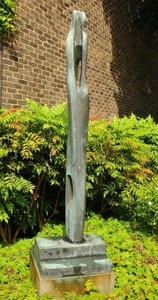
Totem
Format der Reproduktion
Barbara Hepworth (1903–1975) stands as one of the most influential figures in British modernist sculpture, a pioneer who bravely navigated the shifting sands of artistic expression during the tumultuous years following World War I. Her work transcends mere representation; it delves into fundamental questions about materiality, space, and the human condition—themes powerfully embodied in “Totem,” created between 1960 and 1962.
The sculpture itself is a striking example of Hepworth’s signature style: abstract biomorphism. Crafted from alabaster – a translucent white stone prized for its purity and luminosity – Totem eschews recognizable forms, opting instead for undulating curves that mimic the contours of natural elements like seashells or stones. These shapes aren't simply decorative; they are meticulously designed to interact with light and shadow, creating an illusion of depth and movement within the seemingly static form.
Hepworth’s approach to sculpture was deeply rooted in subtractive carving—a painstaking process of removing material from a larger block of alabaster. This technique demanded immense patience and precision, allowing Hepworth to coax out the desired form with subtle manipulations of chisel and mallet. The resulting surface is remarkably smooth and polished, reflecting light in diffused patterns that underscore the sculpture’s inherent materiality.
Furthermore, Hepworth's studio was equipped with a sophisticated lighting system designed to minimize glare and maximize tonal variation—a deliberate effort to capture the essence of the stone itself. This meticulous attention to detail speaks volumes about her commitment to conveying not just visual form but also the tactile qualities of the material.
"Totem" isn't merely an aesthetically pleasing object; it’s imbued with symbolic significance. The sculpture’s flowing curves evoke a sense of serenity and balance, mirroring Hepworth’s belief in the power of art to communicate profound ideas about existence. The circular openings piercing the alabaster body can be interpreted as portals—windows into another realm—suggesting an openness to contemplation and a connection to something beyond the visible world.
Ultimately, Hepworth sought to create works that resonated emotionally with viewers, inviting them to engage in a dialogue with form and space. “Totem” achieves this ambition beautifully, prompting reflection on themes of continuity, transformation, and the enduring beauty of natural forms—a testament to Hepworth’s visionary artistic legacy.
Hepworth's work emerged during the height of British Modernism, a movement characterized by experimentation with new materials and techniques and a rejection of traditional representational conventions. Influenced by Surrealist ideas and championed by artists like Ben Nicholson and Paul Nash, Hepworth’s pursuit of abstraction reflected a broader cultural shift toward prioritizing intuition and emotion over rational thought.
Her contribution to the Unit One Art Movement solidified her position as a leading voice in British art, demonstrating that artistic innovation could flourish alongside intellectual rigor. “Totem” stands as an enduring symbol of this era’s commitment to exploring the expressive potential of form and materiality—a masterpiece that continues to inspire artists and collectors alike.

Hepworths künstlerische Entwicklung war von verschiedenen Einflüssen geprägt. Ihre frühen Werke zeigten noch vereinfachte, naturalistische Formen, doch sie konzentrierte sich zunehmend auf formale Aspekte. Die Begegnung mit Künstlern wie Brancusi und Arp in Paris trug maßgeblich zu ihrer Hinwendung zur Abstraktion bei. Sie experimentierte mit Collage, Fotogrammen und Drucken und entwickelte eine einzigartige Sensibilität für ihre Materialien. Ihre Arbeit wurde von der direkten Bearbeitung des Materials geprägt, wobei sie oft Fäden, Drähte und farbiges Pigment in ihre Skulpturen integrierte.

1903 - 1975 , Vereinigtes Königreich
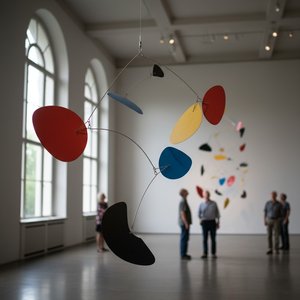
Entdecken Sie die faszinierende Welt von Alexander Calder! Unsere Expertenanalyse beleuchtet seine kinetische Kunst, Mobiles und sein Vermächtnis. Wertvolle Einblicke für Sammler & Kunstliebhaber.
Entdecken Sie die faszinierende Welt monochromer Innenräume! Expertenwissen zu Farbpsychologie, Lichtgestaltung & Materialwahl für elegante, zeitlose Designs. Inspiration & Fallstudien.

Entdecken Sie das Werk von Barbara Hepworth – einer Meisterin der abstrakten Skulptur. Erfahren Sie mehr über ihre einzigartige Formensprache, Materialien und ihren Einfluss auf die moderne Kunst. Wertvolle Einblicke für Sammler und Kenner.

Explore Orphism, the vibrant abstract art movement pioneered by Robert & Sonia Delaunay. Discover its unique color theory, lasting influence on modern art, and how to bring this 'symphony of color' into your home with Most-Famous-Paintings.

Harmonische Integration zeitgenössischer Kunst in klassische Interieurs – Expertenratgeber für stilvolle Wohndekoration. Entdecken Sie, wie Sie mit hochwertiger Kunst Ihr Zuhause veredeln! Jetzt lesen.


Bleiben Sie über die neuesten Kunstnachrichten, exklusive Angebote und Dekorationsideen auf dem Laufenden.
Erzählen Sie uns von Ihrem Projekt, und unsere Kunstexperten erstellen für Sie drei personalisierte Kunstvorschläge.
Wir kuratieren 3 Optionen exklusiv für Sie – kostenlos!


 Versenden
 Teilen
 Details anzeigen

 Herunterladen
 Ähnliche Objekte
 Diashow


 Weiterlesen




































 Die Glasoption ist nur für Größen unter 110 cm verfügbar.