x

 Oil On CanvasWallArtBarbizon School
 19th Century
 81.0 x 64.0 cm
 USC Fisher Museum of Art
Handgemaltes Ölgemälde auf Leinwand in Ihrer Wunschgröße und mit Rahmen, auf Bestellung von unseren Künstlern angefertigt. ( Druck bestellen Bild kaufen)





























Wählen Sie aus unseren vordefinierten Formaten, die den ursprünglichen Proportionen des Kunstwerks entsprechen.

Sie können Ihre eigenen Maße eingeben, um einen bestimmten Rahmen oder Platz auszufüllen. Wenn die gewählte Größe nicht den Proportionen des Originalbildes entspricht, werden wir das Kunstwerk entweder beschneiden oder das Gemälde durch zusätzliche, handgemalte Elemente erweitern. Ein digitales Mockup wird Ihnen zur Genehmigung zugesandt, bevor die Produktion beginnt.
Bitte beachten Sie, dass die Bildschirmvorschau nicht die tatsächliche Beschneidung oder Erweiterung widerspiegelt. Nur das Mockup zeigt die endgültige Komposition exakt an.
Obwohl Sondermaße verfügbar sind, empfehlen wir, eine Größe aus der vordefinierten Liste zu wählen, um die ursprünglichen Proportionen beizubehalten.
Weltweiter Versand () in nur 3 bis 4 Wochen statt der üblichen 5 Wochen. (18 August). Keine Kompromisse bei der Qualität.


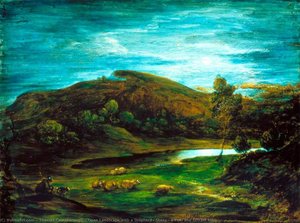
Return to the Fold
Format der Reproduktion
In the quietude of the French countryside, where the boundaries between man and nature blur into a singular, peaceful existence, Charles-Émile Jacque captures a moment of profound serenity. Return to the Fold is not merely a depiction of agricultural labor; it is an evocative window into the soul of the Barbizon school. The painting presents a tender scene of a shepherd tending to his flock as they congregate near the threshold of a rustic barn. Through masterful brushwork, Jacque invites the viewer to step away from the frantic pace of modern life and enter a realm where the only clock is the setting sun and the only rhythm is the gentle movement of grazing sheep.
The composition is anchored by the rhythmic presence of at least thirteen sheep, their soft forms scattered across the foreground and middle ground. Some huddle close to the shepherd, seeking the warmth of his guidance, while others linger in the distance, lost in the verdant landscape. This arrangement creates a deep sense of spatial continuity, drawing the eye from the textured details of the woolly fleece to the weathered wood of the barn. The artist’s background in map engraving is subtly evident here; there is an unmistakable precision in how he maps out the topography of the scene, ensuring that every element—from the heavy shadows of the doorway to the light catching the backs of the animals—contributes to a balanced and harmonious whole.
To understand the emotional weight of this piece, one must look to the historical movement that birthed it. During the mid-19th century, as the industrial revolution began to shroud cities in soot, artists like Jacque sought refuge in the Forest of Fontainebleau. This dedication to plein air painting—working directly in the open air—allowed for a revolutionary capture of light and atmosphere. In Return to the Fold, we see the fruits of this movement: a palpable sense of humidity, the shifting weight of shadows, and the fleeting nuances of a landscape caught in transition.
Jacque’s technique avoids the rigid formality of academic art, opting instead for a more organic, tactile approach. The oil on canvas medium allows for a rich layering of tones that mimics the earthy palette of the French countryside. For the collector or interior designer, this artwork offers more than just visual beauty; it provides an atmospheric anchor. Whether placed in a sun-drenched library or a sophisticated contemporary living space, the painting’s warm, golden undertones and its connection to the natural world evoke a sense of timelessness and stability.
Beyond its technical brilliance, the painting serves as a symbolic meditation on stewardship and belonging. The title itself suggests a homecoming, a return to a simpler, more fundamental way of life. There is a deep-seated emotional resonance in the shepherd’s quiet vigil, a reminder of the symbiotic relationship between humanity and the earth. This sense of peace makes the piece an ideal selection for those looking to curate an environment of calm and contemplation.
For those seeking a high-quality reproduction, this work stands as a testament to the enduring power of the pastoral genre. It is a piece that does not demand attention through loud colors or jarring subjects, but rather earns it through a quiet, persistent grace. Owning such a work is an opportunity to bring a fragment of the French landscape into one's personal sanctuary, fostering a permanent connection to the tranquil beauty of the natural world.


1813 - 1894 , Frankreich

Explore the profound history of landscape masterpieces. From the Barbizon School to Monet's Impressionism, discover how timeless natural scenes bring serenity and prestige to your collection through museum-quality, hand-painted oil reproductions.


Bleiben Sie über die neuesten Kunstnachrichten, exklusive Angebote und Dekorationsideen auf dem Laufenden.
Erzählen Sie uns von Ihrem Projekt, und unsere Kunstexperten erstellen für Sie drei personalisierte Kunstvorschläge.
Wir kuratieren 3 Optionen exklusiv für Sie – kostenlos!


 Vorschau anzeigen
 Versenden
 Teilen
 Details anzeigen

 Herunterladen
 Ähnliche Objekte
 Röntgenaufnahme
 Diashow
 Weiterlesen







 Die Glasoption ist nur für Größen unter 110 cm verfügbar.