x

Handgemaltes Ölgemälde auf Leinwand in Ihrer Wunschgröße und mit Rahmen, auf Bestellung von unseren Künstlern angefertigt. ( Druck bestellen Bild kaufen)





























Wählen Sie aus unseren vordefinierten Formaten, die den ursprünglichen Proportionen des Kunstwerks entsprechen.

Sie können Ihre eigenen Maße eingeben, um einen bestimmten Rahmen oder Platz auszufüllen. Wenn die gewählte Größe nicht den Proportionen des Originalbildes entspricht, werden wir das Kunstwerk entweder beschneiden oder das Gemälde durch zusätzliche, handgemalte Elemente erweitern. Ein digitales Mockup wird Ihnen zur Genehmigung zugesandt, bevor die Produktion beginnt.
Bitte beachten Sie, dass die Bildschirmvorschau nicht die tatsächliche Beschneidung oder Erweiterung widerspiegelt. Nur das Mockup zeigt die endgültige Komposition exakt an.
Obwohl Sondermaße verfügbar sind, empfehlen wir, eine Größe aus der vordefinierten Liste zu wählen, um die ursprünglichen Proportionen beizubehalten.
Weltweiter Versand () in nur 3 bis 4 Wochen statt der üblichen 5 Wochen. (19 August). Keine Kompromisse bei der Qualität.


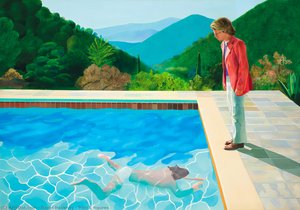
Unfinished self
Format der Reproduktion
David Hockney's "Unfinished Self," painted in 1978, isn’t merely a depiction of a man asleep on his bed; it’s an exquisitely crafted meditation on perception itself. Created during Hockney’s prolific period exploring the effects of aging and distance – he famously undertook a series of ambitious Yorkshire Landscapes documenting the region's changing seasons – this portrait embodies his signature approach: capturing not just what is seen, but how it feels to see.
The painting utilizes Hockney’s distinctive optical mixing technique. Rather than layering colors conventionally, he applies thin washes of pigment that blend optically as they dry on the canvas. This method achieves remarkable luminosity and vibrancy, particularly noticeable in the blue blanket enveloping the sleeping figure. It's a deliberate choice reflecting Hockney’s fascination with how our eyes perceive color – blending hues rather than juxtaposing them to create an illusion of depth.
Despite its rich palette, “Unfinished Self” maintains a remarkable sense of calm. Hockney employs a minimalist compositional strategy, focusing on the central figure against a subtly textured background. The inclusion of other individuals – presumably Hockney’s family – adds an element of domestic intimacy and reinforces the idea that observation extends beyond the immediate subject to encompass relationships and surroundings.
The spatial arrangement is particularly noteworthy. Hockney cleverly utilizes perspective—though not in a rigorously accurate manner—to convey a feeling of depth and distance. The dining table and chairs, positioned slightly behind the bed, contribute to this illusion, suggesting a lived-in space where objects exist alongside each other in relation to one another.
The dominant color – blue – carries significant symbolic weight. Traditionally associated with tranquility, introspection, and spirituality, it underscores the painting’s contemplative mood. The sleeping figure represents restfulness and surrender to the rhythms of life, while simultaneously hinting at mortality—a recurring theme in Hockney's oeuvre.
The inclusion of a potted plant symbolizes growth and vitality, offering a counterpoint to the stillness of sleep. It subtly reminds us that even within moments of repose, life continues its inexorable march forward.
"Unfinished Self" transcends mere visual representation; it communicates a profound emotional resonance. Hockney's masterful handling of light—particularly the diffused glow illuminating the sleeping man—creates an atmosphere of warmth and tenderness. The painting invites viewers to contemplate not only the beauty of the scene but also the complexities of human experience – capturing a quiet dignity and accepting gaze that speaks volumes about Hockney’s enduring belief in the power of observation and the importance of embracing life's fleeting moments.
This artwork exemplifies Hockney’s unwavering commitment to capturing the essence of human existence through a deceptively simple yet profoundly perceptive lens.


1937 - , Vereinigtes Königreich

Entdecken Sie die Top 10 Gemälde in faszinierenden 'Slate Blue' Tönen! Von Monet bis Manet – erleben Sie Kunstgeschichte und lassen Sie sich von Meisterwerken inspirieren. Hochwertige Kunstdrucke auf

Transform your home with soulful blue art. From serene Monet impressions to modern textured sculptures, discover curated masterpieces designed to inspire calm. Explore expert art consultations and bespoke hand-painted reproductions to create your personal sanctuary.

Explore the rich history of blue in art! Discover its symbolism, from ancient pigments to modern masterpieces by Kandinsky & Seurat. Uncover the psychological impact and cultural meanings behind this captivating hue.
Entdecken Sie die 25 ikonischsten Gemälde von René Magritte! Tauchen Sie ein in die surreale Welt des belgischen Künstlers – von 'Der verlorene Jockey' bis 'Golconda'. Hochwertige Reproduktionen & Kunst für Ihr Zuhause auf Most-Famous-Paintings.com.

Entdecken Sie das faszinierende Werk von David Hockney! Unsere Expertenanalyse beleuchtet seine Entwicklung, zentralen Themen und Bedeutung für die Kunstgeschichte. Wertvolle Einblicke für Sammler & Liebhaber.


Bleiben Sie über die neuesten Kunstnachrichten, exklusive Angebote und Dekorationsideen auf dem Laufenden.
Erzählen Sie uns von Ihrem Projekt, und unsere Kunstexperten erstellen für Sie drei personalisierte Kunstvorschläge.
Wir kuratieren 3 Optionen exklusiv für Sie – kostenlos!


 Vorschau anzeigen
 Versenden
 Teilen
 Details anzeigen

 Herunterladen
 Ähnliche Objekte
 Röntgenaufnahme
 Diashow
 Weiterlesen







 Die Glasoption ist nur für Größen unter 110 cm verfügbar.