


x

 Acryl auf LeinwandWandkunstExpressionist Style
 1918Frühmittelalterlich
 44.0 x 29.0 cm
Handgemaltes Ölgemälde auf Leinwand in Ihrer Wunschgröße und mit Rahmen, auf Bestellung von unseren Künstlern angefertigt. ( Druck bestellen Bild kaufen)





























Wählen Sie aus unseren vordefinierten Formaten, die den ursprünglichen Proportionen des Kunstwerks entsprechen.

Sie können Ihre eigenen Maße eingeben, um einen bestimmten Rahmen oder Platz auszufüllen. Wenn die gewählte Größe nicht den Proportionen des Originalbildes entspricht, werden wir das Kunstwerk entweder beschneiden oder das Gemälde durch zusätzliche, handgemalte Elemente erweitern. Ein digitales Mockup wird Ihnen zur Genehmigung zugesandt, bevor die Produktion beginnt.
Bitte beachten Sie, dass die Bildschirmvorschau nicht die tatsächliche Beschneidung oder Erweiterung widerspiegelt. Nur das Mockup zeigt die endgültige Komposition exakt an.
Obwohl Sondermaße verfügbar sind, empfehlen wir, eine Größe aus der vordefinierten Liste zu wählen, um die ursprünglichen Proportionen beizubehalten.
Weltweiter Versand () in nur 3 bis 4 Wochen statt der üblichen 5 Wochen. (23 August). Keine Kompromisse bei der Qualität.


Sitzende Frau
Format der Reproduktion
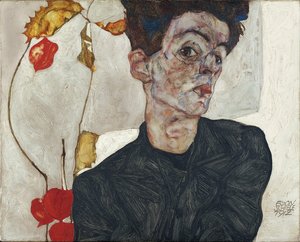
Egon Schiele’s “Die Sitzende” – “The Sitting Woman” – is not merely a portrait; it's an intimate confrontation with mortality, vulnerability, and the unsettling beauty of the human form. Created in 1918, during a period of immense personal turmoil for the artist, this pencil drawing pulsates with a raw emotionality that transcends its modest size of 44 x 29 cm. It’s a work born from shadows – both literal and figurative – reflecting Schiele's own struggles with illness, loss, and an increasingly bleak outlook on life.
The subject herself is presented in a posture of quiet contemplation, seated upon the ground, her legs crossed in a gesture that simultaneously suggests both repose and a subtle defensiveness. Her gaze, though unseen, feels intensely directed inward, inviting the viewer to share in her unspoken thoughts. The dress she wears is simple, almost austere, yet it hints at a lost elegance – a ghost of former beauty now tinged with melancholy. But it’s the heart-shaped tattoo adorning her chest that truly commands attention. This seemingly small detail is far from decorative; it's a potent symbol of love, loss, and perhaps even a desperate yearning for connection in a world increasingly defined by isolation.
Schiele was a pivotal figure in the Expressionist movement, rejecting the idealized forms of academic art in favor of a brutally honest portrayal of human experience. “Die Sitzende” exemplifies this approach perfectly. The elongated lines, the subtly distorted proportions, and the almost palpable sense of tension are hallmarks of his distinctive style. He wasn’t interested in capturing a likeness; he sought to convey an *feeling*, a visceral response to the subject's presence. The pencil medium itself contributes significantly to this effect – its delicate texture allows for incredible nuance, creating a sense of fragility and vulnerability that mirrors the woman’s internal state.
Notice how Schiele utilizes light and shadow to sculpt the figure, emphasizing her contours and drawing attention to the subtle shifts in her posture. The overall palette is muted, dominated by shades of grey and brown, reflecting the somber mood of the piece. This deliberate choice reinforces the sense of melancholy and underscores the painting’s exploration of themes related to death and decay – a preoccupation that would become increasingly central to Schiele's oeuvre.
Considering the context of 1918, it’s crucial to understand the profound personal circumstances surrounding “Die Sitzende.” Schiele was battling tuberculosis and grappling with the recent loss of his sister. The painting can be interpreted as a deeply personal expression of grief, loneliness, and perhaps even a confrontation with his own mortality. The heart tattoo, in this light, becomes not just a symbol of romantic longing but also a poignant reminder of what has been lost.
Interestingly, Schiele’s fascination with the human body – particularly its vulnerability – is evident throughout his work. He wasn't afraid to depict the imperfections and anxieties inherent in the flesh, challenging conventional notions of beauty and celebrating the raw, unfiltered reality of existence. “Die Sitzende” stands as a testament to this courageous approach, offering a glimpse into the artist’s troubled soul and inviting us to contemplate our own mortality alongside him.
Most-Famous-Paintings offers meticulously crafted hand-painted reproductions of Egon Schiele's “Die Sitzende,” allowing you to bring this powerful artwork into your home or studio. Our skilled artisans painstakingly recreate the nuances of Schiele’s technique, capturing the delicate pencil strokes and the subtle shifts in tone that define this iconic piece.
Entdecken Sie die Schönheit und Tiefe von “Die Sitzende” – eine zeitlose Ikone der Expressionismus. Besuchen Sie Most-Famous-Paintings.com, um Ihre persönliche Reproduktion zu bestellen und ein Stück Kunstgeschichte in Ihr Leben zu bringen.

1890 - 1918 , kroatien

Explore the profound history of Expressionism. From Edvard Munch to Jackson Pollock, discover how artists used distortion and color to convey raw emotion. A definitive guide for art lovers seeking deep historical context and mastery in fine art reproductions.

Explore the profound emotional depth of Expressionist portraiture. From Edvard Munch to Francis Bacon, discover how masters used distortion and color to reveal inner truths. Learn about this pivotal movement and find museum-quality oil reproductions for your collection.


Bleiben Sie über die neuesten Kunstnachrichten, exklusive Angebote und Dekorationsideen auf dem Laufenden.
Erzählen Sie uns von Ihrem Projekt, und unsere Kunstexperten erstellen für Sie drei personalisierte Kunstvorschläge.
Wir kuratieren 3 Optionen exklusiv für Sie – kostenlos!


 Vorschau anzeigen
 Versenden
 Teilen
 Details anzeigen

 Herunterladen
 Ähnliche Objekte
 Röntgenaufnahme
 Diashow
 Weiterlesen







 Die Glasoption ist nur für Größen unter 110 cm verfügbar.


