


x

Handgemaltes Ölgemälde auf Leinwand in Ihrer Wunschgröße und mit Rahmen, auf Bestellung von unseren Künstlern angefertigt. ( Druck bestellen Bild kaufen)





























Wählen Sie aus unseren vordefinierten Formaten, die den ursprünglichen Proportionen des Kunstwerks entsprechen.

Sie können Ihre eigenen Maße eingeben, um einen bestimmten Rahmen oder Platz auszufüllen. Wenn die gewählte Größe nicht den Proportionen des Originalbildes entspricht, werden wir das Kunstwerk entweder beschneiden oder das Gemälde durch zusätzliche, handgemalte Elemente erweitern. Ein digitales Mockup wird Ihnen zur Genehmigung zugesandt, bevor die Produktion beginnt.
Bitte beachten Sie, dass die Bildschirmvorschau nicht die tatsächliche Beschneidung oder Erweiterung widerspiegelt. Nur das Mockup zeigt die endgültige Komposition exakt an.
Obwohl Sondermaße verfügbar sind, empfehlen wir, eine Größe aus der vordefinierten Liste zu wählen, um die ursprünglichen Proportionen beizubehalten.
Weltweiter Versand () in nur 3 bis 4 Wochen statt der üblichen 5 Wochen. (18 August). Keine Kompromisse bei der Qualität.


Still Life
Format der Reproduktion
Ferdinand Guillaimin's "Still Life," painted in 1872, isn’t merely a depiction of objects arranged on a table; it’s a carefully constructed tableau brimming with quiet observation and subtle symbolism. This work, rendered in the heart of the Impressionist movement, captures a fleeting moment of domestic tranquility – a scene both familiar and imbued with an understated elegance. The painting immediately draws the eye to the central arrangement: a vase overflowing with vibrant red and yellow flowers, their petals seemingly caught mid-bloom, radiating warmth against the cooler tones that dominate the rest of the composition. Beside them rests a worn book, its pages hinting at untold stories and intellectual pursuits, while a simple bowl holds what appears to be fruit – perhaps apples or pears – adding another layer of earthly abundance.
Guillaimin’s technique is distinctly Impressionistic, prioritizing capturing the *impression* of light and color rather than precise detail. Loose brushstrokes dance across the canvas, creating an atmospheric haze that softens the edges of each object. He masterfully employs broken color – applying small dabs of paint side-by-side to build up hues and create a shimmering effect, particularly noticeable in the reflections on the table’s surface. The dark background serves not as mere backdrop but as a crucial element, intensifying the luminosity of the floral arrangement and lending the scene a sense of intimacy and depth. The artist's focus is less on photographic realism and more on conveying the *feeling* of being present within this quiet space.
To fully appreciate “Still Life,” it’s essential to understand the artistic climate in which Guillaimin was working. The 1870s were a period of profound change and experimentation for French art, marked by the rise of Impressionism. Artists like Monet, Renoir, and Pissarro sought to break free from the rigid conventions of academic painting, embracing plein air (outdoor) painting and capturing the ephemeral qualities of light and atmosphere. Guillaimin’s work reflects this spirit of innovation, moving away from traditional subject matter and exploring new ways of representing the world around him.
Guillaimin's connection to Pissarro is particularly noteworthy. The artist spent a significant period painting alongside Pissarro in Pontoise, a suburb of Paris, where he found inspiration in the everyday life of the region. This proximity fostered a collaborative environment, allowing Guillaimin to refine his style and develop his unique approach to capturing light and color. The Impressionists were not simply interested in depicting what they *saw*; they were driven by a desire to express their subjective experience of the world.
Beyond its aesthetic qualities, “Still Life” is rich with symbolic meaning. The flowers themselves represent beauty, fragility, and the fleeting nature of life – themes frequently explored in Impressionist art. The book suggests knowledge, contemplation, and a connection to the past. The bowl of fruit symbolizes abundance, nourishment, and the pleasures of earthly existence. Even the dark background can be interpreted as representing mortality or the unknown.
Guillaimin’s use of these objects is deliberate and carefully considered, inviting the viewer to engage in a process of interpretation. He doesn't offer explicit explanations; instead, he presents a series of interconnected symbols that resonate with universal themes of beauty, life, and death. The arrangement feels deliberately balanced, creating a harmonious composition that evokes a sense of peace and serenity.
Ferdinand Guillaimin’s “Still Life” stands as a testament to the power of observation and the enduring appeal of simple subjects rendered with exquisite sensitivity. It's a painting that rewards close attention, revealing layers of meaning and emotional depth with each viewing. Reproductions capture much of the original atmosphere, but nothing quite replicates the subtle nuances of light and color that define Guillaimin’s masterful technique.
Today, this work is celebrated for its evocative beauty and its contribution to the development of Impressionism. It remains a poignant reminder of the quiet moments of everyday life – a timeless meditation on beauty, mortality, and the enduring power of art.


1841 - 1927 , Frankreich
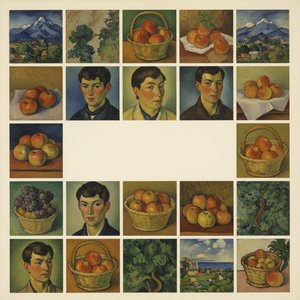
Entdecken Sie die 25 Meisterwerke von Paul Cézanne! Tauchen Sie ein in die Welt des Impressionismus und Postimpressionismus. Erfahren Sie mehr über seine Stillleben, Landschaften & berühmten Gemälde – jetzt hochwertige Kunstdrucke auf Most-Famous-Paintings.com.

Entdecken Sie Ferdinand Guillaumin, einen Meister des Impressionismus! Erfahren Sie mehr über sein Leben, seine atemberaubenden Flusslandschaften und seinen Einfluss auf die französische Landschaftsmalerei. Jetzt lesen!

Entdecken Sie die Top 10 Meisterwerke des Impressionismus! Von Monet bis Renoir – erfahren Sie die Geschichten hinter berühmten Gemälden, Techniken & Farben. Hochwertige Kunstdrucke auf Most-Famous-Paintings.com.

Explore the rich history of flower symbolism in Western painting! Discover how artists from the Renaissance to Modernism used blossoms to convey meaning, emotion & beauty. Learn about iconic artworks and movements.

Explore the rich history of still life painting with Most-Famous-Paintings. Discover Dutch Masters, decode vanitas symbolism & learn about collecting timeless art. Expert insights and museum-quality reproductions.


Bleiben Sie über die neuesten Kunstnachrichten, exklusive Angebote und Dekorationsideen auf dem Laufenden.
Erzählen Sie uns von Ihrem Projekt, und unsere Kunstexperten erstellen für Sie drei personalisierte Kunstvorschläge.
Wir kuratieren 3 Optionen exklusiv für Sie – kostenlos!


 Vorschau anzeigen
 Versenden
 Teilen
 Details anzeigen

 Herunterladen
 Ähnliche Objekte
 Röntgenaufnahme
 Diashow


 Weiterlesen







 Die Glasoption ist nur für Größen unter 110 cm verfügbar.


