


x

Giclée- oder Leinwanddruck in Museumsqualität mit schneller Produktion und flexiblen Veredelungsoptionen. ( Handgemalte Reproduktion bestellen Bild kaufen)





























Wählen Sie aus unseren vordefinierten Formaten, die den ursprünglichen Proportionen des Kunstwerks entsprechen.

Sie können Ihre eigenen Maße eingeben, um ein bestimmtes Format oder einen speziellen Platz einzupassen. Wenn das von Ihnen gewählte Format nicht den Proportionen des Originalbildes entspricht, werden wir das Kunstwerk entweder beschneiden oder das Bild mit einem gespiegelten oder einfarbigen Rand erweitern. Ein digitaler Entwurf wird Ihnen zur Genehmigung zugesandt, bevor die Produktion beginnt.
Bitte beachten Sie, dass die Vorschau auf dem Bildschirm nicht den tatsächlichen Zuschnitt oder die Erweiterung widerspiegelt. Nur der Entwurf zeigt die endgültige Komposition präzise an.
Obwohl Sondermaße verfügbar sind, empfehlen wir die Auswahl eines Maßes aus der vordefinierten Liste, um die ursprünglichen Proportionen zu bewahren.
Weltweiter Versand () innerhalb von 2 Wochen statt der üblichen 4/5 Wochen. (25 August)


Mural, mural or composition, or abstract composition
Format der Reproduktion
Fernand Léger's untitled abstract composition, a vibrant explosion of color and geometric shapes, offers a compelling window into the heart of early 20th-century modernism. Executed with a bold confidence that reflects the burgeoning industrial age, this artwork transcends mere decoration; it’s a profound statement about humanity’s relationship with technology and the evolving landscape of visual expression. The painting's immediate impact lies in its dynamic arrangement – circles punctuate a field of intense hues, while polygons ground the composition with their deliberate placement. This isn’t simply random color; it’s a carefully orchestrated dialogue between organic forms and machine-like precision, a hallmark of Léger’s artistic philosophy.
Léger's work emerged from a pivotal moment in art history, directly following his groundbreaking 1915 painting, *Nude*, which shocked the Parisian art world with its depiction of a figure fragmented into geometric shapes. This radical departure from traditional representation paved the way for Léger’s own exploration of abstraction, but crucially, he didn't simply reject figuration; he sought to reinterpret it through the lens of modern technology. Influenced by the burgeoning industrial landscape – the factories, trains, and machines that were transforming Europe – Léger aimed to capture the essence of this new era in his art. His work can be seen as a visual embodiment of the machine age, reflecting both its power and its potential impact on human form.
Historical Context: The painting was created during a period of rapid industrialization and technological advancement, profoundly impacting artistic thought and practice. Léger’s work reflects this shift, anticipating later developments in Constructivism and Suprematism.Léger's technique is characterized by its bold application of paint and a deliberate avoidance of smooth blending. The colors are applied with a forceful energy, creating a sense of movement and dynamism within the composition. While seemingly abstract, there’s a clear underlying structure – a carefully considered balance between positive and negative space, and a masterful manipulation of color to create depth and visual interest. Léger often employed a technique he called “pointillé,” using small dots of color to build up layers of texture and form, contributing to the painting's vibrant intensity. The use of polygons suggests a deliberate attempt to mimic the precise lines and angles found in machine construction.
Beyond its formal qualities, Léger’s abstract mural carries significant symbolic weight. The circles, often associated with wholeness and unity, are juxtaposed against the angularity of the polygons, creating a tension that reflects the inherent conflict between organic life and mechanical forces. The overall effect is one of both fascination and unease – a recognition of the transformative power of technology while acknowledging its potential disruption of traditional values. This artwork invites viewers to contemplate humanity’s place in an increasingly mechanized world, prompting questions about progress, identity, and the future.

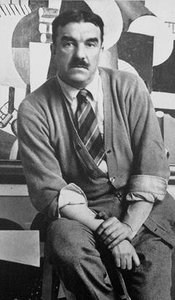
1881 - 1955 , Frankreich

Explore the profound impact of Minimalism and Geometric Abstraction. From Mondrian to Malevich, discover how stripping art to its essential forms revolutionized modern aesthetics through our expert-led historical guide.


Bleiben Sie über die neuesten Kunstnachrichten, exklusive Angebote und Dekorationsideen auf dem Laufenden.
Erzählen Sie uns von Ihrem Projekt, und unsere Kunstexperten erstellen für Sie drei personalisierte Kunstvorschläge.
Wir kuratieren 3 Optionen exklusiv für Sie – kostenlos!


 Vorschau anzeigen
 Versenden
 Teilen
 Details anzeigen

 Herunterladen
 Ähnliche Objekte
 Röntgenaufnahme
 Diashow

 Weiterlesen







 Die Glasoption ist nur für Größen unter 110 cm verfügbar.


