


x

Giclée- oder Leinwanddruck in Museumsqualität mit schneller Produktion und flexiblen Veredelungsoptionen. ( Handgemalte Reproduktion bestellen Bild kaufen)





























Wählen Sie aus unseren vordefinierten Formaten, die den ursprünglichen Proportionen des Kunstwerks entsprechen.

Sie können Ihre eigenen Maße eingeben, um ein bestimmtes Format oder einen speziellen Platz einzupassen. Wenn das von Ihnen gewählte Format nicht den Proportionen des Originalbildes entspricht, werden wir das Kunstwerk entweder beschneiden oder das Bild mit einem gespiegelten oder einfarbigen Rand erweitern. Ein digitaler Entwurf wird Ihnen zur Genehmigung zugesandt, bevor die Produktion beginnt.
Bitte beachten Sie, dass die Vorschau auf dem Bildschirm nicht den tatsächlichen Zuschnitt oder die Erweiterung widerspiegelt. Nur der Entwurf zeigt die endgültige Komposition präzise an.
Obwohl Sondermaße verfügbar sind, empfehlen wir die Auswahl eines Maßes aus der vordefinierten Liste, um die ursprünglichen Proportionen zu bewahren.
Weltweiter Versand () innerhalb von 2 Wochen statt der üblichen 4/5 Wochen. (22 August)


The parade on red
Format der Reproduktion
In the vibrant landscape of mid-century modernism, few works capture the pulse of communal energy quite like Fernand Léger’s “The Parade on Red.” Painted in 1953, this masterpiece serves as a breathtaking manifesto of movement, where the boundaries between the human spirit and geometric precision begin to dissolve. As one gazes upon the canvas, they are immediately swept into a festive procession, a sea of figures and horses bathed in a striking, commanding crimson hue. It is not merely a depiction of a parade; it is an orchestrated celebration of life itself, rendered through a lens that finds beauty in the rhythmic repetition of form and the unapologetic boldness of color.
Léger, a visionary who found profound inspiration in the mechanical rhythms of the industrial age, utilizes this scene to explore the tension between abstraction and reality. While the composition is heavily influenced by Constructivism and the structural legacies of Cubism, it avoids the coldness often associated with pure abstraction. Instead, Léger retains recognizable elements—the sturdy silhouettes of horses and the gathered crowd—to anchor the viewer within a tangible, albeit reimagined, world. This deliberate juxtaposition creates a sense of structured chaos, where every shape feels like a vital component in a larger, living machine.
To truly appreciate the depth of “The Parade on Red,” one must look closer at the artist's masterful command of medium. Léger employed a technique characterized by thick, textured brushstrokes that lend a sculptural weight to the figures. By utilizing encaustic paint—a method involving the layering of pigment with heated wax—he achieved a surface that possesses an almost ethereal luminosity. This technique allows light to interact with the painting in a dynamic way, creating subtle shadows and shimmering highlights that mimic the flickering energy of a sunlit festival.
< p>For the discerning collector or interior designer, this tactile quality offers an unparalleled sensory experience. The interplay of light across the wax-infused pigments ensures that the artwork feels alive, changing its character as the ambient lighting of a room shifts throughout the day. It is a piece that does not merely hang on a wall; it commands the atmosphere, injecting a sense of structural integrity and warmth into any sophisticated space.The historical resonance of this work is deeply intertwined with the era of its creation. Emerging from the shadow of World War II, Léger’s work in the early 1950s reflected a broader societal drive toward reconstruction and the celebration of a new, industrial Europe. His art was a tool for communication, seeking to translate the complexities of a rebuilding world into a visual language that was both accessible and revolutionary. In “The Parade on Red,” we see this optimism distilled into pure form; the parade becomes a metaphor for progress, a collective movement forward through a landscape of bold, geometric certainty.
Owning a high-quality reproduction of this work allows one to bring this historical vitality into the modern home. It offers more than just decoration; it provides an emotional anchor—a reminder of the strength found in unity and the enduring beauty of the machine age. Whether placed in a minimalist gallery setting or as a bold focal point in a contemporary living space, Léger’s vision continues to inspire awe, inviting all who behold it to find rhythm, color, and joy in the structured dance of existence.

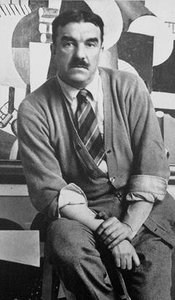
1881 - 1955 , Frankreich

Master the complexities of Geometric Abstraction. Our expert guide explores the evolution from Cubist deconstruction to Bauhaus precision, decoding the power of shape and form. Perfect for art students seeking deep historical context and academic insight into modern masterpieces.

Explore the profound impact of Minimalism and Geometric Abstraction. From Mondrian to Malevich, discover how stripping art to its essential forms revolutionized modern aesthetics through our expert-led historical guide.


Bleiben Sie über die neuesten Kunstnachrichten, exklusive Angebote und Dekorationsideen auf dem Laufenden.
Erzählen Sie uns von Ihrem Projekt, und unsere Kunstexperten erstellen für Sie drei personalisierte Kunstvorschläge.
Wir kuratieren 3 Optionen exklusiv für Sie – kostenlos!


 Vorschau anzeigen
 Versenden
 Teilen
 Details anzeigen

 Herunterladen
 Ähnliche Objekte
 Röntgenaufnahme
 Diashow

 Weiterlesen







 Die Glasoption ist nur für Größen unter 110 cm verfügbar.


