


x

Handgemaltes Ölgemälde auf Leinwand in Ihrer Wunschgröße und mit Rahmen, auf Bestellung von unseren Künstlern angefertigt. ( Druck bestellen Bild kaufen)





























Wählen Sie aus unseren vordefinierten Formaten, die den ursprünglichen Proportionen des Kunstwerks entsprechen.

Sie können Ihre eigenen Maße eingeben, um einen bestimmten Rahmen oder Platz auszufüllen. Wenn die gewählte Größe nicht den Proportionen des Originalbildes entspricht, werden wir das Kunstwerk entweder beschneiden oder das Gemälde durch zusätzliche, handgemalte Elemente erweitern. Ein digitales Mockup wird Ihnen zur Genehmigung zugesandt, bevor die Produktion beginnt.
Bitte beachten Sie, dass die Bildschirmvorschau nicht die tatsächliche Beschneidung oder Erweiterung widerspiegelt. Nur das Mockup zeigt die endgültige Komposition exakt an.
Obwohl Sondermaße verfügbar sind, empfehlen wir, eine Größe aus der vordefinierten Liste zu wählen, um die ursprünglichen Proportionen beizubehalten.
Weltweiter Versand () in nur 3 bis 4 Wochen statt der üblichen 5 Wochen. (16 August). Keine Kompromisse bei der Qualität.


Heuwagen
Format der Reproduktion
Franz Marc's "Hay Wagon" (1905) isn't merely a depiction of a rural scene; it’s an immersive experience, a vibrant distillation of the artist’s profound connection to nature and his deeply felt spirituality. This monumental canvas, currently housed in the Franz Marc Museum in Kochel am See, immediately captivates with its audacious palette and dynamic composition – a testament to Marc's pioneering role within German Expressionism. The painting transcends simple representation, offering instead a glimpse into a world imbued with symbolic weight and emotional resonance.
At first glance, the scene is straightforward: a weathered hay wagon, painted a striking green, pulls a cart laden with chickens and roosters across an open field. Yet, Marc’s masterful manipulation of color and brushstroke elevates this humble subject to something far more profound. The dominant hues – deep blues, ochres, and fiery reds – aren't chosen arbitrarily; they vibrate with an almost palpable energy, mirroring the vitality of the natural world. Notice how the wagon itself is rendered in layers of textured paint, suggesting both its age and the rough-hewn reality of rural life. The loose, expressive brushwork, characteristic of Marc’s style, avoids precise detail, prioritizing instead the conveyance of feeling and atmosphere.
Marc's fascination with animals extended far beyond mere observation; he saw within them a purity and innocence that reflected a deeper spiritual truth. In "Hay Wagon," the chickens and roosters aren’t simply farmyard creatures; they represent fertility, abundance, and the cyclical rhythms of life itself. The presence of two roosters, positioned deliberately on either side of the wagon, can be interpreted as symbols of duality – perhaps representing masculine and feminine energies, or even the forces of light and darkness. The chickens, with their quiet diligence, embody a sense of groundedness and practicality.
Furthermore, the hay wagon itself carries significant symbolic weight. It’s a potent emblem of rural life, agriculture, and the connection between humanity and the land. Marc's choice to depict it in such vivid color suggests that he wasn’t simply documenting a scene; he was elevating it to a level of spiritual significance. The painting echoes the work of Johann Christoph Friedrich Hölder, whose serene landscapes often explored themes of nature and human existence with a similar contemplative quality.
Marc's technique in "Hay Wagon" is deeply rooted in his Expressionist principles. He deliberately distorted forms and exaggerated colors to convey emotional intensity rather than striving for photographic realism. The painting’s dynamism is further enhanced by the interplay of light and shadow, creating a sense of movement and immediacy. It’s fascinating to consider how Marc's early exposure to Vincent van Gogh’s expressive use of color influenced his own artistic vision – both artists shared a desire to capture the essence of their subjects through intense emotional expression.
Interestingly, Marc’s work during this period was also shaped by encounters with other artistic circles and movements. The influence of the “Blue Rider” group, which he co-founded, is evident in his exploration of color theory and his belief that art could be a vehicle for spiritual experience. The use of bold colors and simplified forms can also be linked to the work of Gebrüder Bing, whose intricate toy designs reflected a fascination with natural forms and vibrant hues.
Most-Famous-Paintings is proud to offer meticulously crafted hand-painted reproductions of Franz Marc’s “Hay Wagon.” These reproductions capture not only the painting's visual brilliance but also its emotional depth. By choosing a Most-Famous-Paintings reproduction, you are investing in an authentic work of art that will bring a touch of Marc’s visionary spirit into your home or office. The painting’s enduring appeal lies in its ability to evoke a sense of nostalgia for a simpler time while simultaneously reminding us of the profound beauty and spiritual significance of the natural world.
Consider how Johann Koerbecke, a pioneering German artist known for his innovative use of color and light, would approach this piece – Marc’s bold colors and expressive brushwork resonate with a similar desire to capture the essence of experience. And while the painting may seem simple at first glance, it holds layers of meaning that invite contemplation and reward repeated viewing.

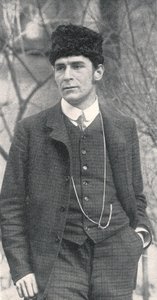
1880 - 1916 , Deutschland

Explore the visceral power of German Expressionism. From Ernst Ludwig Kirchner to Die Brücke, discover how bold colors and distorted forms unmask raw human emotion in this expert art history guide for collectors and enthusiasts.

Explore the raw realism of Neue Sachlichkeit. Discover how German New Objectivity artists like Otto Dix and George Grosz captured the turbulent Weimar Republic through unflinching social critique and precise detail. A definitive guide for art historians and collectors.


Bleiben Sie über die neuesten Kunstnachrichten, exklusive Angebote und Dekorationsideen auf dem Laufenden.
Erzählen Sie uns von Ihrem Projekt, und unsere Kunstexperten erstellen für Sie drei personalisierte Kunstvorschläge.
Wir kuratieren 3 Optionen exklusiv für Sie – kostenlos!


 Vorschau anzeigen
 Versenden
 Teilen
 Details anzeigen

 Herunterladen
 Ähnliche Objekte
 Röntgenaufnahme
 Diashow

 Weiterlesen







 Die Glasoption ist nur für Größen unter 110 cm verfügbar.


