


x
 Oil On CanvasWallArtFuturism and Expression
 1917Modern
 47.0 x 68.0 cm
Giclée- oder Leinwanddruck in Museumsqualität mit schneller Produktion und flexiblen Veredelungsoptionen. ( Handgemalte Reproduktion bestellen Bild kaufen)





























Wählen Sie aus unseren vordefinierten Formaten, die den ursprünglichen Proportionen des Kunstwerks entsprechen.

Sie können Ihre eigenen Maße eingeben, um ein bestimmtes Format oder einen speziellen Platz einzupassen. Wenn das von Ihnen gewählte Format nicht den Proportionen des Originalbildes entspricht, werden wir das Kunstwerk entweder beschneiden oder das Bild mit einem gespiegelten oder einfarbigen Rand erweitern. Ein digitaler Entwurf wird Ihnen zur Genehmigung zugesandt, bevor die Produktion beginnt.
Bitte beachten Sie, dass die Vorschau auf dem Bildschirm nicht den tatsächlichen Zuschnitt oder die Erweiterung widerspiegelt. Nur der Entwurf zeigt die endgültige Komposition präzise an.
Obwohl Sondermaße verfügbar sind, empfehlen wir die Auswahl eines Maßes aus der vordefinierten Liste, um die ursprünglichen Proportionen zu bewahren.
Weltweiter Versand () innerhalb von 2 Wochen statt der üblichen 4/5 Wochen. (15 August)


Explosion
Format der Reproduktion
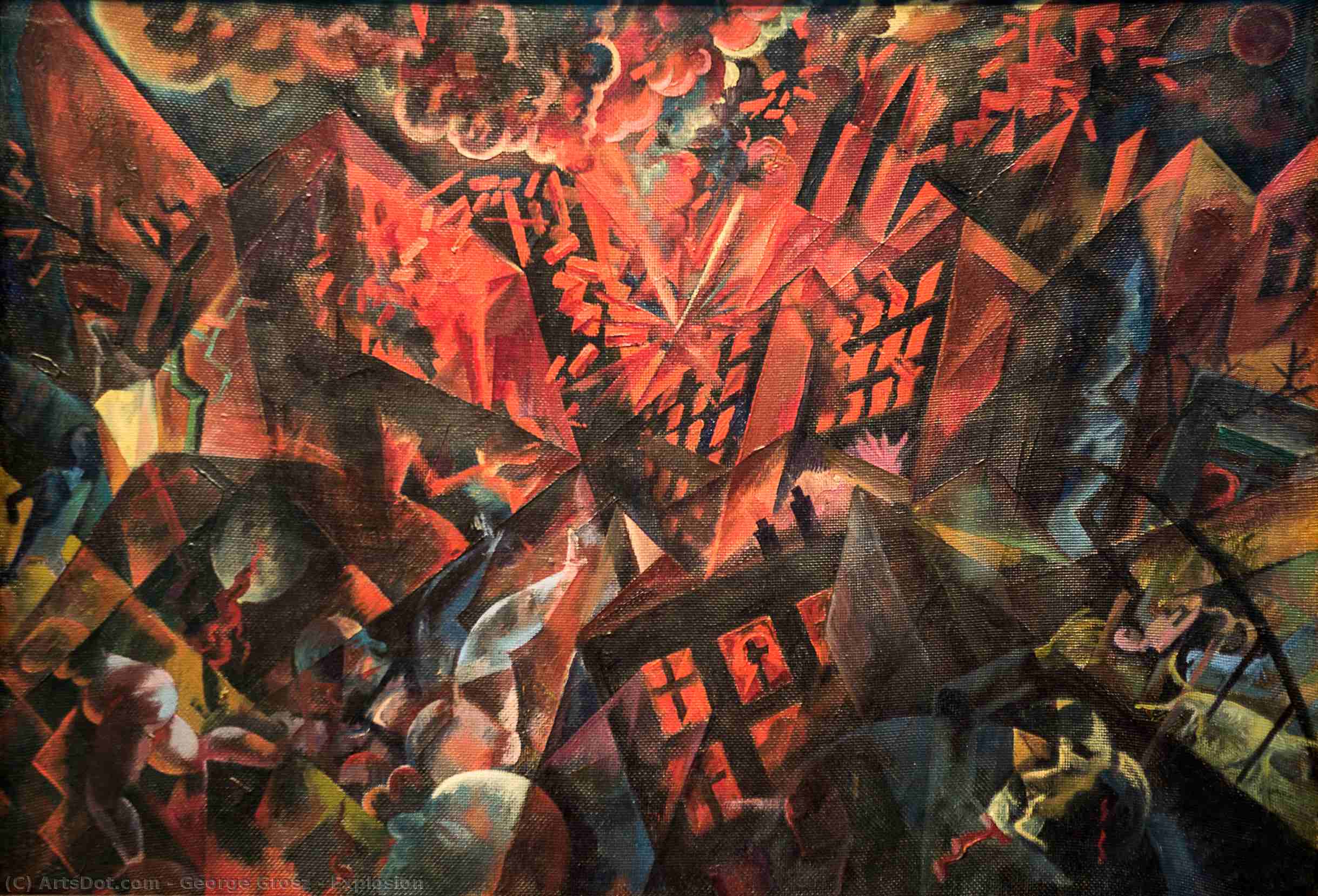
George Grosz’s “Explosion,” painted in 1917, isn’t merely a depiction of war; it’s a visceral scream against the very foundations of society. Born from the artist’s disillusionment following his discharge from the German army due to mental health struggles – a direct consequence of witnessing the horrors of World War I – this work embodies the chaotic disintegration of both physical landscapes and moral values. Grosz, a key figure in the Dada movement and a master of Expressionism, utilizes the burgeoning principles of Futurism to create an image that remains profoundly unsettling and remarkably relevant today. The painting’s immediate impact is one of overwhelming devastation: collapsing high-rise buildings, rendered in furious reds and oranges, seem to pinwheel around a central vortex of black, sucking in shattered windows and billowing smoke – a tangible representation of the war's indiscriminate destruction. It’s a scene that demands attention, forcing the viewer to confront the brutal reality of conflict.
To fully appreciate "Explosion," one must understand its historical context. Painted in 1917, a pivotal year marked by the height of World War I, the artwork reflects the widespread disillusionment and anti-war sentiment that fueled the rise of Dadaism. Grosz’s work aligns with this movement's rejection of traditional artistic values and embrace of irrationality and absurdity as responses to the perceived madness of the era. His earlier training in meticulous Dutch master copies – particularly those of Eduard von Grützner – provided him with a strong technical foundation, which he then deliberately subverted, using his skill to amplify the emotional impact of his subject matter. The painting’s genesis is inextricably linked to Grosz's personal trauma and his profound critique of the militaristic society that produced such devastation.
The fiery background, a dominant feature of “Explosion,” isn’t simply an aesthetic choice; it’s a deliberate symbol of intense heat and destruction. The swirling clouds and streaks of light suggest not just explosions but also the psychological turmoil experienced by those caught in the war's grip. The angular forms of the collapsing buildings – reminiscent of Cubist influences – further contribute to the painting’s sense of fragmentation and disorientation. Grosz masterfully employs contrast, juxtaposing the fiery foreground with cooler blues and greens in the background, intensifying the overall feeling of chaos and amplifying the emotional impact.
"Explosion" remains a powerful testament to George Grosz’s artistic vision and his unwavering commitment to social commentary. Its influence can be seen in contemporary artists who continue to grapple with themes of war, destruction, and societal decay. The Museum of Modern Art (MoMA) recognizes this significance, holding “Explosion” within its collection as a cornerstone of modern art history. This reproduction offers an exceptional opportunity to own a piece of this pivotal artwork, allowing you to experience the raw emotion and intellectual depth that define Grosz’s legacy.


1893 - 1959 , Deutschland

Elevate your design projects with Most-Famous-Paintings's premium canvas prints and hand-painted reproductions. Discover affordable, museum-quality wall decor delivered worldwide, offering freelance decorators professional excellence, archival durability, and bespoke customization for every space.


Bleiben Sie über die neuesten Kunstnachrichten, exklusive Angebote und Dekorationsideen auf dem Laufenden.
Erzählen Sie uns von Ihrem Projekt, und unsere Kunstexperten erstellen für Sie drei personalisierte Kunstvorschläge.
Wir kuratieren 3 Optionen exklusiv für Sie – kostenlos!


 Vorschau anzeigen
 Versenden
 Teilen
 Details anzeigen

 Herunterladen
 Ähnliche Objekte
 Röntgenaufnahme
 Diashow
 Weiterlesen







 Die Glasoption ist nur für Größen unter 110 cm verfügbar.


