


x

Handgemaltes Ölgemälde auf Leinwand in Ihrer Wunschgröße und mit Rahmen, auf Bestellung von unseren Künstlern angefertigt. ( Druck bestellen Bild kaufen)





























Wählen Sie aus unseren vordefinierten Formaten, die den ursprünglichen Proportionen des Kunstwerks entsprechen.

Sie können Ihre eigenen Maße eingeben, um einen bestimmten Rahmen oder Platz auszufüllen. Wenn die gewählte Größe nicht den Proportionen des Originalbildes entspricht, werden wir das Kunstwerk entweder beschneiden oder das Gemälde durch zusätzliche, handgemalte Elemente erweitern. Ein digitales Mockup wird Ihnen zur Genehmigung zugesandt, bevor die Produktion beginnt.
Bitte beachten Sie, dass die Bildschirmvorschau nicht die tatsächliche Beschneidung oder Erweiterung widerspiegelt. Nur das Mockup zeigt die endgültige Komposition exakt an.
Obwohl Sondermaße verfügbar sind, empfehlen wir, eine Größe aus der vordefinierten Liste zu wählen, um die ursprünglichen Proportionen beizubehalten.
Weltweiter Versand () in nur 3 bis 4 Wochen statt der üblichen 5 Wochen. (17 August). Keine Kompromisse bei der Qualität.


untitled (9656)
Format der Reproduktion
This untitled work by Georges Braque, created around 1926 (though the exact date remains elusive), offers a captivating glimpse into the artist's evolving approach to form and space during his pivotal period within the development of Cubism. It’s not merely a depiction of a forest scene; it’s an exploration of perception itself – a deliberate fracturing of reality to reveal its underlying geometric structure, mirroring Braque’s deep engagement with the ideas of Paul Cézanne. The painting's stark black and white palette immediately establishes a formal rigor, stripping away any superfluous detail and forcing the viewer to confront the essential shapes and planes that constitute the landscape.
The composition is dominated by a towering tree, its branches reaching upwards in a complex network of lines and angles. This isn’t a naturalistic representation; rather, it's an abstracted embodiment of the tree’s skeletal structure – a series of interlocking geometric forms that suggest both solidity and fragility. The leaves, rendered as dense clusters of overlapping planes, contribute to this sense of fragmentation, creating a visual texture that is simultaneously chaotic and meticulously controlled. Notice how Braque avoids smooth transitions; instead, he employs sharp edges and distinct planes, anticipating the key tenets of Cubism’s deconstruction of traditional perspective.
Adding to the painting's intrigue is the presence of a solitary figure standing near the left side of the scene. This individual, partially obscured by the foliage, appears to be gazing intently at the tree. Their posture – slightly turned towards the subject – suggests a moment of quiet contemplation, perhaps an appreciation for the tree’s inherent beauty or a deeper engagement with its geometric form. The figure's inclusion isn’t merely decorative; it serves as a focal point, inviting the viewer to consider their own relationship to nature and art. Braque frequently used human figures in his work not to represent specific individuals, but rather to embody universal themes of observation and experience – a silent witness to the unfolding drama of the natural world.
This painting is firmly rooted within the principles of Cubism, a revolutionary movement that Braque co-founded with Pablo Picasso. Unlike earlier artistic styles that prioritized realistic representation, Cubism sought to depict objects from multiple viewpoints simultaneously, breaking them down into their fundamental geometric components and reassembling them on the canvas in an abstract manner. Braque’s approach, often referred to as “Analytical Cubism,” involved a deliberate reduction of color palettes – typically limited to monochromatic schemes – to emphasize form and structure. The use of overlapping planes, fragmented forms, and ambiguous spatial relationships are hallmarks of this style, creating a sense of visual complexity that challenges the viewer's perception.
Beyond its formal innovations, the painting carries a subtle symbolic resonance. The tree itself can be interpreted as a symbol of strength, resilience, and connection to the earth – qualities deeply valued in Braque’s native France. The stark contrast between light and shadow further enhances this sense of drama, creating a visual tension that draws the viewer's eye across the composition. Ultimately, “Untitled (9656)” is not simply a landscape; it’s an invitation to engage with the complexities of perception, form, and the enduring beauty of the natural world – a testament to Braque’s pioneering spirit and his profound influence on the course of modern art.

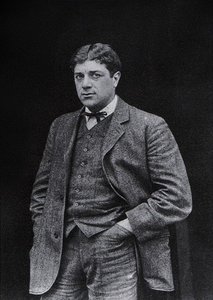
1882 - 1963 , Frankreich

Explore the revolutionary world of Cubism. Discover how Pablo Picasso and Georges Braque dismantled perspective to redefine modern art through geometric innovation and analytical mastery. An essential guide for art students, collectors, and history enthusiasts.

Explore the revolutionary world of Cubism. Discover how masters Pablo Picasso and Georges Braque dismantled reality through geometric abstraction to redefine modern art history.

Master the complexities of Cubism with our expert guide. Explore how Picasso and Braque revolutionized modern art through fragmentation, multiple perspectives, and geometric innovation. Perfect for art students and collectors seeking deep historical insight.

Explore the revolutionary world of Cubism. From Picasso's analytical deconstruction to Braque's geometric forms, master the history of fragmentation and modern art through this expert guide for students and collectors.

Master the complexities of Analytical Cubism with our expert guide. Explore how Picasso and Braque revolutionized art through fragmented perspectives, geometric deconstruction, and simultaneous viewpoints. A definitive resource for art students and collectors seeking deep historical insight.


Bleiben Sie über die neuesten Kunstnachrichten, exklusive Angebote und Dekorationsideen auf dem Laufenden.
Erzählen Sie uns von Ihrem Projekt, und unsere Kunstexperten erstellen für Sie drei personalisierte Kunstvorschläge.
Wir kuratieren 3 Optionen exklusiv für Sie – kostenlos!


 Vorschau anzeigen
 Versenden
 Teilen
 Details anzeigen

 Herunterladen
 Ähnliche Objekte
 Röntgenaufnahme
 Diashow

 Weiterlesen







 Die Glasoption ist nur für Größen unter 110 cm verfügbar.


