Verkaufen Sie Ihre Kunst
Wunschliste Warenkorb Cart
Vorschau anzeigenVorschau anzeigen In AR erlebenIn AR erleben Druck bestellen Druck bestellenBild kaufen Bild kaufen VersendenVersenden
Details anzeigenDetails anzeigen Zu Favoriten hinzufügen Zu Favoriten hinzufügen HerunterladenHerunterladen Ähnliche ObjekteÄhnliche Objekte RöntgenaufnahmeRöntgenaufnahme DiashowDiashow

Verni bird

Georges Braque’s Cubist masterpiece captures the elegance of flight against a tranquil ocean backdrop. This stylized bird painting exemplifies early 20th-century artistic innovation and invites you to explore the beauty of modern art.

Erkunden Sie das Leben und Werk von Georges Braque (1882-1963), eine Schlüsselgestalt der Malerei des 20. Jahrhunderts. Pionier des Kubismus an der Seite Picassos, bekannt für Fauvismus, Collagen und innovative geometrische Formen. Entdecken Sie sein Erbe bei Most-Famous-Paintings!

Handgefertigte Ölreproduktion

Handgemaltes Ölgemälde auf Leinwand in Ihrer Wunschgröße und mit Rahmen, auf Bestellung von unseren Künstlern angefertigt. (Druck bestellen Druck bestellenBild kaufen Bild kaufen)

P118B $10
P118H $10
P118W $10
P438Z $10
P508JH $12
P508YH $12
P805H $10
P805Z $10
P919BZ $10
P919G $10
P919XJ $10
P959ZH $10
P968JZ $12
W106C $8
W218G $10
W218JH $8
W218Y $10
W307PJ $10
W316G $10
W316PJ $8
W316Y $10
W398PJ $8
W4111J $10
W500HY $15
W500JH $15
W692G $12
W849H $8
W940BG $15
W953PJ $8

Standard
custom
CM
INCH

Wählen Sie aus unseren vordefinierten Formaten, die den ursprünglichen Proportionen des Kunstwerks entsprechen.

Breite
Höhe

Sie können Ihre eigenen Maße eingeben, um einen bestimmten Rahmen oder Platz auszufüllen. Wenn die gewählte Größe nicht den Proportionen des Originalbildes entspricht, werden wir das Kunstwerk entweder beschneiden oder das Gemälde durch zusätzliche, handgemalte Elemente erweitern. Ein digitales Mockup wird Ihnen zur Genehmigung zugesandt, bevor die Produktion beginnt.
Bitte beachten Sie, dass die Bildschirmvorschau nicht die tatsächliche Beschneidung oder Erweiterung widerspiegelt. Nur das Mockup zeigt die endgültige Komposition exakt an.
Obwohl Sondermaße verfügbar sind, empfehlen wir, eine Größe aus der vordefinierten Liste zu wählen, um die ursprünglichen Proportionen beizubehalten.

Beispiele für Anpassungsmöglichkeiten: Gesicht durch Kundenfoto ersetzen; Haustier hinzufügen (z. B. Katze durch Hund ersetzen); eine versteckte Nachricht im Hintergrund einfügen; Hintergrundlandschaft oder -elemente ändern.
Nach der Bestellung wird das Most-Famous-Paintings.com-Team dem Kunden Anweisungen per E-Mail zusenden und eine Mockup-Vorschau bereitstellen.

Weltweiter Versand () in nur 3 bis 4 Wochen statt der üblichen 5 Wochen. (15 August). Keine Kompromisse bei der Qualität.

why_choose_icon
Kostenloser weltweiter Expressversand
why_choose_icon
Hochwertige Leinenleinwand
why_choose_icon
Umfassender Versicherungsschutz beim Versand
why_choose_icon
Zollgebühren-Rückerstattungsgarantie
why_choose_icon
Garantie für exakte Farbtreue
why_choose_icon
60 Tage Rückgaberecht (nur bei Mängeln)
why_choose_icon
100% Geld-zurück-Garantie
why_choose_icon
Mengenrabatt verfügbar

Gesamtpreis

$ 272

reproduction

Verni bird

Art der Reproduktion

Format der Reproduktion

-

Gesamtpreis

$ 272

Eckdaten

  • Medium: Painting
  • Subject or theme: Bird in flight
  • Title: Verni bird
  • Artist: Georges Braque
  • Influences: House painters
  • Artistic style: Complex visual effect

Beschreibung des Kunstwerks

Georges Braque’s “Verni Bird”: A Fragment of Cubist Vision

  • The painting "Verni Bird," executed by Georges Braque, stands as a testament to the transformative power of Cubism—a movement that irrevocably altered the course of artistic history. Created sometime between 1906 and 1907, this deceptively simple composition encapsulates the core tenets of Picasso’s and Braque's groundbreaking experimentation with perspective and representation.
  • Subject Matter & Composition: At its heart lies a stylized depiction of a bird in flight. Rather than striving for realistic portrayal, Braque employs geometric forms—primarily planes intersecting at sharp angles—to convey the essence of movement and volume. The bird’s wings dominate the canvas, rendered as fragmented planes that simultaneously suggest both frontal and lateral views.
  • Cubist Technique: Braque's masterful technique exemplifies the principles of Cubism. He utilizes a palette dominated by muted earthy tones—ochre, umber, and terracotta—creating an atmosphere of quiet contemplation. The artist meticulously builds up texture through layering thin washes of pigment, subtly hinting at the materiality of the bird’s plumage.
  • Historical Context: “Verni Bird” emerged during a pivotal period in artistic innovation. Following Impressionism's focus on capturing fleeting moments of light and color, Cubists sought to dismantle illusionistic space and explore alternative ways of perceiving reality. Influenced by Cézanne’s explorations of sculptural form and African art’s expressive simplification, Braque and Picasso pushed the boundaries of artistic convention.
  • Symbolism & Emotional Resonance: While seemingly devoid of overt narrative content, “Verni Bird” resonates with profound symbolic significance. The bird itself represents freedom, aspiration, and transcendence—themes central to the humanist spirit of the era. Its upward trajectory embodies a yearning for progress and beauty, capturing an intangible emotion that transcends mere visual representation.

Exploring Braque’s Geometric Approach

Braque's decision to fragment form wasn’t merely stylistic; it was driven by a deeper philosophical inquiry into the nature of perception. He believed that objects could be understood not as single entities but as composite structures viewed from multiple viewpoints simultaneously. This conceptual breakthrough mirrored broader intellectual currents of the time, reflecting anxieties about traditional notions of representation and embracing new ways of engaging with visual experience.

The Influence of Cézanne & African Art

The artist’s vision was undeniably shaped by two seminal influences: Cézanne's groundbreaking explorations of sculptural form and the expressive simplification characteristic of African tribal art. Cézanne’s insistence on depicting objects as they exist in three dimensions—rather than flattening them onto a canvas—provided Braque with a crucial precedent for dismantling illusionistic space. Similarly, African sculptures captivated artists with their bold geometric shapes and stylized figures, inspiring Braque to adopt a similar aesthetic strategy.

A Reproduction That Captures Essence

Most-Famous-Paintings’s meticulous reproductions faithfully capture the subtle nuances of Braque's original painting. Utilizing archival pigments and printing methods, our artisans ensure that every detail—from the delicate texture of the bird’s feathers to the muted tonal palette—is reproduced with exceptional accuracy. This allows collectors and interior designers alike to experience the beauty and intellectual depth of “Verni Bird” in a stunningly realistic format.

Über den Künstler

**frühes Leben und Ausbildung**

Georges Braque, ein prominenter französischer Maler, Kollagist, Bleistrichzeichner, Grafiker und Bildhauer, wurde am 13. Mai 1882 in Argenteuil, Val-d'oise, geboren. Er wuchs in Le Havre auf und erhielt zunächst eine Ausbildung als Hausmaler und Dekorateur wie sein Vater und Großvater. Braques künstlerische Neigungen führten ihn jedoch dazu, von 1897 bis 1899 an der École des Beaux-Arts in Le Havre Malerei zu studieren.

**Künstlerische Entwicklung und Fauvisme**

Im Jahr 1902, nachdem er seine Lehre bei einem Dekorateur in Paris abgeschlossen hatte, besuchte Braque bis 1904 die Académie Humbert. Dieser Zeitraum markierte seine Einführung ins Fauvismus, einen Stil, der durch lebendige Farben und emotionale Reaktionen gekennzeichnet ist. Beeinflusst von den Werken von Henri Matisse und André Derain, übernahm Braque einen fauvistischen Ansatz, wie in seinem Gemälde The Patience (Fauvismus, Öl auf Leinwand).

**Beitrag zum Kubismus**

Braques Zusammenarbeit mit Pablo Picasso von 1908 bis 1912 führte zur Entwicklung des Kubismus. Ihre analytischen kubistischen Werke, wie z.B. Georges Braque: The Patience und Pablo Picasso: Clarinet(analytischer Kubismus, Öl auf Leinwand), gelten heute als Meilensteine der Kunstgeschichte.

**Erbe und bemerkenswerte Werke**

* Houses at L'Estaques: Ein Zeugnis für Braques innovatives Einsatz von Geometrie und simultaner Perspektive. * The Patience(Fauvismus, Öl auf Leinwand): Demonstriert Braques fauvistischen Stil. * Clarinet(analytischer Kubismus, Öl auf Leinwand): Eine kollaborative kubistische Arbeit mit Picasso.

**Museen und Sammlungen**

* Musée d'Orsay: Bietet eine umfangreiche Sammlung impressionistischer und postimpressionistischer Kunst, darunter Werke von Braque. * Musée de l'Orangerie: Zeigt eine breite Palette von Kunstwerken, darunter Werke von Braque und anderen bedeutenden Künstlern. **Georges Braques innovative Stil und seine Zusammenarbeit mit Pablo Picasso inspirieren weiterhin Künstler und Kunstliebhaber.**
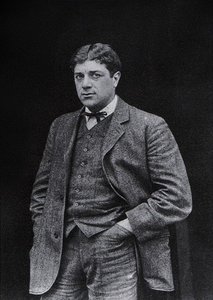
Georges Braque

Georges Braque

1882 - 1963 , Frankreich

Kurzinfos

  • Beeinflusste Künstler: ['Pablo Picasso']
  • Bemerkenswerte Werke:
    • Häuser in L'Estaque
    • Die Geduld (Fauvismus)
    • Stillleben mit Pfeife
    • Mandola
  • Einflussreiche Künstler:
    • Henri Matisse
    • André Derain
    • Paul Cézanne
  • Geburtsdatum: 13. Mai 1882
  • Geburtsort: Argenteuil, Frankreich
  • Künstlerischer Stil: Kubismus, Fauvismus
  • Nationalität: Französisch
  • Sterbedatum: 1963
  • Vollständiger Name: Georges Braque
Entdecken Sie Kunstwerke, die nach Themen, Stilen und Merkmalen sortiert sind.