x

 Oil On CanvasWallArtContemporary Realism
 1973Contemporary
 90.0 x 65.0 cm
Handgemaltes Ölgemälde auf Leinwand in Ihrer Wunschgröße und mit Rahmen, auf Bestellung von unseren Künstlern angefertigt. ( Druck bestellen Bild kaufen)





























Wählen Sie aus unseren vordefinierten Formaten, die den ursprünglichen Proportionen des Kunstwerks entsprechen.

Sie können Ihre eigenen Maße eingeben, um einen bestimmten Rahmen oder Platz auszufüllen. Wenn die gewählte Größe nicht den Proportionen des Originalbildes entspricht, werden wir das Kunstwerk entweder beschneiden oder das Gemälde durch zusätzliche, handgemalte Elemente erweitern. Ein digitales Mockup wird Ihnen zur Genehmigung zugesandt, bevor die Produktion beginnt.
Bitte beachten Sie, dass die Bildschirmvorschau nicht die tatsächliche Beschneidung oder Erweiterung widerspiegelt. Nur das Mockup zeigt die endgültige Komposition exakt an.
Obwohl Sondermaße verfügbar sind, empfehlen wir, eine Größe aus der vordefinierten Liste zu wählen, um die ursprünglichen Proportionen beizubehalten.
Weltweiter Versand () in nur 3 bis 4 Wochen statt der üblichen 5 Wochen. (19 August). Keine Kompromisse bei der Qualität.


Grey (Bark)
Format der Reproduktion
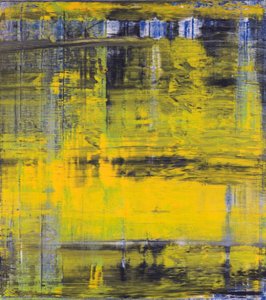
In the vast landscape of contemporary art, few works possess the quiet, arresting power of Gerhard Richter’s Grey (Bark). Created in 1973, this masterpiece invites the viewer into a profound dialogue with the surface itself. At first glance, the painting presents an expanse of monochromatic gray, yet a closer inspection reveals a world of subtle irregularities and meticulously crafted textures. These rhythmic bumps and undulations are not mere accidents of the brush; they are intentional evocations of natural bark, suggesting a weathered resilience that speaks to the endurance of the natural world. The work exists in that ethereal space between what is seen and what is felt, offering an experience that is as much about tactile sensation as it is about visual perception.
Richter’s signature brilliance lies in his ability to blur the boundaries between photorealism and abstraction. While the surface may initially resemble a monochromatic photograph, the painting deliberately avoids capturing a definitive, literal image. Instead, it prioritizes suggestion over representation, a technique that mirrors the artist's deeper philosophical inquiries into the reliability of human memory and sight. By blending these two seemingly opposing styles, Richter creates a sense of "uncertainty" that becomes the very soul of the piece. For the collector or interior designer, this ambiguity provides a sophisticated focal point—a work that changes character depending on the light, the angle of view, and the contemplative state of the observer.
The technical execution of Grey (Bark) is a testament to Richter’s mastery over oil paint. To achieve such a complex surface, the artist employed a sophisticated layering process, alternating between thin, translucent washes and thicker, more sculptural impasto. This meticulous buildup of pigment allows light to interact with the canvas in a way that creates depth within a seemingly flat color field. The result is a surface that feels alive, possessing a materiality that anchors the abstract concept in physical reality. It is this very tension—between the ethereal gray hue and the rugged, tactile texture—that gives the painting its enduring emotional weight.
To understand the gravity of this work, one must consider the historical moment of its creation. Emerging from the post-World War II era, Richter’s 1973 production was part of a broader movement toward conceptual art and abstraction that sought to navigate the anxieties of a fractured Germany. The neutral gray palette can be seen as a symbol of contemplation and a refusal to offer easy, propagandistic answers, reflecting a period of profound social and political questioning. In Grey (Bark), we find a beautiful synthesis of history and emotion: a piece that uses the motif of bark to symbolize transformation and connection, offering a sense of stability and organic strength amidst the complexities of the modern human experience.


1932 - , Deutschland

Explore the profound emotional depth of Color Field painting. Discover the history of mid-century abstraction, from Rothko to Newman, and learn how pure color transforms the viewer's experience through our expert art history guide.
Explore the profound emotional depth of Lyrical Abstraction. Discover how masters like Raymond Parker used color and form to bridge Impressionism and Abstract Expressionism. Learn about this pivotal movement through our expert-led art history guide.

Explore the profound beauty of oil on canvas. Discover how impasto textures, masterful brushwork, and light create unparalleled depth in fine art reproductions and custom commissions for discerning collectors.


Bleiben Sie über die neuesten Kunstnachrichten, exklusive Angebote und Dekorationsideen auf dem Laufenden.
Erzählen Sie uns von Ihrem Projekt, und unsere Kunstexperten erstellen für Sie drei personalisierte Kunstvorschläge.
Wir kuratieren 3 Optionen exklusiv für Sie – kostenlos!


 Vorschau anzeigen
 Versenden
 Teilen
 Details anzeigen

 Herunterladen
 Ähnliche Objekte
 Röntgenaufnahme
 Diashow
 Weiterlesen







 Die Glasoption ist nur für Größen unter 110 cm verfügbar.