x

Erwerben Sie ein hochauflösendes, optimiertes digitales Bild, das der Online-Vorschau weit überlegen ist.
Jede Datei wird von unseren hauseigenen Spezialisten mit modernsten Werkzeugen und fachmännischer manueller Retusche sorgfältig vorbereitet. Wir stellen sicher, dass jedes Bild eine außergewöhnliche Klarheit, präzise Farbgenauigkeit und feinste Details aufweist.
Die endgültige Datei wird innerhalb von 72 Stunden per E-Mail zugestellt und ist für den sofortigen Einsatz in professionellen, redaktionellen und Druckumgebungen optimiert. Es handelt sich um dieselbe Qualität, der führende Designstudios, Verlage und Galerien vertrauen.
Laden Sie eine hochauflösende Datei für die persönliche Präsentation, den Druck und kreative Projekte herunter. ( Druck bestellen Handgemalte Reproduktion bestellen)
Wenn Sie sich für Most-Famous-Paintings.com entscheiden, erhalten Sie nicht nur ein Bild – Sie erhalten ein professionell aufbereitetes digitales Kunstwerk, das mit höchster Präzision erstellt und durch eine Zufriedenheitsgarantie abgesichert wird. Hier ist alles, was automatisch mit Ihrer Bestellung geliefert wird:

Ihre hochauflösende digitale Bilddatei wird Ihnen innerhalb von 72 Stunden nach der Bestellung per E-Mail zugestellt – bereit zur sofortigen Verwendung.

Ihre Kunstwerke werden professionell mithilfe fortschrittlicher KI-Tools und manueller Bearbeitung optimiert, um maximale Detailtreue, Klarheit und Farbgenauigkeit zu gewährleisten.

Datei versehentlich gelöscht oder verloren? Keine Sorge – wir senden sie Ihnen jederzeit kostenlos erneut zu.

Genießen Sie Ihr Kunstwerk sofort ohne Zollgebühren, Einfuhrabgaben oder Versandkosten – digitale Downloads sind immer steuerfrei.

Wir garantieren, dass Ihr digitales Bild mithilfe professioneller Werkzeuge und Farbmanagement die Originalfarben so präzise wie möglich wiedergibt.

Sollten Sie mit Ihrem digitalen Bild nicht zufrieden sein, werden wir es überarbeiten oder Ihnen innerhalb von 60 Tagen 100% erstatten – ohne Wenn und Aber.

Nicht zufrieden? Erhalten Sie innerhalb von 60 Tagen nach Erhalt Ihrer digitalen Datei eine vollständige Rückerstattung – ohne Angabe von Gründen.

3 Bilder kaufen, 10% sparen – 5 Bilder kaufen, 15% sparen – Ab 10 Bildern 20% sparen. Ideal für kreative Projekte, Galerien und Agenturen.
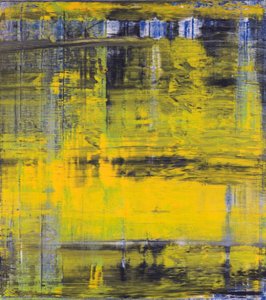
Gerhard Richter's "Untitled (167)," a seemingly simple black and white photograph of a woman nursing her child, is far more than a portrait; it’s a profound exploration of memory, time, and the inherent ambiguity of representation. Created in an era deeply marked by division – Richter’s childhood unfolded under the shadow of post-war Germany and the subsequent rise of authoritarianism – the work speaks to a persistent sense of uncertainty and a questioning spirit that would become hallmarks of his artistic practice. This photograph, created around 1989, captures a tender yet subtly unsettling moment, inviting viewers to contemplate the fragility of human connection and the elusive nature of recollection.
Richter’s approach is characteristic of his broader oeuvre: he masterfully employs techniques borrowed from both photography and painting. The image itself isn't a direct reproduction but rather an interpretation, a distillation of memory through the lens of the camera. Richter frequently worked with photographs, often creating multiple versions of the same subject – a technique that highlights the subjective nature of visual perception. Here, he’s not simply documenting reality; he’s constructing a narrative, layering meaning onto a seemingly straightforward scene. The stark black and white palette further emphasizes this process, stripping away extraneous detail and focusing attention on form, texture, and the emotional weight of the figures.
A key element of Richter’s work – and particularly evident in “Untitled (167)” – is his use of absence. The background figures are deliberately vague, their identities obscured by distance and shadow. This deliberate lack of specificity forces the viewer to actively participate in constructing the scene, filling in the gaps with their own memories and associations. The woman’s gaze, fixed intently on her child, is both loving and distant, suggesting a complex mix of emotions – perhaps nostalgia, worry, or simply the quiet contemplation that accompanies motherhood. The baby's proximity to her chest isn’t merely a depiction of physical closeness; it symbolizes nourishment, protection, and the continuity of life.
Richter’s technique is deceptively simple. He utilizes a soft focus, characteristic of his ‘photorealistic’ period, lending the image an almost dreamlike quality. The subtle gradations of tone create a sense of depth and atmosphere, while the slightly blurred edges contribute to the feeling that we are glimpsing a memory rather than witnessing a concrete event. This blurring is not a flaw but a deliberate artistic choice, mirroring the imperfect nature of recollection itself – how memories fade, shift, and ultimately become reconstructions.
“Untitled (167)” was created during a period when Gerhard Richter's work began to be recognized for its exploration of the complexities of post-war Germany. His style, often described as “Capitalist Realism,” reflected the societal shifts and anxieties of the time. This approach involved creating paintings that mimicked the appearance of photographs but lacked their inherent truthfulness – a deliberate commentary on the increasing reliance on media and the manipulation of reality. The photograph’s quiet intimacy contrasts sharply with the grand narratives often associated with historical art, suggesting a focus on the individual experience within a broader context of societal change.
Richter's work during this period was deeply influenced by his personal history – his childhood experiences under Nazi rule and the subsequent division of Germany. The photograph’s sense of vulnerability and uncertainty can be interpreted as a reflection of this historical trauma, a quiet acknowledgment of the enduring impact of past events on the present.
Despite its subtle complexities, “Untitled (167)” ultimately offers a profoundly moving portrayal of human connection. The image transcends specific details and speaks to universal themes of love, care, and the passage of time. It’s a reminder that even in moments of quiet intimacy, there is always an element of mystery and ambiguity. Richter's masterful use of light, shadow, and composition creates a work that is both visually arresting and emotionally resonant – a testament to his enduring legacy as one of the most important artists of our time.

1932 - , Deutschland


Bleiben Sie über die neuesten Kunstnachrichten, exklusive Angebote und Dekorationsideen auf dem Laufenden.
Erzählen Sie uns von Ihrem Projekt, und unsere Kunstexperten erstellen für Sie drei personalisierte Kunstvorschläge.
Wir kuratieren 3 Optionen exklusiv für Sie – kostenlos!


 Vorschau anzeigen
 Versenden
 Teilen
 Details anzeigen

 Herunterladen
 Ähnliche Objekte
 Röntgenaufnahme
 Diashow
 Weiterlesen