


x

 Acryl auf LeinwandWandkunstRenaissance Mannerism
 1570
1570 53.0 x 41.0 cm
 Nationalmuseum
Erwerben Sie ein hochauflösendes, optimiertes digitales Bild, das der Online-Vorschau weit überlegen ist.
Jede Datei wird von unseren hauseigenen Spezialisten mit modernsten Werkzeugen und fachmännischer manueller Retusche sorgfältig vorbereitet. Wir stellen sicher, dass jedes Bild eine außergewöhnliche Klarheit, präzise Farbgenauigkeit und feinste Details aufweist.
Die endgültige Datei wird innerhalb von 72 Stunden per E-Mail zugestellt und ist für den sofortigen Einsatz in professionellen, redaktionellen und Druckumgebungen optimiert. Es handelt sich um dieselbe Qualität, der führende Designstudios, Verlage und Galerien vertrauen.
Laden Sie eine hochauflösende Datei für die persönliche Präsentation, den Druck und kreative Projekte herunter. ( Druck bestellen Handgemalte Reproduktion bestellen)
Wenn Sie sich für Most-Famous-Paintings.com entscheiden, erhalten Sie nicht nur ein Bild – Sie erhalten ein professionell aufbereitetes digitales Kunstwerk, das mit höchster Präzision erstellt und durch eine Zufriedenheitsgarantie abgesichert wird. Hier ist alles, was automatisch mit Ihrer Bestellung geliefert wird:

Ihre hochauflösende digitale Bilddatei wird Ihnen innerhalb von 72 Stunden nach der Bestellung per E-Mail zugestellt – bereit zur sofortigen Verwendung.

Ihre Kunstwerke werden professionell mithilfe fortschrittlicher KI-Tools und manueller Bearbeitung optimiert, um maximale Detailtreue, Klarheit und Farbgenauigkeit zu gewährleisten.

Datei versehentlich gelöscht oder verloren? Keine Sorge – wir senden sie Ihnen jederzeit kostenlos erneut zu.

Genießen Sie Ihr Kunstwerk sofort ohne Zollgebühren, Einfuhrabgaben oder Versandkosten – digitale Downloads sind immer steuerfrei.

Wir garantieren, dass Ihr digitales Bild mithilfe professioneller Werkzeuge und Farbmanagement die Originalfarben so präzise wie möglich wiedergibt.

Sollten Sie mit Ihrem digitalen Bild nicht zufrieden sein, werden wir es überarbeiten oder Ihnen innerhalb von 60 Tagen 100% erstatten – ohne Wenn und Aber.

Nicht zufrieden? Erhalten Sie innerhalb von 60 Tagen nach Erhalt Ihrer digitalen Datei eine vollständige Rückerstattung – ohne Angabe von Gründen.

3 Bilder kaufen, 10% sparen – 5 Bilder kaufen, 15% sparen – Ab 10 Bildern 20% sparen. Ideal für kreative Projekte, Galerien und Agenturen.
Giuseppe Arcimboldo's "The Cook," painted around 1570 and now residing in the Nationalmuseum of Stockholm, isn’t merely a still life; it’s a meticulously constructed illusion, a vibrant testament to the Renaissance fascination with metamorphosis and symbolic representation. More than just a depiction of roasted meats arranged within a human form, this painting is an invitation into a world where art transcends the boundaries of realism and embraces the power of suggestion.
At first glance, the image presents a somewhat grotesque, yet undeniably compelling, male head. However, a subtle shift in perspective – turning the canvas upside down – reveals a startling transformation: the figure’s eye becomes the watchful gaze of a chicken, the nose morphs into a plump turkey, and the mouth is framed by a generous helping of sausages. This ingenious visual trickery, known as pareidolia, immediately draws attention to Arcimboldo's masterful manipulation of form and his profound understanding of how viewers perceive images. The arrangement isn’t random; each element – the glistening cuts of meat, the vibrant vegetables, the carefully positioned fruits – contributes to a larger narrative, hinting at abundance, feasting, and perhaps even the fleeting nature of earthly pleasures.
Arcimboldo’s work emerged during a period of intense intellectual ferment in Europe. The Renaissance witnessed a renewed interest in classical antiquity, alongside burgeoning scientific inquiry and philosophical speculation. The concept of *memento mori* – the reminder of mortality – was prevalent, prompting artists to explore themes of transience and decay. Arcimboldo’s “The Cook” can be interpreted through this lens, with its emphasis on perishable goods serving as a poignant meditation on the ephemeral nature of life.
Furthermore, the painting reflects the lavish tastes and conspicuous consumption of the European courts during the late 16th century. Emperors Rudolf II and Maximilian I were renowned for their extravagant collections of exotic objects – animals, plants, minerals, and artworks – which served as symbols of power and prestige. Arcimboldo’s portraits, often commissioned by these rulers, cleverly incorporated elements from their personal collections, transforming everyday items into elaborate allegories.
Arcimboldo's technique was remarkably innovative for his time. He employed a meticulous layering of oil paint on panel, painstakingly arranging each object to create the illusion of depth and volume. The use of vibrant colors – rich reds, browns, yellows, and greens – further enhances the painting’s visual impact. Crucially, he didn't simply glue or attach objects; he painted them directly onto the surface, seamlessly integrating them into the overall composition.
The artist’s skill lies not only in his technical proficiency but also in his ability to manipulate perspective and create a convincing illusion of three-dimensionality. The careful positioning of each element – from the glistening cuts of meat to the delicate arrangement of fruits – contributes to the painting's overall sense of realism, despite its fantastical nature. It’s a testament to Arcimboldo’s artistic vision that he could transform disparate objects into a cohesive and compelling portrait.
"The Cook" transcends mere visual spectacle; it evokes a complex range of emotions. The painting's humor, combined with its subtle melancholy, invites viewers to contemplate the beauty and fragility of life. There’s an element of playful trickery, but also a deeper sense of reflection on mortality and the transient nature of earthly pleasures.
Arcimboldo’s work continues to fascinate audiences today, demonstrating his enduring artistic genius and his ability to create images that are both intellectually stimulating and emotionally resonant. Whether viewed as a whimsical portrait or a profound meditation on life and death, “The Cook” remains a captivating masterpiece of the Renaissance era.

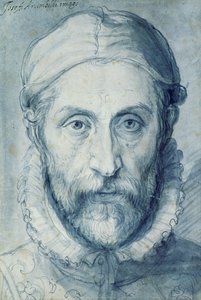
1527 - 1593 , Italien


Bleiben Sie über die neuesten Kunstnachrichten, exklusive Angebote und Dekorationsideen auf dem Laufenden.
Erzählen Sie uns von Ihrem Projekt, und unsere Kunstexperten erstellen für Sie drei personalisierte Kunstvorschläge.
Wir kuratieren 3 Optionen exklusiv für Sie – kostenlos!


 Vorschau anzeigen
 Versenden
 Teilen
 Details anzeigen

 Herunterladen
 Ähnliche Objekte
 Röntgenaufnahme
 Diashow
 Weiterlesen


