x

Giclée- oder Leinwanddruck in Museumsqualität mit schneller Produktion und flexiblen Veredelungsoptionen. ( Handgemalte Reproduktion bestellen Bild kaufen)





























Wählen Sie aus unseren vordefinierten Formaten, die den ursprünglichen Proportionen des Kunstwerks entsprechen.

Sie können Ihre eigenen Maße eingeben, um ein bestimmtes Format oder einen speziellen Platz einzupassen. Wenn das von Ihnen gewählte Format nicht den Proportionen des Originalbildes entspricht, werden wir das Kunstwerk entweder beschneiden oder das Bild mit einem gespiegelten oder einfarbigen Rand erweitern. Ein digitaler Entwurf wird Ihnen zur Genehmigung zugesandt, bevor die Produktion beginnt.
Bitte beachten Sie, dass die Vorschau auf dem Bildschirm nicht den tatsächlichen Zuschnitt oder die Erweiterung widerspiegelt. Nur der Entwurf zeigt die endgültige Komposition präzise an.
Obwohl Sondermaße verfügbar sind, empfehlen wir die Auswahl eines Maßes aus der vordefinierten Liste, um die ursprünglichen Proportionen zu bewahren.
Weltweiter Versand () innerhalb von 2 Wochen statt der üblichen 4/5 Wochen. (15 August)


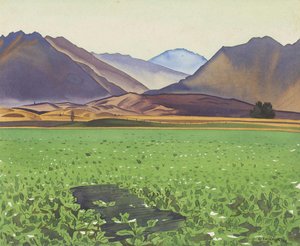
Llyn Ogwen
Format der Reproduktion
John Sell Cotman's "Llyn Ogwen," painted circa 1824, isn’t merely a depiction of a Welsh lake; it’s an immersion into the heart of Romantic sensibility. This watercolor, now meticulously reproduced for discerning collectors, captures not just a landscape but a profound mood – a quiet contemplation interwoven with the raw beauty and elemental power of Snowdonia National Park. Cotman, a pivotal figure in the Norwich School, eschewed grand historical narratives or idealized forms, instead focusing on translating the immediate impressions of nature onto paper with an unparalleled sensitivity to light and atmosphere.
The scene unfolds before us: Llyn Ogwen itself, a serene ribbon of water nestled amongst the towering peaks of Tryfan and Pen yr Ole Wen. The composition is deceptively simple – a foreground dominated by grazing cattle, reflecting in the still waters; a mid-distance showcasing the rugged slopes of the mountains; and a dramatic sky hinting at both brooding clouds and fleeting sunlight. Cotman’s genius lies not in precise detail but in his masterful use of *wash*—layers of diluted color applied with delicate brushstrokes to create an ethereal, almost dreamlike quality. Notice how he doesn't attempt to render every rock or blade of grass; instead, he suggests them through subtle tonal variations and carefully placed highlights, allowing the viewer’s imagination to complete the picture.
Cotman’s work is inextricably linked to the Norwich School, a movement that championed the unique character of the Norfolk countryside. Unlike many artists of his time preoccupied with classical ideals or grand historical scenes, Cotman sought to capture the immediate beauty and emotional resonance of the local landscape. This painting exemplifies this approach perfectly – it's not a romanticized idealization but a genuine observation imbued with a deep sense of connection to the natural world. The influence of J.M.W. Turner is palpable here; both artists shared a fascination with capturing fleeting moments of light and atmosphere, employing similar techniques of *plein air* painting and expressive brushwork.
The historical context surrounding "Llyn Ogwen" is equally compelling. Painted in the early 19th century, it reflects the burgeoning Romantic movement’s emphasis on emotion, imagination, and the sublime power of nature. The legend associated with Llyn Ogwen – the tale of Excalibur being cast into its depths by Sir Bedivere – adds a layer of mythic resonance to the scene, suggesting a connection between the landscape and ancient lore. The inclusion of cattle further grounds the image in everyday life, reminding us of the enduring relationship between humanity and nature.
Cotman’s technique is characterized by an extraordinary control over watercolor—a medium he elevated to new heights. He expertly manipulated the flow and transparency of the pigment, creating a remarkable sense of depth and atmosphere. The use of *dry brush* techniques adds texture and definition to the mountains, while washes of color evoke the shimmering light on the water’s surface. The composition itself is carefully balanced—the vertical thrust of the mountains contrasts with the horizontal flow of the lake, creating a dynamic visual harmony.
Beyond its technical brilliance, "Llyn Ogwen" is rich in symbolism. The lake represents tranquility and reflection, while the towering mountains embody strength and resilience. The cattle symbolize the connection between humanity and nature, suggesting a harmonious coexistence. The painting’s overall mood—a blend of serenity and drama—reflects the Romantic ideal of the sublime – an experience that evokes both awe and terror in the face of nature's grandeur.
A hand-painted reproduction of "Llyn Ogwen" offers a remarkable opportunity to bring this timeless masterpiece into your home or office. The meticulous attention to detail, combined with Cotman’s masterful use of color and light, ensures that the painting retains its emotional impact and visual beauty. Whether you're an art enthusiast, a collector seeking a statement piece, or simply someone who appreciates the evocative power of landscape art, this reproduction is sure to captivate and inspire.

John Sell Cotman war ein bedeutender englischer Künstler, der für seine Marine- und Landschaftsbilder, Radierungen, Illustrationen und Schriften bekannt ist. Geboren in einer wohlhabenden Familie von Seidenhändlern und Spitzenhändlern in Norwich, England, zeigte er schon früh eine Begabung für die Kunst und erhielt eine Ausbildung an der Norwich School. Sein künstlerischer Werdegang spiegelt eine tiefe Verbindung zur Natur wider und ein Engagement, ihre Schönheit mit akribischer Detailgenauigkeit festzuhalten.
Cotmans formelle künstlerische Ausbildung begann, als er 1798 nach London umzog. Dieser Umzug erwies sich als entscheidend, da er ihn einflussreichen Künstlern wie J.M.W. Turner, Peter de Wint und Thomas Girtin vorstellte. Er trat begeistert dem Sketching Club von Girtin bei und nahm an Exkursionen nach Wales und Surrey teil, die seine künstlerische Perspektive maßgeblich prägten. Seine erste Ausstellung in der Royal Academy fand 1800 statt und zeigte Szenen aus Surrey und Harlech Castle, was den Beginn einer produktiven Karriere markierte.
Cotman wurde zu einer führenden Figur der Norwich School von Künstlern, einer Gruppe, die für ihren Fokus auf die Darstellung der Norfolk-Landschaft und ihrer Umgebung mit Realismus und Sensibilität bekannt ist. Sein Stil zeichnet sich aus durch:
Cotmans künstlerisches Erbe ist in zahlreichen Sammlungen auf der ganzen Welt erhalten geblieben. Das Castle Museum and Art Gallery in Norwich beherbergt die umfangreichste Sammlung seiner Arbeiten mit über 2000 Stücken. Seine Gemälde sind auch in renommierten Institutionen vertreten, wie:
Einige bemerkenswerte Werke sind:
John Sell Cotmans Einfluss reichte über seine eigenen künstlerischen Leistungen hinaus. Er spielte eine entscheidende Rolle bei der Gestaltung der Entwicklung der britischen Kunst, insbesondere innerhalb der Norwich School-Bewegung. Seine Söhne, Miles Edmund Cotman und John Joseph Cotman, verfolgten ebenfalls Karrieren als Maler und trugen so zum bleibenden Vermächtnis der Familie in der Kunstwelt bei.
Für weitere Informationen über das Leben und Werk von John Sell Cotman besuchen Sie bitte Most-Famous-Paintings.com oder konsultieren Sie seine Wikipedia-Seite.

1782 - 1842 , Vereinigtes Königreich

Entdecken Sie die 10 legendärsten Aquarellwerke der Kunstgeschichte! Von Turner bis Monet – erleben Sie die Geschichten, Techniken & Farben dieser Meisterwerke. Finden Sie hochwertige Kunstdrucke auf Most-Famous-Paintings.com und gestalten Sie Ihr Zuhause mit zeitloser Eleganz.

Explore the captivating world of watercolor painting! Discover its rich history, essential techniques, influential artists & collecting tips. A comprehensive guide for art enthusiasts from Most-Famous-Paintings.

Entdecken Sie die faszinierende Welt der Aquarellmalerei! Von historischen Ursprüngen bis zu modernen Techniken – wir bieten Expertenwissen, Inspiration und Tipps für Anfänger & Fortgeschrittene.

Explore the captivating world of watercolor painting! Discover its rich history, essential techniques, influential artists & collecting tips from art experts. A comprehensive guide for enthusiasts.
Entdecken Sie die 10 schönsten Landschaftsbilder der Kunstgeschichte! Von Monet bis Van Gogh – erfahren Sie die Geschichten hinter Meisterwerken & finden Sie Inspiration für Ihr Zuhause. Hochwertige Kunstdrucke auf Most-Famous-Paintings.com.


Bleiben Sie über die neuesten Kunstnachrichten, exklusive Angebote und Dekorationsideen auf dem Laufenden.
Erzählen Sie uns von Ihrem Projekt, und unsere Kunstexperten erstellen für Sie drei personalisierte Kunstvorschläge.
Wir kuratieren 3 Optionen exklusiv für Sie – kostenlos!


 Vorschau anzeigen
 Versenden
 Teilen
 Details anzeigen

 Herunterladen
 Ähnliche Objekte
 Röntgenaufnahme
 Diashow


 Weiterlesen







 Die Glasoption ist nur für Größen unter 110 cm verfügbar.