


x

 Oil On CanvasWallArtSurrealist Movement
 1927Modern
 54.0 x 65.0 cm
Giclée- oder Leinwanddruck in Museumsqualität mit schneller Produktion und flexiblen Veredelungsoptionen. ( Handgemalte Reproduktion bestellen Bild kaufen)





























Wählen Sie aus unseren vordefinierten Formaten, die den ursprünglichen Proportionen des Kunstwerks entsprechen.

Sie können Ihre eigenen Maße eingeben, um ein bestimmtes Format oder einen speziellen Platz einzupassen. Wenn das von Ihnen gewählte Format nicht den Proportionen des Originalbildes entspricht, werden wir das Kunstwerk entweder beschneiden oder das Bild mit einem gespiegelten oder einfarbigen Rand erweitern. Ein digitaler Entwurf wird Ihnen zur Genehmigung zugesandt, bevor die Produktion beginnt.
Bitte beachten Sie, dass die Vorschau auf dem Bildschirm nicht den tatsächlichen Zuschnitt oder die Erweiterung widerspiegelt. Nur der Entwurf zeigt die endgültige Komposition präzise an.
Obwohl Sondermaße verfügbar sind, empfehlen wir die Auswahl eines Maßes aus der vordefinierten Liste, um die ursprünglichen Proportionen zu bewahren.
Weltweiter Versand () innerhalb von 2 Wochen statt der üblichen 4/5 Wochen. (21 August)


Fishbone Forest
Format der Reproduktion
In the hauntingly beautiful 1927 masterpiece “Fishbone Forest,” Max Ernst invites us to step beyond the threshold of reality and into a realm where the boundaries of the conscious mind dissolve. This seminal work of Surrealism is far more than a mere landscape; it is a psychological labyrinth, a carefully constructed vision that captures the unsettling tension between life and death. As one gazes upon the canvas, the eye is immediately drawn to the celestial duality of a luminous sun encircled by a moon-like disc, casting an ethereal glow over a world that feels simultaneously ancient and alien. The composition is populated by scattered sheep, some resting in tranquil repose while others stand alert, creating an incongruous tableau that disrupts our conventional understanding of nature. It is a scene that breathes with the restless energy of a dream, making it an extraordinary centerpiece for any collection seeking to provoke thought and conversation.
The technical brilliance of Ernst’s execution lies in his revolutionary approach to texture and materiality. Drawing from his experimental years at Bonn University, Ernst utilized frottage and grattage—techniques involving the rubbing and scraping of surfaces to reveal organic, hidden patterns. Through these methods, he achieved a tactile richness that makes the canvas appear to pulse with life. The skeletal, bone-like structures that emerge from the earth and sky are not merely painted; they seem to have been unearthed from the very fabric of the canvas itself. This mastery of texture allows the viewer to feel the grit and the organic decay of the forest, providing a sensory depth that is essential for those looking to bring a sophisticated, multi-dimensional element into a curated interior space.
Beyond its striking visual surface, “Fishbone Forest” serves as a profound meditation on the human condition. Ernst masterfully juxtaposes symbols of innocence with emblems of mortality. The soft, vulnerable presence of the sheep represents purity and the enduring cycle of life, yet they are inextricably woven into a landscape defined by skeletal forms and structural decay. This deliberate tension reflects the core tenets of the Surrealist movement: the confrontation of existential anxieties through the celebration of the irrational. For the discerning collector or interior designer, this painting offers more than aesthetic pleasure; it provides an emotional anchor, a piece that embodies the beautiful contradictions of our existence—the way beauty can be found within the unsettling and how life persists amidst the remnants of the past.
To possess a reproduction of such a significant work is to invite a piece of art history into one's home. Whether placed in a minimalist modern gallery or a richly textured study, “Fishbone Forest” commands attention through its ability to evoke wonder and introspection. It remains a testament to Max Ernst’s legacy as a pioneer who dared to bypass logic to tap directly into the primal imagery of the human psyche, offering a window into a world where the only rule is the boundless freedom of the imagination.


1891 - 1976 , Deutschland

Step into a world of dreams with our guide to the 10 greatest Surrealist masterpieces. From Dali to Magritte, explore the stories behind these iconic works and find museum-quality art reproductions for your decor. Discover all masterpieces on Most-Famous-Paintings.com.

Step into a world of dreams with our guide to the 10 greatest Surrealist masterpieces. From Dali to Magritte, explore the stories behind these iconic works and find museum-quality art reproductions for your decor. Discover all masterpieces on Most-Famous-Paintings.com.
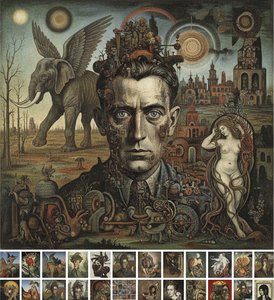
Step into the dreamscapes of Max Ernst. Explore 25 iconic Surrealist masterpieces, from pioneering collage to haunting Frottage techniques. Find inspiration for your collection with museum-quality art reproductions and curated decor ideas. Discover all masterpieces on Most-Famous-Paintings.com.


Bleiben Sie über die neuesten Kunstnachrichten, exklusive Angebote und Dekorationsideen auf dem Laufenden.
Erzählen Sie uns von Ihrem Projekt, und unsere Kunstexperten erstellen für Sie drei personalisierte Kunstvorschläge.
Wir kuratieren 3 Optionen exklusiv für Sie – kostenlos!


 Vorschau anzeigen
 Versenden
 Teilen
 Details anzeigen

 Herunterladen
 Ähnliche Objekte
 Röntgenaufnahme
 Diashow
 Weiterlesen







 Die Glasoption ist nur für Größen unter 110 cm verfügbar.


