x

 Öl auf LeinwandWandkunstPost-Impressionism
 187319. Jahrhundert
 44.0 x 34.0 cm
Handgemaltes Ölgemälde auf Leinwand in Ihrer Wunschgröße und mit Rahmen, auf Bestellung von unseren Künstlern angefertigt. ( Druck bestellen Bild kaufen)





























Wählen Sie aus unseren vordefinierten Formaten, die den ursprünglichen Proportionen des Kunstwerks entsprechen.

Sie können Ihre eigenen Maße eingeben, um einen bestimmten Rahmen oder Platz auszufüllen. Wenn die gewählte Größe nicht den Proportionen des Originalbildes entspricht, werden wir das Kunstwerk entweder beschneiden oder das Gemälde durch zusätzliche, handgemalte Elemente erweitern. Ein digitales Mockup wird Ihnen zur Genehmigung zugesandt, bevor die Produktion beginnt.
Bitte beachten Sie, dass die Bildschirmvorschau nicht die tatsächliche Beschneidung oder Erweiterung widerspiegelt. Nur das Mockup zeigt die endgültige Komposition exakt an.
Obwohl Sondermaße verfügbar sind, empfehlen wir, eine Größe aus der vordefinierten Liste zu wählen, um die ursprünglichen Proportionen beizubehalten.
Weltweiter Versand () in nur 3 bis 4 Wochen statt der üblichen 5 Wochen. (16 August). Keine Kompromisse bei der Qualität.


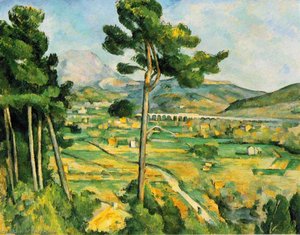
Ansicht von Auvers-sur-Oise
Format der Reproduktion
Paul Cézanne's "View of Auvers-sur-Oise" isn't merely a landscape painting; it’s a profound meditation on perception, light, and the very essence of being. Completed in 1879-80 during his sojourn in the small Provençal village that would tragically become the backdrop to Vincent van Gogh’s final days, this work represents a pivotal moment in Cézanne's artistic evolution – a bridge between the fleeting impressions of Impressionism and the nascent explorations of Cubism. The painting captures a deceptively simple scene: a cluster of houses nestled amongst rolling hills beneath a vast, azure sky, yet within its quiet composition lies an astonishing depth of observation and a revolutionary approach to depicting reality.
Cézanne’s genius lay not in replicating the visual world with photographic accuracy, but rather in distilling it into its fundamental forms. He sought to capture the *feeling* of a place, the way light interacts with surfaces, and the underlying structure that gives form to everything we see. This is immediately evident in "View of Auvers-sur-Oise." The houses aren’t rendered as individual buildings; instead, they are suggested through blocks of color and geometric shapes – rectangles, squares, and triangles – arranged in a way that evokes their presence without explicitly defining them. The trees, too, are simplified, reduced to essential brushstrokes that convey their volume and texture rather than meticulously detailing every branch or leaf. This technique, heavily influenced by Japanese prints he’d studied extensively, demonstrates Cézanne's deliberate rejection of traditional perspective and his embrace of a more subjective, internalized way of seeing.
To understand “View of Auvers-sur-Oise,” it’s crucial to consider the artist's personal circumstances at the time. Cézanne had moved to Auvers in 1879, seeking respite from the bustling art scene of Paris and a chance to reconnect with his roots in Provence. The village itself held a particular significance for him – it was where he would later spend his final months, tragically succumbing to illness under Van Gogh’s care. This period of intense introspection profoundly shaped Cézanne's artistic vision, leading him to explore themes of memory, time, and the relationship between the artist and nature.
Cézanne’s artistic journey was marked by a gradual shift away from Impressionism towards a more structured and analytical approach. Early influences included Romantic landscape painters like Jean-Baptiste Millet, whose depictions of rural life emphasized the dignity and simplicity of peasant labor. He also drew inspiration from Realist artists such as Gustave Courbet, who sought to represent the world with unflinching honesty. However, it was his encounter with Japanese prints – particularly those depicting landscapes and water scenes – that proved to be a transformative experience. These prints taught him to see space not as a linear perspective but as a series of overlapping planes, a concept he would later apply to his own work.
While seemingly straightforward, “View of Auvers-sur-Oise” is rich in symbolic meaning. The village itself represents a retreat from the complexities of modern life, a return to a simpler, more authentic existence. The rolling hills evoke a sense of timelessness and tranquility, while the vast sky suggests an infinite expanse beyond human comprehension. The presence of people – though largely indistinct – hints at the vitality and community that define rural life.
More profoundly, the painting embodies Cézanne’s own struggle to reconcile his artistic ambitions with his personal demons. The quiet solitude of Auvers-sur-Oise mirrored his internal turmoil, as he grappled with questions of identity, mortality, and the nature of art itself. "View of Auvers-sur-Oise" is not simply a depiction of a place; it’s a visual expression of an artist's soul – a testament to his unwavering commitment to capturing the essence of reality through innovative techniques and profound observation.
Most-Famous-Paintings offers meticulously crafted, hand-painted oil painting reproductions of Paul Cézanne’s “View of Auvers-sur-Oise,” allowing art enthusiasts to experience this iconic masterpiece in stunning detail. Our skilled artisans painstakingly recreate Cézanne's broken brushstrokes, vibrant color palette, and unique compositional techniques, ensuring that each reproduction captures the spirit and emotional depth of the original painting. Whether you’re a seasoned collector or simply seeking to bring a touch of Provençal beauty into your home, our reproductions provide an authentic and affordable way to connect with one of art history's most influential figures.
Explore our collection today and discover the timeless allure of “View of Auvers-sur-Oise” – a painting that continues to inspire and captivate viewers around the world. View of Auvers by Paul Cézanne – a window into the soul of Provence.


1839 - 1906 , Frankreich

Explore the profound evolution of Post-Impressionist landscapes. From Van Gogh's emotional brushwork to Cézanne's structural mastery, discover how these visionaries redefined art history through color and form in this expert guide for fine art enthusiasts.


Bleiben Sie über die neuesten Kunstnachrichten, exklusive Angebote und Dekorationsideen auf dem Laufenden.
Erzählen Sie uns von Ihrem Projekt, und unsere Kunstexperten erstellen für Sie drei personalisierte Kunstvorschläge.
Wir kuratieren 3 Optionen exklusiv für Sie – kostenlos!


 Vorschau anzeigen
 Versenden
 Teilen
 Details anzeigen

 Herunterladen
 Ähnliche Objekte
 Röntgenaufnahme
 Diashow
 Weiterlesen







 Die Glasoption ist nur für Größen unter 110 cm verfügbar.