x

 Öl auf LeinwandWandkunstPost-Impressionism
 188219. Jahrhundert
 71.0 x 73.0 cm
 Museu de Arte
Giclée- oder Leinwanddruck in Museumsqualität mit schneller Produktion und flexiblen Veredelungsoptionen. ( Handgemalte Reproduktion bestellen Bild kaufen)





























Wählen Sie aus unseren vordefinierten Formaten, die den ursprünglichen Proportionen des Kunstwerks entsprechen.

Sie können Ihre eigenen Maße eingeben, um ein bestimmtes Format oder einen speziellen Platz einzupassen. Wenn das von Ihnen gewählte Format nicht den Proportionen des Originalbildes entspricht, werden wir das Kunstwerk entweder beschneiden oder das Bild mit einem gespiegelten oder einfarbigen Rand erweitern. Ein digitaler Entwurf wird Ihnen zur Genehmigung zugesandt, bevor die Produktion beginnt.
Bitte beachten Sie, dass die Vorschau auf dem Bildschirm nicht den tatsächlichen Zuschnitt oder die Erweiterung widerspiegelt. Nur der Entwurf zeigt die endgültige Komposition präzise an.
Obwohl Sondermaße verfügbar sind, empfehlen wir die Auswahl eines Maßes aus der vordefinierten Liste, um die ursprünglichen Proportionen zu bewahren.
Weltweiter Versand () innerhalb von 2 Wochen statt der üblichen 4/5 Wochen. (15 August)


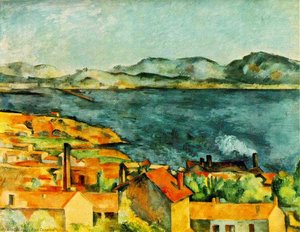
Rochedos em L'Estaque
Format der Reproduktion
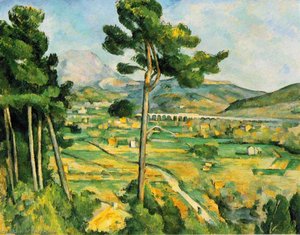
“Rocks at L’Estaque” by Pierre-Auguste Renoir captures the serene beauty of Provence with Impressionistic brushstrokes and vibrant colors—a cornerstone of French art history.
This captivating oil on canvas painting, created in 1882 by Paul Cézanne, exemplifies his distinctive style and represents a pivotal moment in the Post-Impressionist movement. Measuring 71 x 73 cm and currently residing at the Museo de Arte in São Paulo, Brazil, Rocks at L'Estaque transcends mere representation of a landscape; it embodies Cézanne’s profound engagement with capturing the essence of nature.
The painting depicts a mountainous terrain dominated by several hills receding into the distance. Two prominent rock formations command attention in the foreground, positioned on either side of the image—a testament to Cézanne's meticulous observation and his rejection of traditional perspective techniques. Water reflects the sunlight, adding depth and tranquility to the scene and creating an impression of vastness.
Cézanne’s artistic approach is characterized by bold brushstrokes and a deliberate simplification of forms—a hallmark of Post-Impressionism. Unlike Impressionists who sought to capture fleeting moments of light, Cézanne focused on conveying the underlying structure of objects, prioritizing solidity and permanence. The painting's palette utilizes earthy tones – ochre, greyish hues – combined with vibrant greens reflecting the vegetation, resulting in a harmonious blend that conveys both visual richness and emotional resonance.
Created during Cézanne’s formative years, Rocks at L'Estaque stands as a crucial precursor to Cubism and profoundly influenced subsequent generations of artists, including Pablo Picasso and Henri Matisse. Cézanne’s innovative method challenged academic conventions and paved the way for exploring new artistic languages—a legacy that continues to inspire contemporary art.
These paintings—like Rocks at L'Estaque—demonstrate Cézanne’s mastery of Post-Impressionism and his ability to distill complex visual sensations into powerfully expressive compositions.
For those seeking a stunning reproduction of this iconic artwork, Rocks at L'Estaque offers exceptional quality and detail—bringing Cézanne’s vision to life in your home.
Furthermore, the Museo de Arte in São Paulo provides a rich context for appreciating Cézanne’s artistic achievements alongside other masterpieces of European art history. Explore more about Paul Cézanne's life and work on Paul Cézanne's Wikipedia page.


1839 - 1906 , Frankreich

Explore the transformative era of Post-Impressionism. Discover how masters like Van Gogh moved beyond light to embrace emotion, structure, and vibrant color, redefining modern art history through expressive brushwork and symbolic depth.


Bleiben Sie über die neuesten Kunstnachrichten, exklusive Angebote und Dekorationsideen auf dem Laufenden.
Erzählen Sie uns von Ihrem Projekt, und unsere Kunstexperten erstellen für Sie drei personalisierte Kunstvorschläge.
Wir kuratieren 3 Optionen exklusiv für Sie – kostenlos!


 Vorschau anzeigen
 Versenden
 Teilen
 Details anzeigen

 Herunterladen
 Ähnliche Objekte
 Röntgenaufnahme
 Diashow
 Weiterlesen







 Die Glasoption ist nur für Größen unter 110 cm verfügbar.