x

Handgemaltes Ölgemälde auf Leinwand in Ihrer Wunschgröße und mit Rahmen, auf Bestellung von unseren Künstlern angefertigt. ( Druck bestellen Bild kaufen)





























Wählen Sie aus unseren vordefinierten Formaten, die den ursprünglichen Proportionen des Kunstwerks entsprechen.

Sie können Ihre eigenen Maße eingeben, um einen bestimmten Rahmen oder Platz auszufüllen. Wenn die gewählte Größe nicht den Proportionen des Originalbildes entspricht, werden wir das Kunstwerk entweder beschneiden oder das Gemälde durch zusätzliche, handgemalte Elemente erweitern. Ein digitales Mockup wird Ihnen zur Genehmigung zugesandt, bevor die Produktion beginnt.
Bitte beachten Sie, dass die Bildschirmvorschau nicht die tatsächliche Beschneidung oder Erweiterung widerspiegelt. Nur das Mockup zeigt die endgültige Komposition exakt an.
Obwohl Sondermaße verfügbar sind, empfehlen wir, eine Größe aus der vordefinierten Liste zu wählen, um die ursprünglichen Proportionen beizubehalten.
Weltweiter Versand () in nur 3 bis 4 Wochen statt der üblichen 5 Wochen. (20 August). Keine Kompromisse bei der Qualität.


Houndsditch
Format der Reproduktion
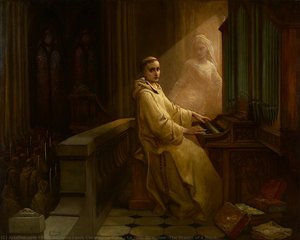
Gustave Doré’s “Houndsditch,” completed in 1872, isn't merely a depiction of a London street; it’s a visceral plunge into the heart of Victorian urban decay and social misery. Born in Strasbourg in 1832, Doré possessed an unparalleled ability to translate emotion onto canvas—or rather, etching plate—capturing not just visual reality but also the palpable atmosphere of his time.
The engraving emerged during a period marked by rapid industrialization and burgeoning poverty in London’s East End. Doré meticulously researched the conditions of life for the working class, documenting the squalid tenements and desperate faces that characterized this era with unflinching honesty. It reflects anxieties surrounding social reform and the moral failings of Victorian society.
The artwork’s stark grayscale palette—a deliberate choice by Doré—amplifies the sense of gloom and emphasizes textural detail. Employing dense cross-hatching, he skillfully simulates the rough surfaces of crumbling buildings and worn clothing, creating a remarkably convincing illusion of depth. Doré’s mastery lies in his masterful use of line work; fine lines delineate facial features and clothing folds, while broader strokes define architectural elements with precision.
Linear perspective is expertly utilized to draw the viewer into the narrow alleyway, enhancing the claustrophobic feeling of the scene. Overlapping figures and buildings further contribute to this effect, reinforcing Doré’s commitment to realism and conveying a profound understanding of spatial relationships.
Beyond its realistic portrayal, “Houndsditch” operates on a symbolic level. The cramped alleyway represents the oppressive confines of poverty and social injustice, mirroring the psychological burden carried by those trapped within such circumstances. Doré’s dramatic lighting—a single gas lamp casting harsh shadows—underscores the bleakness of the scene and evokes feelings of despair and vulnerability.
The engraving powerfully communicates themes of hardship and neglect, prompting contemplation on the ethical responsibilities of society towards its most vulnerable members. The overall mood is one of profound sadness and moral indictment – a testament to Doré’s ability to infuse his art with emotional resonance.
“Houndsditch” firmly establishes itself within the Romantic movement, which championed emotion and imagination as responses to societal ills. Doré’s work aligns with this artistic tradition’s fascination for depicting human suffering and confronting uncomfortable truths about social conditions—a courageous stance against the prevailing optimism of the era.
The engraving's subject matter – impoverished individuals struggling amidst urban decay – speaks directly to Romantic ideals of compassion and moral reform. It serves as a poignant reminder that art can serve as both documentation and catalyst for change, capturing not only what is seen but also what is felt.
Doré’s style embodies dramatic realism—a technique characterized by meticulous detail and unflinching portrayal of human experience. His unwavering dedication to accuracy combined with expressive line work elevates “Houndsditch” beyond mere illustration, transforming it into a timeless masterpiece that continues to inspire awe and provoke reflection.


1832 - 1883 , Frankreich

Journey through the evolution of cityscape art, from Monet’s Impressionist streets to contemporary urban narratives. Explore the history of iconic urban landscapes and discover museum-quality, hand-painted oil reproductions of the world's most beloved masterpieces.


Bleiben Sie über die neuesten Kunstnachrichten, exklusive Angebote und Dekorationsideen auf dem Laufenden.
Erzählen Sie uns von Ihrem Projekt, und unsere Kunstexperten erstellen für Sie drei personalisierte Kunstvorschläge.
Wir kuratieren 3 Optionen exklusiv für Sie – kostenlos!


 Vorschau anzeigen
 Versenden
 Teilen
 Details anzeigen

 Herunterladen
 Ähnliche Objekte
 Röntgenaufnahme
 Diashow

 Weiterlesen







 Die Glasoption ist nur für Größen unter 110 cm verfügbar.