


x

 Acryl auf LeinwandWandkunstCubist
 1911Renaissance
 79.0 x 109.0 cm
Giclée- oder Leinwanddruck in Museumsqualität mit schneller Produktion und flexiblen Veredelungsoptionen. ( Handgemalte Reproduktion bestellen Bild kaufen)





























Wählen Sie aus unseren vordefinierten Formaten, die den ursprünglichen Proportionen des Kunstwerks entsprechen.

Sie können Ihre eigenen Maße eingeben, um ein bestimmtes Format oder einen speziellen Platz einzupassen. Wenn das von Ihnen gewählte Format nicht den Proportionen des Originalbildes entspricht, werden wir das Kunstwerk entweder beschneiden oder das Bild mit einem gespiegelten oder einfarbigen Rand erweitern. Ein digitaler Entwurf wird Ihnen zur Genehmigung zugesandt, bevor die Produktion beginnt.
Bitte beachten Sie, dass die Vorschau auf dem Bildschirm nicht den tatsächlichen Zuschnitt oder die Erweiterung widerspiegelt. Nur der Entwurf zeigt die endgültige Komposition präzise an.
Obwohl Sondermaße verfügbar sind, empfehlen wir die Auswahl eines Maßes aus der vordefinierten Liste, um die ursprünglichen Proportionen zu bewahren.
Weltweiter Versand () innerhalb von 2 Wochen statt der üblichen 4/5 Wochen. (23 August)


Die Graue Baum
Format der Reproduktion
Piet Mondrian’s *The Gray Tree*, painted in 1911, stands as a cornerstone of early Cubism and represents a pivotal moment in the artist's artistic evolution. More than just a depiction of nature—albeit an abstracted one—it embodies Mondrian’s unwavering commitment to distilling visual experience into its purest geometric essence.
Early Influences & The Shift Towards Abstraction
Cubist Elements in *The Gray Tree*
The painting’s stark simplicity is deceptive. At first glance, it appears to portray a solitary tree against a muted gray background—a deliberate choice that underscores Mondrian's rejection of naturalistic representation. However, closer examination reveals the meticulous application of geometric shapes: black rectangles and white squares intersect to create a dynamic interplay of lines and planes.
“The tree,” Mondrian wrote in 1914, “should be approached as if it were a sign on paper.” This statement encapsulates his artistic philosophy—a desire to transcend the mundane and capture something universal through abstract form. The artist’s goal was not to reproduce what he saw but rather to express an underlying harmony of geometric relationships.
Artistic Significance & Legacy
*The Gray Tree* is considered a precursor to Mondrian's later Neoplasticism style, which solidified his belief in the primacy of primary colors—red, yellow, and blue—and geometric shapes as instruments of artistic expression. This stylistic breakthrough profoundly impacted the trajectory of 20th-century art.
Mondrian’s influence extends far beyond painting itself, permeating fields such as architecture, design, and typography. His unwavering conviction in the power of abstraction continues to inspire artists today who seek to communicate ideas with clarity and precision—a testament to the enduring legacy of *The Gray Tree* and Mondrian's groundbreaking contribution to modern art.
Where to See It
A remarkable reproduction of *The Gray Tree* can be viewed at Most-Famous-Paintings.com, offering a captivating glimpse into the artistic vision of Piet Mondrian.

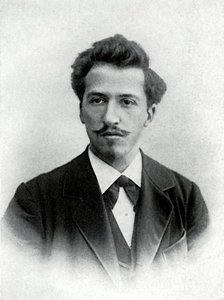
1872 - 1944 , Niederlande

Explore the profound impact of Minimalism and Geometric Abstraction. From Mondrian to Malevich, discover how stripping art to its essential forms revolutionized modern aesthetics through our expert-led historical guide.

Explore the revolutionary world of Cubism. Discover how masters Pablo Picasso and Georges Braque dismantled reality through geometric abstraction to redefine modern art history.


Bleiben Sie über die neuesten Kunstnachrichten, exklusive Angebote und Dekorationsideen auf dem Laufenden.
Erzählen Sie uns von Ihrem Projekt, und unsere Kunstexperten erstellen für Sie drei personalisierte Kunstvorschläge.
Wir kuratieren 3 Optionen exklusiv für Sie – kostenlos!


 Vorschau anzeigen
 Versenden
 Teilen
 Details anzeigen

 Herunterladen
 Ähnliche Objekte
 Röntgenaufnahme
 Diashow
 Weiterlesen







 Die Glasoption ist nur für Größen unter 110 cm verfügbar.


