


x

Giclée- oder Leinwanddruck in Museumsqualität mit schneller Produktion und flexiblen Veredelungsoptionen. ( Handgemalte Reproduktion bestellen Bild kaufen)





























Wählen Sie aus unseren vordefinierten Formaten, die den ursprünglichen Proportionen des Kunstwerks entsprechen.

Sie können Ihre eigenen Maße eingeben, um ein bestimmtes Format oder einen speziellen Platz einzupassen. Wenn das von Ihnen gewählte Format nicht den Proportionen des Originalbildes entspricht, werden wir das Kunstwerk entweder beschneiden oder das Bild mit einem gespiegelten oder einfarbigen Rand erweitern. Ein digitaler Entwurf wird Ihnen zur Genehmigung zugesandt, bevor die Produktion beginnt.
Bitte beachten Sie, dass die Vorschau auf dem Bildschirm nicht den tatsächlichen Zuschnitt oder die Erweiterung widerspiegelt. Nur der Entwurf zeigt die endgültige Komposition präzise an.
Obwohl Sondermaße verfügbar sind, empfehlen wir die Auswahl eines Maßes aus der vordefinierten Liste, um die ursprünglichen Proportionen zu bewahren.
Weltweiter Versand () innerhalb von 2 Wochen statt der üblichen 4/5 Wochen. (18 August)


Untitled
Format der Reproduktion
Purvis Young's art wasn’t born within the pristine walls of an artist’s studio, but rather emerged from the vibrant, often turbulent streets of Miami’s Overtown neighborhood. This particular piece, “Untitled” (1980), is a potent distillation of that lived experience—a layered testament to a community’s resilience, its struggles, and its enduring spirit. It's not merely a painting; it’s an archive, a memory captured in ink and paper, a window into a forgotten corner of American history.
The artwork itself is a captivating assemblage, dominated by a stack of aged books – their yellowed pages hinting at countless stories absorbed and then largely discarded. These aren't simply decorative; they’re the foundation upon which Young constructs his narrative. Affixed to the front cover is an abstract painting—a dynamic swirl of black ink against a textured background of browns, tans, and subtle blues. The style leans heavily into expressionism, mirroring the raw emotion and immediacy of Young’s process. There's a deliberate lack of polish; the brushstrokes are visible, the edges frayed, suggesting a work created with urgency and without meticulous planning – a reflection of Young’s own approach to his art.
Young’s genius lay in his resourceful use of discarded materials. He didn't seek out canvases or traditional paints; instead, he embraced the detritus of urban life—old books, newspapers, magazines, correspondence, and even discarded bills – transforming them into the very fabric of his art. “Untitled” exemplifies this perfectly. The books themselves are not just a backdrop but actively contribute to the composition, their worn covers and fragmented pages symbolizing forgotten histories and untold narratives. The layering of these found elements creates a rich tapestry of textures and visual information, inviting the viewer to piece together their own interpretation.
The abstract painting adhered to the book cover adds another layer of complexity. It’s difficult to discern specific figures or forms within its swirling patterns, yet it evokes a sense of movement, energy, and perhaps even chaos – mirroring the social dynamics of Overtown at the time. Young often used these abstract elements as vehicles for expressing emotions and ideas that were difficult to articulate directly.
To fully appreciate “Untitled,” it’s crucial to understand the historical context surrounding Purvis Young's work. Overtown, a predominantly Black neighborhood in Miami, was a vibrant hub of Jamaican culture and community life in the mid-20th century. However, by the late 1960s, it faced systematic displacement due to urban renewal projects – specifically, the construction of Interstate 395, which effectively cleaved the neighborhood apart. Young’s art became a powerful record of this transition—a poignant documentation of Overtown's social life, its struggles, and ultimately, its loss.
The drawings within the books themselves offer glimpses into this world: basketball games, horse races, pregnant women, funerals – scenes of everyday life rendered with an arresting immediacy. They are not idealized representations; they capture the grit, the hardship, but also the joy and resilience of a community facing immense challenges.
“Untitled” is more than just a visual record; it’s imbued with potent symbolism. The aged books represent memory and the passage of time, while the fragmented pages suggest broken narratives and lost histories. The abstract painting embodies the chaotic energy of urban life and the difficulty of capturing complex emotions. Ultimately, the artwork evokes a sense of melancholy—a recognition of loss and displacement – but also a profound appreciation for the enduring spirit of a community.
Purvis Young’s work continues to resonate today because it speaks to universal themes of identity, memory, and social justice. “Untitled” is a powerful reminder that art can be born from adversity and that even the most discarded materials can hold extraordinary beauty and meaning. It's a piece that invites contemplation, sparking dialogue about history, community, and the power of artistic expression.

Purvis Young war ein amerikanischer Künstler ohne formale Ausbildung, der tief in der pulsierenden und oft herausfordernden Landschaft von Overtown, Miami, Florida, verwurzelt war. Sein Leben und sein Werk sind untrennbar mit dieser historisch schwarzen Nachbarschaft verbunden, die er mit unerschütterlicher Ehrlichkeit und tiefem Mitgefühl darstellte. Young’s künstlerische Reise begann ohne formale Ausbildung; stattdessen lernte er durch Beobachtung, Erfahrung und eine unermüdliche Hingabe, das Wesen seiner Umgebung einzufangen.
Purvis Young’s Werk hat eine immense historische Bedeutung aus mehreren Gründen:

1943 - 2010 , Vereinigte Staaten von Amerika
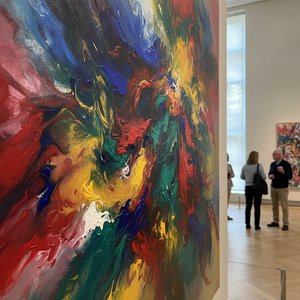
Explore the profound emotional depth of Lyrical Abstraction. Discover how masters like Raymond Parker used color and form to bridge Impressionism and Abstract Expressionism. Learn about this pivotal movement through our expert-led art history guide.

Explore the profound emotional depth of Color Field painting. Discover the history of mid-century abstraction, from Rothko to Newman, and learn how pure color transforms the viewer's experience through our expert art history guide.

Discover the profound emotional depth and investment potential of contemporary abstraction. Our expert guide explores how texture, movement, and form create timeless value for discerning art collectors and sophisticated interiors.


Bleiben Sie über die neuesten Kunstnachrichten, exklusive Angebote und Dekorationsideen auf dem Laufenden.
Erzählen Sie uns von Ihrem Projekt, und unsere Kunstexperten erstellen für Sie drei personalisierte Kunstvorschläge.
Wir kuratieren 3 Optionen exklusiv für Sie – kostenlos!


 Vorschau anzeigen
 Versenden
 Teilen
 Details anzeigen

 Herunterladen
 Ähnliche Objekte
 Röntgenaufnahme
 Diashow


 Weiterlesen







 Die Glasoption ist nur für Größen unter 110 cm verfügbar.


![Abstract Composition [triptych] — Vaclav Vytlacil, Abstract Expressionism](/media/artworks/images/thumbnails/e5/3d/e53db42ea02644b9a8e722f9d4dd3742.jpg)


