x

Giclée- oder Leinwanddruck in Museumsqualität mit schneller Produktion und flexiblen Veredelungsoptionen. ( Handgemalte Reproduktion bestellen Bild kaufen)





























Wählen Sie aus unseren vordefinierten Formaten, die den ursprünglichen Proportionen des Kunstwerks entsprechen.

Sie können Ihre eigenen Maße eingeben, um ein bestimmtes Format oder einen speziellen Platz einzupassen. Wenn das von Ihnen gewählte Format nicht den Proportionen des Originalbildes entspricht, werden wir das Kunstwerk entweder beschneiden oder das Bild mit einem gespiegelten oder einfarbigen Rand erweitern. Ein digitaler Entwurf wird Ihnen zur Genehmigung zugesandt, bevor die Produktion beginnt.
Bitte beachten Sie, dass die Vorschau auf dem Bildschirm nicht den tatsächlichen Zuschnitt oder die Erweiterung widerspiegelt. Nur der Entwurf zeigt die endgültige Komposition präzise an.
Obwohl Sondermaße verfügbar sind, empfehlen wir die Auswahl eines Maßes aus der vordefinierten Liste, um die ursprünglichen Proportionen zu bewahren.
Weltweiter Versand () innerhalb von 2 Wochen statt der üblichen 4/5 Wochen. (16 August)


Der Bankett
Format der Reproduktion
René Magritte's "The Banquet," painted in 1958, isn't merely a landscape; it’s an invitation to question the very nature of reality. This captivating oil on canvas, part of a series exploring the relationship between visibility and invisibility, stands as a cornerstone of Surrealist art – yet, remarkably, Magritte masterfully employs techniques rooted in realism to achieve his profoundly unsettling effect. The painting immediately draws the viewer into a scene that seems familiar at first glance: a stone wall, a vase, and a collection of trees stretching towards a vibrant orange sky. However, a closer look reveals a deliberate disruption, a subtle yet potent paradox that lies at the heart of Magritte’s artistic vision.
The key to understanding “The Banquet” resides in the large red circle dominating the mid-ground – a seemingly arbitrary intrusion upon the established landscape. This isn't simply an accidental blot; it’s a carefully considered element, deeply influenced by the ‘Papier Collé’ technique, a method Magritte frequently utilized. ‘Papier Collé,’ meaning “glued paper” in French, involved pasting pre-cut shapes – often brightly colored – onto a flat surface. In this instance, the circle represents the setting sun, but crucially, it obscures the trees beneath it. This creates an immediate visual tension: the sun, traditionally associated with illumination and warmth, now casts a shadow, effectively hiding part of the natural world. It’s as if reality itself is being deliberately distorted, forcing us to confront the limitations of our perception.
Magritte's genius lies in his ability to seamlessly blend Surrealist principles with a meticulous attention to detail. While firmly embedded within the Surrealist movement – a group dedicated to exploring the subconscious mind and challenging conventional notions of reality – Magritte’s work never descends into outright fantasy or grotesque imagery. Instead, he employs a deceptively realistic style, using precise brushstrokes and carefully rendered objects to create an atmosphere of unease and ambiguity. The stone wall, the vase, and the trees are depicted with remarkable accuracy, lending them a tangible presence that further emphasizes the strangeness of the central element – the concealing sun.
The painting’s composition is deliberately unsettling. The perspective subtly shifts, drawing our eye towards the red circle and prompting us to question its significance. It's not just a visual anomaly; it represents a fundamental disruption of order, mirroring Magritte’s broader thematic concerns about the hidden realities that lie beneath the surface of everyday life. The choice of materials – the rough texture of the stone wall contrasting with the smooth glaze of the vase – further contributes to this sense of discordance.
“The Banquet” is deeply rooted in Magritte’s recurring theme: the distinction between what is visible and what remains hidden. The obscured trees, rendered partially invisible by the sun's shadow, symbolize the unseen aspects of our world – memories, desires, anxieties, and perhaps even the fundamental mysteries of existence. Magritte wasn’t simply depicting a landscape; he was inviting us to contemplate the limitations of our understanding, suggesting that much remains beyond our immediate grasp.
The title itself, “The Banquet,” adds another layer of complexity. It evokes images of abundance and celebration, yet this sense of festivity is immediately undermined by the painting’s unsettling atmosphere. Is it a banquet for the senses, or a banquet for the mind – one that challenges our assumptions about what we perceive to be real? The ambiguity inherent in the title mirrors the overall effect of the artwork, prompting viewers to actively engage with its meaning and interpret its symbolism.
“The Banquet” is a testament to Magritte’s enduring influence on art. It resides within the prestigious Lindy and Bergman Collection at the Art Institute of Chicago, a fitting home for this enigmatic masterpiece. Its serene setting and vibrant colors belie its profound philosophical implications, making it an exceptional piece that continues to inspire artists and art enthusiasts alike. Reproductions of “The Banquet” offer a remarkable opportunity to bring this captivating work into your own space, inviting you to contemplate the subtle paradoxes of perception and the hidden realities that shape our world – just as Magritte intended.

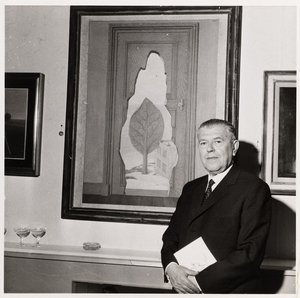
1898 - 1967 , Belgien
Entdecken Sie die 25 ikonischsten Gemälde von René Magritte! Tauchen Sie ein in die surreale Welt des belgischen Künstlers – von 'Der verlorene Jockey' bis 'Golconda'. Hochwertige Reproduktionen & Kunst für Ihr Zuhause auf Most-Famous-Paintings.com.

Explore the rich symbolism of the red dress in art history! From ancient power displays to iconic portraits like Cézanne’s 'Madame Cezanne', discover the cultural and artistic significance behind this captivating color. Expert analysis & insights.

Explore the rich history of trees in painting! Discover symbolism, Romantic masterpieces by Caspar David Friedrich & beyond. A curated journey for art enthusiasts.

Explore the rich history of trees in painting! Discover symbolism, Romantic masterpieces by Caspar David Friedrich & beyond. A curated journey for art enthusiasts.
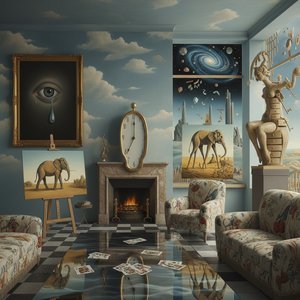
Entdecken Sie die 10 prägendsten Meisterwerke des Surrealismus! Von Dalí bis Magritte – erfahren Sie die Geschichten hinter ikonischen Gemälde und lassen Sie sich von traumhaften Welten inspirieren. Hochwertige Art Reproduktionen auf .


Bleiben Sie über die neuesten Kunstnachrichten, exklusive Angebote und Dekorationsideen auf dem Laufenden.
Erzählen Sie uns von Ihrem Projekt, und unsere Kunstexperten erstellen für Sie drei personalisierte Kunstvorschläge.
Wir kuratieren 3 Optionen exklusiv für Sie – kostenlos!


 Vorschau anzeigen
 Versenden
 Teilen
 Details anzeigen

 Herunterladen
 Ähnliche Objekte
 Röntgenaufnahme
 Diashow

 Weiterlesen







 Die Glasoption ist nur für Größen unter 110 cm verfügbar.