x

 Acrylic On CanvasWallArtSurrealist Manifestation
 1920Modern
 83.0 x 64.0 cm
Giclée- oder Leinwanddruck in Museumsqualität mit schneller Produktion und flexiblen Veredelungsoptionen. ( Handgemalte Reproduktion bestellen Bild kaufen)





























Wählen Sie aus unseren vordefinierten Formaten, die den ursprünglichen Proportionen des Kunstwerks entsprechen.

Sie können Ihre eigenen Maße eingeben, um ein bestimmtes Format oder einen speziellen Platz einzupassen. Wenn das von Ihnen gewählte Format nicht den Proportionen des Originalbildes entspricht, werden wir das Kunstwerk entweder beschneiden oder das Bild mit einem gespiegelten oder einfarbigen Rand erweitern. Ein digitaler Entwurf wird Ihnen zur Genehmigung zugesandt, bevor die Produktion beginnt.
Bitte beachten Sie, dass die Vorschau auf dem Bildschirm nicht den tatsächlichen Zuschnitt oder die Erweiterung widerspiegelt. Nur der Entwurf zeigt die endgültige Komposition präzise an.
Obwohl Sondermaße verfügbar sind, empfehlen wir die Auswahl eines Maßes aus der vordefinierten Liste, um die ursprünglichen Proportionen zu bewahren.
Weltweiter Versand () innerhalb von 2 Wochen statt der üblichen 4/5 Wochen. (15 August)


Landscape
Format der Reproduktion
René Magritte's “Landscape,” painted in 1920, is not merely a depiction of a scene; it’s an immersion into the subconscious, a meticulously crafted puzzle designed to challenge our very understanding of reality. Measuring 83 x 64 cm, this intimate work embodies the nascent surrealism that would define Magritte's career and profoundly influence generations of artists. The painting immediately arrests the viewer with its unsettling juxtaposition: a nude figure emerges from a dark, almost oppressive background, their back intertwined with the gnarled branches of trees that possess distinctly human faces. These arboreal figures, rendered in meticulous detail, are not simply decorative elements; they represent a potent symbol of memory and perhaps, the lingering presence of trauma – a direct echo of Magritte’s own childhood experience following his mother's death.
Painted in 1920, “Landscape” represents a crucial moment in Magritte’s artistic development, firmly establishing his interest in exploring the realms beyond rational perception. The year coincides with his move to Brussels and his increasing engagement with avant-garde movements. However, this work transcends simple categorization; it's deeply rooted in personal experience. The image of his mother’s corpse, recovered from the Sambre River, became a recurring motif, symbolizing not just grief but also the impossibility of truly knowing or representing the past. This early trauma fueled Magritte’s lifelong preoccupation with illusion and deception – the idea that what we perceive is often far removed from objective reality. The two birds subtly placed within the composition—one at the top left, one at the bottom right—add another layer of ambiguity, perhaps symbolizing fleeting thoughts or lost opportunities.
The symbolism within “Landscape” is layered and deliberately ambiguous. The naked figure can be interpreted as a representation of vulnerability, mortality, or even the artist himself confronting his own subconscious. The trees with faces are arguably the most compelling element, representing memory, judgment, or perhaps the silent witnesses to human suffering. Magritte’s masterful use of dark tones amplifies this sense of unease and invites viewers to confront uncomfortable questions about perception, identity, and the nature of reality. The overall effect is profoundly unsettling, prompting a deep engagement with the artwork's emotional core.
“Landscape” stands as an early example of Magritte’s mature style, foreshadowing his later explorations of surrealist themes. Created during a period of significant artistic experimentation—with movements like Dadaism and Futurism challenging traditional notions of art—Magritte's work quickly distinguished itself through its intellectual rigor and unsettling imagery. This painting demonstrates the artist's early commitment to disrupting conventional representations and inviting viewers to question their assumptions about the world around them. Its meticulous detail and haunting atmosphere continue to captivate audiences today, solidifying Magritte’s place as one of the 20th century’s most influential artists.

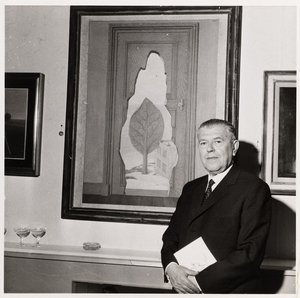
1898 - 1967 , Belgien
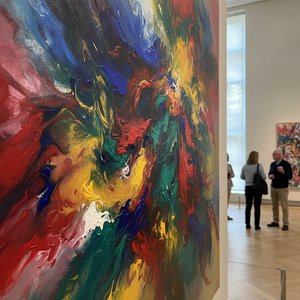
Explore the profound emotional depth of Lyrical Abstraction. Discover how masters like Raymond Parker used color and form to bridge Impressionism and Abstract Expressionism. Learn about this pivotal movement through our expert-led art history guide.

Explore the profound mystery of René Magritte’s 'The Treachery of Images.' Dive into an expert analysis of his Surrealist philosophy, the paradox of representation, and how he challenged reality through the interplay of language and visual perception.


Bleiben Sie über die neuesten Kunstnachrichten, exklusive Angebote und Dekorationsideen auf dem Laufenden.
Erzählen Sie uns von Ihrem Projekt, und unsere Kunstexperten erstellen für Sie drei personalisierte Kunstvorschläge.
Wir kuratieren 3 Optionen exklusiv für Sie – kostenlos!


 Vorschau anzeigen
 Versenden
 Teilen
 Details anzeigen

 Herunterladen
 Ähnliche Objekte
 Röntgenaufnahme
 Diashow
 Weiterlesen







 Die Glasoption ist nur für Größen unter 110 cm verfügbar.