


x

Handgemaltes Ölgemälde auf Leinwand in Ihrer Wunschgröße und mit Rahmen, auf Bestellung von unseren Künstlern angefertigt. ( Druck bestellen Bild kaufen)





























Wählen Sie aus unseren vordefinierten Formaten, die den ursprünglichen Proportionen des Kunstwerks entsprechen.

Sie können Ihre eigenen Maße eingeben, um einen bestimmten Rahmen oder Platz auszufüllen. Wenn die gewählte Größe nicht den Proportionen des Originalbildes entspricht, werden wir das Kunstwerk entweder beschneiden oder das Gemälde durch zusätzliche, handgemalte Elemente erweitern. Ein digitales Mockup wird Ihnen zur Genehmigung zugesandt, bevor die Produktion beginnt.
Bitte beachten Sie, dass die Bildschirmvorschau nicht die tatsächliche Beschneidung oder Erweiterung widerspiegelt. Nur das Mockup zeigt die endgültige Komposition exakt an.
Obwohl Sondermaße verfügbar sind, empfehlen wir, eine Größe aus der vordefinierten Liste zu wählen, um die ursprünglichen Proportionen beizubehalten.
Weltweiter Versand () in nur 3 bis 4 Wochen statt der üblichen 5 Wochen. (22 August). Keine Kompromisse bei der Qualität.


Pierre Bladelin Triptych
Format der Reproduktion
The *Pierre Bladelin Triptych*, created around 1450 by Rogier van der Weyden, stands as a testament to the profound artistic achievements of the Early Netherlandish Renaissance. More than just a depiction of biblical scenes—the Annunciation, Nativity and Visitation—it’s an immersive experience crafted with meticulous detail and imbued with an emotional resonance that continues to captivate viewers centuries later.
Artist & Context: Rogier van der Weyden (c. 1400-1464), a sculptor initially trained in Tournai, Belgium, ascended to prominence as one of the foremost painters of his era. His workshop flourished during a period marked by burgeoning humanist thought and artistic innovation—a time when artists sought to capture not merely appearances but also inner psychological states.
The triptych’s tripartite structure is deliberately designed to guide the viewer's gaze through a narrative progression. Each panel presents distinct scenes—the Annunciation, depicting Mary receiving the divine messenger Gabriel; the Nativity, portraying Jesus’ birth in Bethlehem; and the Visitation, illustrating Mary and Elizabeth meeting. These figures are rendered with astonishing accuracy, capturing their expressions of awe, compassion, and humility.
Symbolism: The inclusion of a dog beneath Mary and Joseph symbolizes fidelity and loyalty—a cornerstone of Christian virtue. The illuminated building in the second panel represents Jerusalem, symbolizing divine grace and spiritual aspiration. Light plays a crucial role throughout the triptych, emanating from Christ’s radiant halo and illuminating the faces of the figures, signifying God's presence and enlightenment.
What distinguishes this artwork is its ability to evoke profound emotion—a hallmark of van der Weyden’s artistic vision. The artist skillfully captures the psychological complexity of his subjects, conveying their inner turmoil and spiritual devotion with breathtaking subtlety. This emotive realism anticipates developments in Renaissance art that would prioritize human experience.
The *Pierre Bladelin Triptych* remains an enduring masterpiece—a symbol of Flemish artistic excellence and a powerful reminder of the transformative power of faith and beauty. Its meticulous detail, luminous colors, and expressive figures continue to inspire artists and collectors alike, securing its place as one of the most celebrated works of the Early Netherlandish Renaissance.

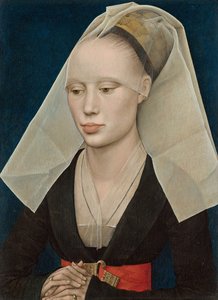
1400 - 1464 , Belgien

Entdecken Sie die 10 prägendsten Meisterwerke der Frühniederländischen Renaissance! Erfahren Sie mehr über Jan van Eyck, Rogier van der Weyden & Co. und ihre ikonischen Gemälde. Hochwertige Reproduktionen für Ihr Zuhause – jetzt auf Most-Famous-Paintings.com!

Entdecken Sie Rogier van der Weydens revolutionäre Kunst! Erfahren Sie mehr über seine Technik, ikonische Werke und den Einfluss der Frührenaissance auf die niederländische Malerei. Expertenanalyse & tiefe Einblicke.

Entdecken Sie die 10 prägendsten Meisterwerke der Frühniederländischen Malerei! Von Jan van Eyck bis Rogier van der Weyden – erleben Sie Kunstgeschichte hautnah. Hochwertige Reproduktionen & Inspiration für Ihr Interieur auf Most-Famous-Paintings.com.

Entdecken Sie die revolutionäre Kunst von Hugo van der Goes! Tiefgründige Analyse seiner Werke, bahnbrechende Technik und bleibender Einfluss auf die frühe niederländische Malerei. Für Kunstexperten & Sammler.

Explore the Northern Renaissance! Discover Jan van Eyck's innovations, religious shifts, & key artists of this influential period. Expert analysis and insights into Early Netherlandish painting at Most-Famous-Paintings.


Bleiben Sie über die neuesten Kunstnachrichten, exklusive Angebote und Dekorationsideen auf dem Laufenden.
Erzählen Sie uns von Ihrem Projekt, und unsere Kunstexperten erstellen für Sie drei personalisierte Kunstvorschläge.
Wir kuratieren 3 Optionen exklusiv für Sie – kostenlos!


 Vorschau anzeigen
 Versenden
 Teilen
 Details anzeigen

 Herunterladen
 Ähnliche Objekte
 Röntgenaufnahme
 Diashow

 Weiterlesen







 Die Glasoption ist nur für Größen unter 110 cm verfügbar.


