x

Giclée- oder Leinwanddruck in Museumsqualität mit schneller Produktion und flexiblen Veredelungsoptionen. ( Handgemalte Reproduktion bestellen Bild kaufen)





























Wählen Sie aus unseren vordefinierten Formaten, die den ursprünglichen Proportionen des Kunstwerks entsprechen.

Sie können Ihre eigenen Maße eingeben, um ein bestimmtes Format oder einen speziellen Platz einzupassen. Wenn das von Ihnen gewählte Format nicht den Proportionen des Originalbildes entspricht, werden wir das Kunstwerk entweder beschneiden oder das Bild mit einem gespiegelten oder einfarbigen Rand erweitern. Ein digitaler Entwurf wird Ihnen zur Genehmigung zugesandt, bevor die Produktion beginnt.
Bitte beachten Sie, dass die Vorschau auf dem Bildschirm nicht den tatsächlichen Zuschnitt oder die Erweiterung widerspiegelt. Nur der Entwurf zeigt die endgültige Komposition präzise an.
Obwohl Sondermaße verfügbar sind, empfehlen wir die Auswahl eines Maßes aus der vordefinierten Liste, um die ursprünglichen Proportionen zu bewahren.
Weltweiter Versand () innerhalb von 2 Wochen statt der üblichen 4/5 Wochen. (18 August)


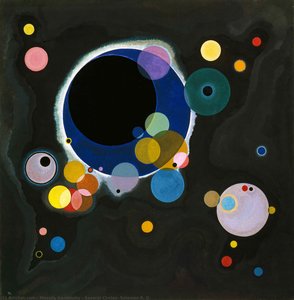
Division-Unity
Format der Reproduktion
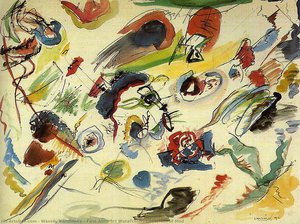
Wassily Kandinsky’s “Division-Unity” stands as a cornerstone of abstract expressionism, representing a pivotal moment in the history of art—a decisive break from representational imagery toward pure visual sensation. Painted in 1934, this canvas embodies Kandinsky's profound conviction that color and form could communicate emotions and spiritual ideas independently of any external reference.
Wassily Wassilyevich Kandinsky (1866-1944) revolutionized artistic thought, establishing himself as one of the foremost figures in the genesis of abstract art. Initially drawn to Impressionism—particularly Monet’s “Haystacks”—Kandinsky experienced a transformative epiphany witnessing Wagner's opera “Lohengrin,” propelling him toward an uncompromising pursuit of artistic expression beyond conventional boundaries.
His journey began with formal training at the Moscow State University, where he studied law and economics alongside his fascination for color symbolism. However, it was this encounter with Wagner’s music that ignited within him a fervent desire to explore art as a conduit for spiritual contemplation—a conviction that would permeate his entire oeuvre.
Moving to Munich in 1896, Kandinsky honed his skills under Franz von Stuck and Anton Ažbe, absorbing influences from Art Nouveau and Symbolism. He established the Phalanx association with Marc, fostering a dialogue between artists committed to challenging artistic conventions. His exploration of synesthesia—the merging of senses—became an integral element of his artistic practice.
Kandinsky’s profound appreciation for Richard Wagner's opera “Lohengrin” profoundly shaped his artistic vision. He recognized in Wagner’s music a similar quest for transcendence—a deliberate attempt to push the boundaries of musical expression beyond mere lyrical content.
This experience instilled within him a conviction that art could communicate spiritual truths—mirroring the composer's ambition to evoke profound emotional responses. Kandinsky believed that music and painting were inextricably linked, each capable of conveying feelings and ideas independently of visual or auditory stimuli.
Kandinsky’s legacy extends far beyond his individual paintings; he fundamentally altered the trajectory of modern art by championing abstraction as a means of accessing inner experience. His pioneering work continues to inspire artists and designers today, demonstrating the enduring power of color and form to communicate emotion and elevate consciousness.


1866 - 1944 , Russland

Master the complexities of Geometric Abstraction. Our expert guide explores the evolution from Cubist deconstruction to Bauhaus precision, decoding the power of shape and form. Perfect for art students seeking deep historical context and academic insight into modern masterpieces.
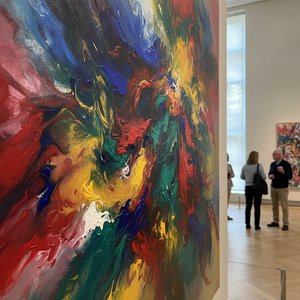
Explore the profound emotional depth of Lyrical Abstraction. Discover how masters like Raymond Parker used color and form to bridge Impressionism and Abstract Expressionism. Learn about this pivotal movement through our expert-led art history guide.

Explore the profound emotional depth of Color Field painting. Discover the history of mid-century abstraction, from Rothko to Newman, and learn how pure color transforms the viewer's experience through our expert art history guide.

Discover the profound emotional depth and investment potential of contemporary abstraction. Our expert guide explores how texture, movement, and form create timeless value for discerning art collectors and sophisticated interiors.


Bleiben Sie über die neuesten Kunstnachrichten, exklusive Angebote und Dekorationsideen auf dem Laufenden.
Erzählen Sie uns von Ihrem Projekt, und unsere Kunstexperten erstellen für Sie drei personalisierte Kunstvorschläge.
Wir kuratieren 3 Optionen exklusiv für Sie – kostenlos!


 Vorschau anzeigen
 Versenden
 Teilen
 Details anzeigen

 Herunterladen
 Ähnliche Objekte
 Röntgenaufnahme
 Diashow
 Weiterlesen







 Die Glasoption ist nur für Größen unter 110 cm verfügbar.