x

 52.0 x 59.0 cm
 Royal College of Art
Hand-painted oil on canvas in your size and frame, made to order by our artists. ( Buy Print Buy Image)
Pick from our preset sizes that match the artwork's original proportions.

You may enter your own dimensions to fit a specific frame or space. If your selected size does not match the original image's proportions, we will either crop the artwork or extend the painting with additional hand-painted elements. A digital mockup will be sent for your approval before production begins.
Please note that the on-screen preview does not reflect the actual cropping or extension. Only the mockup will accurately show the final composition.
While custom sizes are available, we recommend selecting a dimension from the predefined list to preserve the original proportions.
Worldwide Delivery () in 3/4 weeks instead of standard 5 weeks. (17 August). No compromise on quality.


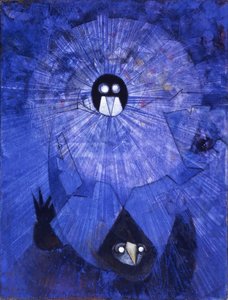
Abstract Composition (Bridge at Étaples)
Reproduction Size

Alistair Grant (1925–1997) stands as a monumental figure in British printmaking and modern art, recognized for his distinctive approach to abstraction and his unwavering dedication to fostering artistic exploration. Born in London amidst the backdrop of post-war Britain, Grant’s formative years were deeply rooted in Normandy, France—specifically Etaples—where he resided throughout his life, profoundly shaping his artistic vision.
His father, a Scottish immigrant, instilled in him a blend of cultural influences that would permeate his oeuvre. Despite initially pursuing veterinary studies, Grant swiftly gravitated towards art school, enrolling at Birmingham College of Art (1941–43) before serving with the RAF during World War II. This military experience broadened his horizons and honed his observational skills.
Returning to academia after the war, Grant excelled at Royal College of Art (RCA), where he studied under luminaries like Carel Weight and Ruskin Spear—artists who championed experimentation and innovation. He embraced printmaking with fervor, mastering lithography and etching techniques under Edwin La Dell and Robert Austin, establishing himself as a masterful craftsman.
Grant’s tenure at RCA spanned three decades (1955–90), culminating in his role as Head of Department from 1970 to 1990 and Professor Emeritus from 1984 to 1990. During this period, he nurtured a vibrant printmaking community, attracting talented students and fostering collaborative projects—a testament to his belief that rigorous critique stimulates creativity and resilience.
Beyond RCA, Grant’s artistic pursuits extended across diverse mediums, including painting, collage, and illustration. He collaborated with fellow artists like Michael Rothenstein, Julian Trevelyan, Eric Ravilious, and Peter Green, engaging in dialogues about art and technique that enriched the British printmaking landscape. His work was showcased internationally at events such as the Print Biennale Ljubljana (1972), cementing his reputation as a visionary artist.
Grant’s artistic style evolved from figurative representations to increasingly abstract explorations—characterized by bold colors, dynamic compositions, and evocative imagery inspired by landscapes, particularly those of Normandy. He famously stated, “For me, my pictures are a transcription of my feelings for boats, for the sea, the light, for a privileged moment…” This sentiment encapsulates his artistic ethos: capturing fleeting impressions and conveying profound emotional resonance.
Grant’s legacy extends beyond his individual artworks; he championed printmaking as an art form and instilled in generations of students a commitment to experimentation and artistic integrity. His influence continues to resonate within the British art world, ensuring that Alistair Grant's contribution to modern art remains celebrated for years to come.

1925 - 1997


Stay updated with the latest art news, exclusive offers, and decoration ideas.
Tell us about your project and our art experts will provide you with 3 personalized art suggestions.
Let Us Curate 3 Options Just for You - Free!


 Preview
 Send
Send Share
Share
 Details

 Download
 Similars
 X-Ray
X-Ray Diaporama
 Read More




































 Glass option is only available in size under 110 CM