


x

 Acrylic On CanvasWallArtGeorgian Portraiture
 1772
1772 54.0 x 54.0 cm
 National Trust
Museum-quality giclée or canvas print with fast production and flexible finish options. ( Buy Hand Made Painting Buy Image)





























Pick from our preset sizes that match the artwork's original proportions.

You may enter your own dimensions to fit a specific frame or space. If your selected size does not match the original image's proportions, we will either crop the artwork or extend the image with a mirrored or solid-fill edge. A digital mockup will be sent for your approval before production begins.
Please note that the on-screen preview does not reflect the actual cropping or extension. Only the mockup will accurately show the final composition.
While custom sizes are available, we recommend selecting a dimension from the predefined list to preserve the original proportions.
Worldwide Delivery () in 2 weeks instead of standard 4/5 weeks. (18 August)


Pike, Tench and Chub
Reproduction Size
Arthur William Devis (1762–1822) stands as a pivotal figure in the landscape of Georgian portraiture, recognized primarily for his masterful execution of ‘conversation pieces,’ intimate depictions that captured not merely likeness but also social milieu. While overshadowed by later artistic trends—particularly Romanticism’s emphasis on dramatic emotion and sublime landscapes—Devis's work retains an enduring appeal due to its quiet elegance and meticulous attention to detail, offering a valuable glimpse into the sensibilities of his era.
Born in London in 1762, Devis descended from a lineage dedicated to artistic pursuits. Following closely in the footsteps of his elder brother Thomas Anthony Devis—also a painter—he embarked on an apprenticeship under the tutelage of Nicolas Antoine Jegouët, a Flemish topographical artist who instilled in him a foundational understanding of perspective and compositional balance. This formative experience decisively shaped Devis’s artistic trajectory, steering him away from grand narratives toward the nuanced portrayal of individuals within domestic settings.
“Pike, Tench and Chub,” painted circa 1772, exemplifies Devis's signature style—characterized by a restrained palette dominated by muted browns, creams, and ochres. The canvas showcases three fish specimens arranged on a richly textured surface, meticulously rendered with oil paint using glazing techniques that achieved remarkable luminosity and depth. These subtle tonal variations contribute to the painting’s overall atmosphere of serene contemplation.
Beyond its technical prowess, “Pike, Tench and Chub” resonates deeply with the intellectual currents of the Enlightenment. The inclusion of fish—particularly pike, tench, and chub—was a deliberate symbolic gesture reflecting the burgeoning interest in natural history and scientific observation prevalent during Devis’s lifetime. These aquatic creatures represented not merely beauty but also resilience and adaptability – qualities valued by thinkers grappling with questions of morality and human understanding.
Furthermore, the painting's placement within Kedleston Hall—a stately mansion owned by William Cavendish, 7th Duke of Devonshire—underscores its significance as a product of aristocratic patronage. The Duke’s fascination with natural history fueled his commissioning of Devis, demonstrating the role of wealthy patrons in fostering artistic innovation and disseminating knowledge.
“Pike, Tench and Chub” remains a testament to Devis's ability to distill complex ideas into visually arresting compositions. Its understated beauty—coupled with its intellectual underpinning—continues to captivate viewers today, cementing Devis’s place as one of the most accomplished portraitists of his generation.


1712 - 1787 , United Kingdom

Explore the life & work of Arthur William Devis (1762-1822), a key figure in Georgian portraiture and naval history painting. Discover his intimate 'conversation pieces' and captivating depictions of colonial India. Learn more at Most-Famous-Paintings.

Explore the life & work of John Hoppner, a leading Georgian portraitist. Discover his vibrant style, influential patrons, and lasting impact on British art history. Expert insights for collectors.
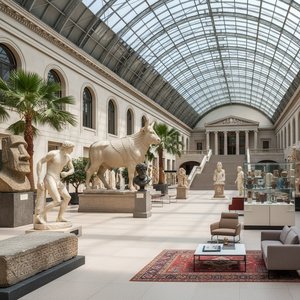
Journey through 25 iconic artworks at the British Museum, London! Explore masterpieces from Egyptian sculptures to Renaissance paintings & uncover their stories. Find museum-quality art reproductions and curated decor ideas on Most-Famous-Paintings.com.

Explore the captivating world of Johann Zoffany, master portraitist of Georgian society. Discover his unique 'conversation pieces,' imperial commissions & lasting legacy. A guide for discerning collectors.

Explore the enchanting world of Arthur Rackham (1867-1939), a leading figure in British Golden Age illustration. Discover his iconic fairy tale art, classic book illustrations & lasting legacy. Learn more at Most-Famous-Paintings.


Stay updated with the latest art news, exclusive offers, and decoration ideas.
Tell us about your project and our art experts will provide you with 3 personalized art suggestions.
Let Us Curate 3 Options Just for You - Free!


 Preview
 Send
Send Share
Share
 Details

 Download
 Similars
 X-Ray
X-Ray Diaporama
 Read More







 Glass option is only available in size under 110 CM


