x

 Oil On CanvasWallArtBaroque
 1682Early Modern
 293.0 x 207.0 cm
Purchase a high-resolution, enhanced digital image, far superior to the online preview.
Each file is meticulously prepared by our in-house specialists using advanced tools and expert manual retouching. We ensure every image has exceptional clarity, precise color accuracy, and fine detail.
The final file is delivered via email within 72 hours, optimized for immediate use in professional, editorial, and print environments. This is the same quality trusted by top-tier design studios, publishers, and galleries.
Download a high-resolution file for personal display, printing, and creative projects. ( Buy Print Buy Hand Made Painting)
When you choose Most-Famous-Paintings.com, you're not just getting an image - you're receiving a professionally enhanced digital artwork, crafted with precision and backed by a satisfaction guarantee. Here's everything that comes with your order, automatically:

Your high-resolution digital image file will be emailed to you within 72 hours of ordering - ready for immediate use.

Your artwork is professionally optimized using advanced AI tools and manual editing, ensuring maximum detail, clarity, and color accuracy.

Accidentally deleted or lost your file? No worries - we'll resend it to you anytime, free of charge.

Enjoy your artwork instantly with zero customs, duties, or delivery fees - digital downloads are always tax-free.

We ensure your digital image reflects the original colors as closely as possible using professional tools and color management.

If you're not satisfied with your digital image, we'll revise it or refund 100% within 60 days - no questions asked.

Not satisfied? Get a full refund within 60 days of receiving your digital file - no questions asked.

Buy 3 images, save 10% - Buy 5, save 15% - Buy 10+, save 20%. Great for creative projects, galleries, and agencies.
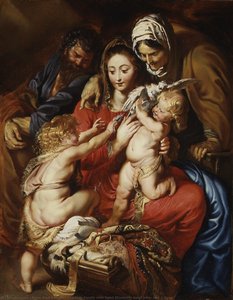
Bartolomé Esteban Murillo's "The Two Trinities," painted in 1682, stands as a pinnacle of Spanish Baroque art. This oil on canvas (measuring 293 x 207 cm) is housed within the National Gallery and exemplifies the era’s dramatic style, rich colors, and profound religious symbolism. The painting depicts a scene centered around the Holy Family – Mary, Jesus, and Joseph – enveloped by celestial figures, creating a powerful visual narrative of faith and divine grace.
The composition is meticulously structured, employing a pyramidal arrangement that draws the viewer's eye towards Christ Child at the apex. Mary kneels in reverent prayer, her gaze fixed upon Jesus, while Joseph stands beside her, offering a gesture of blessing. The background teems with swirling clouds populated by cherubic angels and illuminated by a radiant dove – a potent symbol of the Holy Spirit. This arrangement visually represents the two trinities: the Holy Trinity (God the Father, Jesus Christ, and the Holy Spirit) and the earthly trinity (the Virgin Mary, Jesus, and Saint Joseph). The stepped platform upon which the figures stand elevates their importance, reinforcing the sacred nature of the scene.
Murillo’s style is firmly rooted in the Baroque tradition, characterized by its dramatic use of light and shadow (chiaroscuro) to create a sense of depth and emotional intensity. The lighting emanates from above, highlighting key figures and intensifying the contrasts between light and dark areas. While perspective is somewhat flattened – a common feature of Baroque painting prioritizing emotional impact over strict realism – atmospheric perspective suggests depth through muted colors and less detailed rendering in distant elements. Murillo’s technique showcases smooth brushstrokes and rich pigment layering, typical of oil on canvas paintings. Textures range from the soft folds of drapery to the rougher surfaces of clouds and angels.
Created during a period of intense religious fervor in Spain, "The Two Trinities" reflects the Counter-Reformation’s emphasis on emotional engagement with faith. Murillo's work aimed to inspire devotion through its beauty and accessibility. The painting evokes feelings of serenity, reverence, and awe. It invites viewers to contemplate the divine presence within the human realm, offering a moment of spiritual reflection. Murillo's ability to portray tenderness and grace in religious subjects made him one of the most celebrated painters of his time, and this work remains a testament to his skill and enduring legacy.


1618 - 1682 , Spain


Stay updated with the latest art news, exclusive offers, and decoration ideas.
Tell us about your project and our art experts will provide you with 3 personalized art suggestions.
Let Us Curate 3 Options Just for You - Free!


 Preview
 Send
Send Share
Share
 Details

 Download
 Similars
 X-Ray
X-Ray Diaporama
 Read More