


x


Hand-painted oil on canvas in your size and frame, made to order by our artists.





























Pick from our preset sizes that match the artwork's original proportions.

You may enter your own dimensions to fit a specific frame or space. If your selected size does not match the original image's proportions, we will either crop the artwork or extend the painting with additional hand-painted elements. A digital mockup will be sent for your approval before production begins.
Please note that the on-screen preview does not reflect the actual cropping or extension. Only the mockup will accurately show the final composition.
While custom sizes are available, we recommend selecting a dimension from the predefined list to preserve the original proportions.
Worldwide Delivery () in 3/4 weeks instead of standard 5 weeks. (18 July). No compromise on quality.


Untitled (Mule)
Reproduction Size
In the quiet, stark lines of Bill Traylor’s Untitled (Mule), there exists a profound resonance that transcends the simple depiction of an animal. Created in 1939, this evocative work serves as a window into the soul of the American South during the Great Depression. The mule, rendered with a striking, minimalist geometry, stands as a powerful symbol of endurance and the rhythmic, often grueling, labor that defined rural life in Alabama. Through the delicate interplay of pencil and opaque watercolor on paperboard, Traylor captures not just a subject, but an atmosphere—a moment of stillness captured amidst the heavy weight of history.
The composition is characterized by its masterful use of negative space and bold, simplified forms. The mule’s large, expressive head and prominent horns create a silhouette that is both imposing and vulnerable. There is a rhythmic quality to the linework, where every stroke feels intentional, stripping away the unnecessary to reveal the essential character of the creature. This technique, often associated with the "self-taught" or "outsider" tradition, possesses a modernistic clarity that predates many formal movements, making it an incredibly sophisticated piece for the contemporary eye.
To behold this work is to engage with the complex legacy of Bill Traylor, an artist whose life journey from slavery to creative prominence informs every mark on the paperboard. The Untitled (Mule) does not merely document a farm animal; it embodies the folklore and the lived experience of a man who observed the world with unparalleled clarity. The starkness of the black and white elements, contrasted with the subtle presence of watercolor, evokes a sense of memory—as if we are looking at a fragment of a dream or a fading photograph from a bygone era.
For the discerning collector or interior designer, this piece offers a unique opportunity to introduce a narrative of strength and resilience into a space. Its aesthetic versatility allows it to anchor a room with its historical gravity while complementing modern, minimalist decor. A high-quality reproduction of this masterpiece brings more than just visual interest; it invites a conversation about the beauty found in simplicity and the enduring power of the human (and animal) spirit. It is an investment in a piece of American heritage that continues to captivate, provoke thought, and inspire awe.


1854 - 1949

Journey through 25 iconic artworks at the Metropolitan Museum of Art! Explore Van Gogh, Monet, Rembrandt & more. Discover art history, inspiring stories, and museum-quality reproductions to elevate your home decor. Explore the full collection on Most-Famous-Paintings.com.

Journey through 25 iconic James Abbott McNeill Whistler paintings! Explore his masterpieces of Aestheticism, from 'Nocturne in Black and Gold' to captivating portraits. Find museum-quality art reproductions & elevate your home decor with Most-Famous-Paintings.com. Discover the full collection online.

Journey through 25 iconic artworks at the Detroit Institute of Arts! Explore Van Gogh, Monet, Rembrandt & more. Discover art history, stunning techniques & find museum-quality reproductions to elevate your home decor on Most-Famous-Paintings.com.
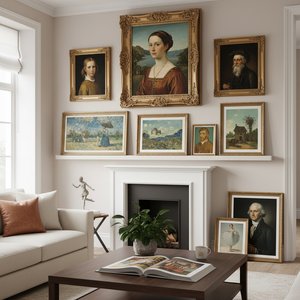
Explore 25 iconic artworks from Washington DC's National Gallery of Art! Discover masterpieces by Cézanne, Matisse & Picasso. Find museum-quality art reproductions and elevate your home decor with timeless paintings. Explore the full collection online at Most-Famous-Paintings.com.
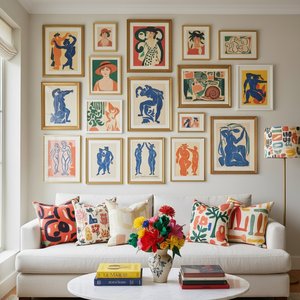
Journey through Henri Matisse's 25 most iconic paintings! Explore Fauvism, vibrant colors & the stories behind masterpieces like 'The Dance'. Find museum-quality art reproductions and curated decor ideas to elevate your space. Discover all masterpieces on Most-Famous-Paintings.com.


Stay updated with the latest art news, exclusive offers, and decoration ideas.
Tell us about your project and our art experts will provide you with 3 personalized art suggestions.
Let Us Curate 3 Options Just for You - Free!


 Buy print
 Send
Send Share
Share
 Details

 Download
 Similars
 X-Ray
X-Ray Diaporama


 Read More







 Glass option is only available in size under 110 CM


![Untitled [Figure on Construction with Legs]](/media/artworks/images/thumbnails/0e/d6/0ed68f2e07aa4354aa6051a89659a064.jpg)
![Untitled [Cat]](/media/artworks/images/thumbnails/a9/24/a924e2aac5b34083ab87ecea30e30273.jpg)


![Untitled [Pineapple]](/media/artworks/images/thumbnails/4c/fa/4cfa78179caf4bb29938597a92ccb2b3.jpg)

![Untitled [Footed Form]](/media/artworks/images/thumbnails/6b/de/6bde2b5bae53419c8ff065233bbe9ff6.jpg)