x


 Oil On CanvasWallArtGrand Manner Portraiture
 182419th Century
 64.0 x 52.0 cm
 Hermitage Museum
Hand-painted oil on canvas in your size and frame, made to order by our artists.





























Pick from our preset sizes that match the artwork's original proportions.

You may enter your own dimensions to fit a specific frame or space. If your selected size does not match the original image's proportions, we will either crop the artwork or extend the painting with additional hand-painted elements. A digital mockup will be sent for your approval before production begins.
Please note that the on-screen preview does not reflect the actual cropping or extension. Only the mockup will accurately show the final composition.
While custom sizes are available, we recommend selecting a dimension from the predefined list to preserve the original proportions.
Worldwide Delivery () in 3/4 weeks instead of standard 5 weeks. (18 July). No compromise on quality.


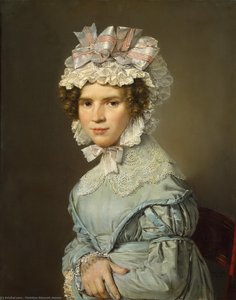
Portrait of a Lady in Blue Dress
Reproduction Size
Christian Albrecht Jensen’s “Portrait of a Lady in Blue Dress,” painted in 1824, is more than just a depiction of a woman; it's a meticulously crafted snapshot of a specific moment in time – the burgeoning artistic and intellectual landscape of early 19th-century Denmark. Jensen, born in Bredstedt in 1792 and passing away in Copenhagen in 1870, was a pivotal figure in Danish art, known for his psychologically astute portraits that captured both outward appearance and inner character. This particular work offers a rare glimpse into the refined tastes and social conventions of the era, revealing a sophisticated understanding of light, color, and the subtle language of gesture.
The painting itself presents a young woman, elegantly posed within a modestly furnished interior. Her dress, rendered in delicate shades of blue and accented with crisp white lace, speaks to both wealth and an appreciation for understated elegance – hallmarks of the period’s fashion. The pale pink bow nestled amongst her hair is a small but significant detail, suggesting a youthful innocence and perhaps a hint of flirtation. Her direct gaze, unwavering yet gentle, invites the viewer into the scene, creating an immediate connection that transcends mere observation.
Jensen’s style aligns closely with what is often referred to as the “Grand Manner,” a compositional approach popularized by Sir Joshua Reynolds. This technique emphasized clarity, balance, and a carefully orchestrated arrangement of elements within the frame. Notice how Jensen employs a pyramidal structure, guiding the eye from the lady's head down to her hands, which rest gracefully on a delicate fan. The background, featuring a simple chair and a suggestion of a window – likely offering a glimpse of a garden – is deliberately muted, ensuring that the subject remains firmly at the center of attention. Jensen’s masterful use of light is particularly noteworthy; he employs soft, diffused illumination to sculpt the lady's features, highlighting her delicate complexion and creating an atmosphere of quiet intimacy.
The painting is executed in oil on canvas, a medium favored by Jensen for its ability to capture subtle nuances of color and texture. His brushwork is remarkably smooth and controlled, contributing to the overall sense of refinement and composure. The meticulous detail evident in the lace trim and the folds of the dress demonstrates his technical skill and dedication to achieving a realistic yet idealized representation of his subject.
Beyond its aesthetic qualities, “Portrait of a Lady in Blue Dress” offers insights into the social context of 1824 Denmark. The lady’s attire and demeanor reflect the prevailing ideals of feminine grace and decorum. The inclusion of the fan, a common accessory for women of this era, suggests her participation in polite conversation and social gatherings. Furthermore, the painting's restrained palette – dominated by blues, whites, and subtle pinks – reflects the understated elegance favored by the Danish aristocracy.
Jensen’s portraits frequently depicted members of the upper classes, including intellectuals, artists, and politicians. He was known for his ability to capture not only their physical appearance but also their personalities and intellectual pursuits. This portrait likely represents a member of the Danish elite, perhaps a young woman poised to enter society or already established within it.
Today, “Portrait of a Lady in Blue Dress” stands as a testament to Jensen’s artistic skill and his profound understanding of human psychology. Reproductions offer an accessible way to appreciate the nuances of this captivating work, allowing viewers to experience its beauty and historical significance firsthand. Whether displayed in a private collection or adorning a wall in a stylish interior, this portrait continues to evoke a sense of quiet elegance and timeless charm – a window into a bygone era.
Further Research: For more information about Christian Albrecht Jensen and his artistic career, explore the WGA (Wikiart) website: JENSEN, Christian Albrecht. You can also find related works by Jensen at the Statens Museum for Kunst in Copenhagen and view images of similar portraits from the period on sites like Bridgeman Art Library: Portrait of a Lady in a Blue Dress - Christian Albrecht Jensen.


1792 - 1870 , Germany

Journey through 25 iconic artworks at the Metropolitan Museum of Art! Explore Van Gogh, Monet, Rembrandt & more. Discover art history, inspiring stories, and museum-quality reproductions to elevate your home decor. Explore the full collection on Most-Famous-Paintings.com.
Explore 25 iconic artworks from Washington DC's National Gallery of Art! Discover masterpieces by Cézanne, Matisse & Picasso. Find museum-quality art reproductions and elevate your home decor with timeless paintings. Explore the full collection online at Most-Famous-Paintings.com.
Journey through 25 iconic James Abbott McNeill Whistler paintings! Explore his masterpieces of Aestheticism, from 'Nocturne in Black and Gold' to captivating portraits. Find museum-quality art reproductions & elevate your home decor with Most-Famous-Paintings.com. Discover the full collection online.
Delve into the haunting world of Egon Schiele with our curated selection of his 25 most iconic Expressionist paintings. Explore the artist's life, technique & emotional depth. Find museum-quality Schiele reproductions and elevate your home decor on Most-Famous-Paintings.com.
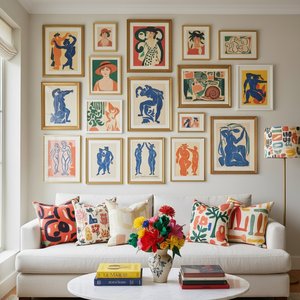
Journey through Henri Matisse's 25 most iconic paintings! Explore Fauvism, vibrant colors & the stories behind masterpieces like 'The Dance'. Find museum-quality art reproductions and curated decor ideas to elevate your space. Discover all masterpieces on Most-Famous-Paintings.com.


Stay updated with the latest art news, exclusive offers, and decoration ideas.
Tell us about your project and our art experts will provide you with 3 personalized art suggestions.
Let Us Curate 3 Options Just for You - Free!


 Buy print
 Send
Send Share
Share
 Details

 Download
 Similars
 X-Ray
X-Ray Diaporama
 Read More







 Glass option is only available in size under 110 CM