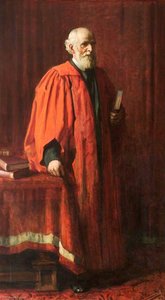
x

 OilWallArtCeltic Revival
 19th Century
 159.0 x 137.0 cm
Museum-quality giclée or canvas print with fast production and flexible finish options. ( Buy Hand Made Painting Buy Image)





























Pick from our preset sizes that match the artwork's original proportions.

You may enter your own dimensions to fit a specific frame or space. If your selected size does not match the original image's proportions, we will either crop the artwork or extend the image with a mirrored or solid-fill edge. A digital mockup will be sent for your approval before production begins.
Please note that the on-screen preview does not reflect the actual cropping or extension. Only the mockup will accurately show the final composition.
While custom sizes are available, we recommend selecting a dimension from the predefined list to preserve the original proportions.
Worldwide Delivery () in 2 weeks instead of standard 4/5 weeks. (16 August)


Ceridwen
Reproduction Size
In the evocative portrait Ceridwen, the late Victorian master Christopher Williams invites us into a realm where myth and reality converge. The painting presents a profound moment of introspection, centered on a woman draped in vibrant, crimson attire that commands the viewer's immediate attention. Seated amidst a rugged, primordial landscape of weathered rocks, she rests her chin upon her hands, her gaze lost in a deep, contemplative trance. This is not merely a portrait of a person, but an encounter with a legend; the subject evokes the spirit of the Welsh goddess Ceridwen, the keeper of wisdom and transformation. The interplay between her soft, thoughtful expression and the harsh, unyielding textures of the stone background creates a captivating tension, suggesting a soul that finds peace within the wild, untamed heart of nature.
The artist’s technique reflects the rich traditions of the Celtic Revival, utilizing a masterful command of color and light to breathe life into the mythological subject. Williams employs a palette where the deep, saturated reds of the woman's garments serve as a focal point against the muted, earthy tones of the rocky terrain. Through delicate brushwork, he captures the flowing texture of her long hair and the subtle folds of her dress, contrasting these soft elements with the heavy, tactile presence of the foreground stones. This careful manipulation of light creates a sense of atmosphere that feels both ancient and immediate, pulling the observer into the quiet, sacred space the figure inhabits.
Beyond its visual splendor, Ceridwen serves as a powerful symbol of the enduring connection between humanity and the earth. The choice of a rocky, desolate setting is far from accidental; it represents the foundational strength and the cyclical nature of life and rebirth often associated with Welsh folklore. The woman’s posture—closed, inward-looking, and meditative—mirrors the process of incubation and the gathering of wisdom. For the collector or the lover of fine art, this piece offers more than just aesthetic beauty; it provides a window into a period of history when artists sought to reclaim their cultural identity through the romanticization of ancestral legends.
For interior designers and connoisseurs of high-quality reproductions, this artwork serves as a sophisticated centerpiece capable of anchoring a room with its dramatic presence and emotional depth. Whether placed in a quiet study to inspire thought or in a grand living space to evoke a sense of historical grandeur, the painting brings a layer of narrative complexity to any environment. It is an ideal acquisition for those who seek art that transcends simple decoration, offering instead a profound sense of storytelling, a touch of the sublime, and a timeless connection to the mystical heritage of the British Isles.

Christopher David Williams (1873-1934) was a celebrated Welsh artist whose career spanned the late Victorian and early 20th centuries. He is particularly remembered for his evocative portraits, allegorical scenes, and landscapes that often reflected a strong sense of Welsh identity and the spirit of the Celtic Revival.
Born in Maesygwrath, Wales, Williams initially faced opposition from his father, Evan Williams, who envisioned a medical career for him. However, a transformative visit to the Walker Art Gallery in Liverpool in 1892, where he was deeply moved by Frederick Leighton’s *Perseus and Andromeda*, ignited his passion for art. This experience solidified his determination to pursue a life as an artist.
Williams’s work is characterized by:
Christopher Williams played a significant role in promoting Welsh art and culture during his lifetime. He actively participated in the National Eisteddfod as an adjudicator and served on committees for the National Museum of Wales and the Honourable Society of Cymmrodorion. His work reflects a strong sense of national identity and contributed to the artistic flourishing of Wales in the early 20th century.
His paintings are held in numerous public collections, including the National Museum of Wales, the Royal Collection, and the Glynn Vivian Art Gallery, ensuring his legacy continues to inspire and captivate audiences today. He was a brother-in-law to fellow artist Fred Appleyard, and father to astronomer Evan Gwyn Williams and artist Ivor Williams.

1873 - 1934 , United States of America

Explore the rich symbolism of the red dress in art history! From ancient power displays to iconic portraits like Cézanne’s 'Madame Cezanne', discover the cultural and artistic significance behind this captivating color. Expert analysis & insights.

Explore 25 iconic Mark Rothko paintings that define Abstract Expressionism. Discover the stories, colors & emotions behind these masterpieces. Find museum-quality art reproductions and curated decor ideas at Most-Famous-Paintings.com.
Journey through Henri Matisse's 25 most iconic paintings! Explore Fauvism, vibrant colors & the stories behind masterpieces like 'The Dance'. Find museum-quality art reproductions and curated decor ideas to elevate your space. Discover all masterpieces on Most-Famous-Paintings.com.
Explore the rich history of the blue dress in Western art! Discover its symbolism, from Renaissance masterpieces to modern interpretations by artists like Martin & Schiele. Uncover cultural meanings and artistic techniques.

Explore 25 iconic artworks by Amedeo Modigliani, from his haunting portraits to captivating sculptures. Discover the stories behind these masterpieces of early 20th-century art & find museum-quality reproductions at Most-Famous-Paintings.com.


Stay updated with the latest art news, exclusive offers, and decoration ideas.
Tell us about your project and our art experts will provide you with 3 personalized art suggestions.
Let Us Curate 3 Options Just for You - Free!


 Preview
 Send
Send Share
Share
 Details

 Download
 Similars
 X-Ray
X-Ray Diaporama
 Read More







 Glass option is only available in size under 110 CM