x

 Oil On CanvasWallArt
 1914Early Modern
 29.0 x 38.0 cm
 Llyfrgell Genedlaethol Cymru / The National Library of Wales
Museum-quality giclée or canvas print with fast production and flexible finish options. ( Buy Hand Made Painting Buy Image)





























Pick from our preset sizes that match the artwork's original proportions.

You may enter your own dimensions to fit a specific frame or space. If your selected size does not match the original image's proportions, we will either crop the artwork or extend the image with a mirrored or solid-fill edge. A digital mockup will be sent for your approval before production begins.
Please note that the on-screen preview does not reflect the actual cropping or extension. Only the mockup will accurately show the final composition.
While custom sizes are available, we recommend selecting a dimension from the predefined list to preserve the original proportions.
Worldwide Delivery () in 2 weeks instead of standard 4/5 weeks. (18 August)


Tangiers
Reproduction Size
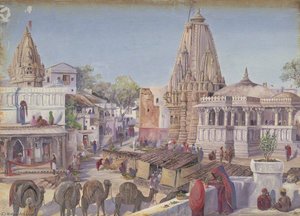
To stand before this depiction of Tangiers is to be instantly transported across continents and through the veil of time. Christopher Williams has captured not merely a location, but a palpable moment—the very breath of a bustling marketplace in early 20th-century Morocco. The scene explodes with life; one can almost hear the calls of vendors mingling with the clatter of hooves from the horse visible in the background. It is a rich tapestry woven from human interaction and exotic architecture, inviting the viewer to step directly into its vibrant chaos.
Williams’s technique here showcases an impressive ability to render depth and atmosphere simultaneously. The composition draws the eye through the foreground activity toward the intriguing archway, which acts as a visual portal into a more secluded courtyard setting. Notice the interplay between the solid, detailed architecture framing the scene and the softer textures of the tents and gathered crowds. This masterful handling of light suggests an intense Mediterranean sun filtering through narrow alleyways, illuminating faces caught in moments of conversation or commerce. The sheer number of figures—at least thirteen visible souls—lends a documentary quality to the piece, celebrating the enduring rhythm of daily life.
Painted in 1914, this work sits at a fascinating historical juncture, capturing Tangiers before the sweeping changes that would define the decades to come. For collectors and those drawn to global narratives, it offers an intimate window into a specific cultural moment. Williams, while celebrated for his Welsh identity, possessed an eye capable of absorbing and interpreting the universal human experience through diverse locales. The marketplace itself becomes a microcosm of cross-cultural exchange—a place where goods, stories, and people from disparate backgrounds converged.
For interior designers or art lovers seeking to infuse a space with worldly character, this reproduction offers unparalleled depth. It moves beyond mere decoration; it acts as an emotional anchor, suggesting adventure and warmth. The rich palette—the earthy tones of the buildings contrasted with the varied colors of clothing and goods—will provide a stunning focal point in any room. Owning this piece is not just acquiring art; it is curating a narrative of travel, history, and enduring human vitality for your walls.

Christopher David Williams (1873-1934) was a celebrated Welsh artist whose career spanned the late Victorian and early 20th centuries. He is particularly remembered for his evocative portraits, allegorical scenes, and landscapes that often reflected a strong sense of Welsh identity and the spirit of the Celtic Revival.
Born in Maesygwrath, Wales, Williams initially faced opposition from his father, Evan Williams, who envisioned a medical career for him. However, a transformative visit to the Walker Art Gallery in Liverpool in 1892, where he was deeply moved by Frederick Leighton’s *Perseus and Andromeda*, ignited his passion for art. This experience solidified his determination to pursue a life as an artist.
Williams’s work is characterized by:
Christopher Williams played a significant role in promoting Welsh art and culture during his lifetime. He actively participated in the National Eisteddfod as an adjudicator and served on committees for the National Museum of Wales and the Honourable Society of Cymmrodorion. His work reflects a strong sense of national identity and contributed to the artistic flourishing of Wales in the early 20th century.
His paintings are held in numerous public collections, including the National Museum of Wales, the Royal Collection, and the Glynn Vivian Art Gallery, ensuring his legacy continues to inspire and captivate audiences today. He was a brother-in-law to fellow artist Fred Appleyard, and father to astronomer Evan Gwyn Williams and artist Ivor Williams.

1873 - 1934 , United States of America

Journey through the vibrant world of Marianne North’s botanical paintings! Explore 25 iconic artworks from this Victorian artist, celebrating exotic flora & travel. Find museum-quality reproductions and curated decor ideas at Most-Famous-Paintings.com.

Explore the captivating journey of street art from urban walls to prestigious galleries. Discover how contemporary graffiti has evolved into a high-end collectible movement, redefining modern interior design and global art culture.

Explore the evolution of street art from rebellious origins to a respected fine art form. Discover key artists like Banksy & learn how to collect urban art with confidence. Expert insights for discerning investors.

Explore the rich history of genre painting! Discover Dutch Masters & European artists who captured everyday life with stunning realism. Learn about symbolism, techniques & lasting influence.

Master the bold, dusty textures of street and pop art. Discover how chalk-inspired aesthetics and high-impact graphic styles are redefining modern urban interiors through tactile pigment and raw, energetic design.


Stay updated with the latest art news, exclusive offers, and decoration ideas.
Tell us about your project and our art experts will provide you with 3 personalized art suggestions.
Let Us Curate 3 Options Just for You - Free!


 Preview
 Send
Send Share
Share
 Details

 Download
 Similars
 X-Ray
X-Ray Diaporama
 Read More







 Glass option is only available in size under 110 CM