


x

 Oil On CanvasWallArtImpressionism
 189719th Century
 120.0 x 80.0 cm
Museum-quality giclée or canvas print with fast production and flexible finish options. ( Buy Hand Made Painting Buy Image)





























Pick from our preset sizes that match the artwork's original proportions.

You may enter your own dimensions to fit a specific frame or space. If your selected size does not match the original image's proportions, we will either crop the artwork or extend the image with a mirrored or solid-fill edge. A digital mockup will be sent for your approval before production begins.
Please note that the on-screen preview does not reflect the actual cropping or extension. Only the mockup will accurately show the final composition.
While custom sizes are available, we recommend selecting a dimension from the predefined list to preserve the original proportions.
Worldwide Delivery () in 2 weeks instead of standard 4/5 weeks. (17 August)


Chrysanthemums
Reproduction Size
In the late nineteenth century, Claude Monet captured a moment of botanical brilliance that continues to enchant the modern eye. His 1897 masterpiece, Chrysanthemums, is far more than a mere study of flora; it is a vibrant, breathing testament to the Impressionist obsession with the ephemeral nature of light. As one gazes upon this oil on canvas, the viewer is immediately swept into a lush, kaleidoscopic field where colors dance in a rhythmic arrangement. The composition masterfully guides the eye through layers of depth, placing certain blossoms in a tactile foreground while others recede into a soft, atmospheric haze. This deliberate layering creates an immersive experience, inviting anyone from the passionate art collector to the discerning interior designer to step directly into Monet’s sun-drenched garden.
The palette used in this work is nothing short of celebratory. Monet employs a rich spectrum of reds, yellows, blues, pinks, whites, and oranges, weaving them together to simulate the lively energy of a summer afternoon. Each stroke of the brush serves to define the delicate texture of at least thirteen different types of flowers, yet the artist avoids rigid outlines in favor of soft, blended edges that suggest movement and life. This technique—the hallmark of his innovative style—allows the colors to bleed into one another, mimicking the way sunlight filters through petals and shifts with the passing breeze. For those looking to adorn a space, such a piece offers an unparalleled infusion of vitality and warmth.
To understand the profound impact of Chrysanthemums, one must consider Monet’s revolutionary approach to his subject matter. Unlike the traditionalists of his era who sought permanence in their subjects, Monet was a pioneer of the "series" concept. He found infinite fascination in how a single theme could be transformed by the changing clock and the shifting weather. While he is perhaps most famous for his Water Lilies and Haystacks, this floral study exemplifies his ability to find monumental beauty in the small, fleeting details of the natural world. His practice of painting en plein air—directly from nature—allowed him to capture the true essence of the atmosphere, a quality that remains palpable in every layer of this painting.
Beyond its technical brilliance, the artwork carries an emotional resonance that transcends time. There is a sense of profound peace and abundance within the frame, a sanctuary of color that offers respite from the complexities of modern life. For an interior designer, Chrysanthemums serves as a sophisticated focal point, capable of anchoring a room with its organic elegance and historical prestige. It is not merely a reproduction of a painting; it is an invitation to experience the enduring legacy of a man who taught the world to see beauty in the transient, making it a timeless acquisition for any curated collection.
Oscar-Claude Monet, a name synonymous with Impressionism, wasn't merely a painter of landscapes; he was a chronicler of fleeting moments, a poet of light and color. Born in Paris on November 14, 1840, his early life took an unexpected turn when his family relocated to Le Havre, Normandy, at the age of five. While initially destined for a commercial career by his father, young Claude’s innate artistic talent quickly surfaced, manifesting first in charcoal caricatures sold locally – a testament to both his skill and entrepreneurial spirit. However, it was his encounter with Eugène Boudin that proved pivotal. Boudin didn't just teach Monet *how* to paint; he instilled within him the revolutionary idea of painting en plein air—directly from nature—a practice that would define his entire artistic journey.
Monet’s formal training began in Paris, briefly at the Académie Suisse and later under Charles Gleyre. It was here he forged lasting friendships with fellow artists like Auguste Renoir, a bond built on shared artistic frustrations and a desire to break free from the constraints of traditional academic painting. His early works, while demonstrating technical proficiency, lacked the distinctive voice that would soon characterize his style. A period of upheaval followed – the Franco-Prussian War forced Monet to seek refuge in London, where he immersed himself in the work of English landscape masters like J.M.W. Turner, absorbing their atmospheric effects and innovative use of color.
Upon his return to France, Monet became a central figure in a burgeoning artistic rebellion. Dissatisfied with the conservative standards of the Salon, he joined forces with other like-minded artists to organize independent exhibitions. The exhibition of 1874 proved to be a watershed moment, not only for Monet but for the entire art world. It was here that his painting “Impression, soleil levant” (Impression, Sunrise) – a hazy depiction of Le Havre’s harbor at dawn – was displayed, and from which the derisive term "Impressionism" originated. However, the name stuck, evolving into a badge of honor for a movement that sought to capture the subjective *impression* of a scene rather than its precise representation.
Monet's signature style blossomed during this period: loose, visible brushstrokes, vibrant and often unmixed colors applied side-by-side (a technique known as “broken color”), and an unwavering focus on capturing the ephemeral qualities of light. He relentlessly pursued his plein air practice, working rapidly to record his immediate perceptions before the shifting conditions altered the scene. This dedication wasn’t simply about depicting what he *saw*, but rather how he *felt* in response to it – a radical departure from artistic conventions.
In 1883, Monet settled in Giverny, northwest of Paris, establishing a home and garden that would become both his sanctuary and his greatest source of inspiration. He meticulously transformed the property into an elaborate paradise, complete with exotic flowers, weeping willows, and, most famously, a water lily pond spanned by a Japanese bridge. This wasn’t merely a decorative garden; it was a living laboratory where Monet could study the effects of light on water, foliage, and reflections in controlled conditions.
The final decades of his life were almost entirely devoted to painting the water lily pond at Giverny. He embarked upon the monumental Water Lilies series (Nymphéas), creating vast canvases that depicted the pond’s surface as a constantly shifting tapestry of color and light. These weren't simply paintings of flowers; they were immersive experiences, designed to envelop the viewer in a world of serene beauty and contemplative stillness. The scale of these works is breathtaking, pushing the boundaries of traditional painting and anticipating abstract expressionism.
Claude Monet’s impact on art history is immeasurable. He wasn't just the founder of Impressionism; he fundamentally altered the way artists perceived and represented the world around them. His emphasis on subjective experience, his embrace of plein air painting, and his innovative techniques paved the way for modern art’s exploration of abstraction and non-representational forms.
Monet achieved considerable commercial success during his lifetime – a rarity for avant-garde artists of his era. His work continues to inspire awe and captivate audiences worldwide, solidifying his place as one of the most important figures in Western art. He died on December 5, 1926, leaving behind a legacy that resonates through generations of artists and art lovers alike. Significant collections of his masterpieces are held at prestigious institutions such as the Musée d'Orsay and the Musée Marmottan Monet in Paris, ensuring that his vision continues to illuminate the world.
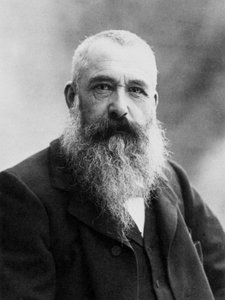
1840 - 1926 , France

Journey through 25 iconic Claude Monet masterpieces! Explore Impressionism’s beauty, from Water Lilies to Rouen Cathedral. Discover stunning art reproductions & curated decor ideas – explore the full collection online at Most-Famous-Paintings.com.

Journey through 10 iconic Impressionist landscapes by Monet, Renoir & Degas. Explore the history, techniques & emotions behind these masterpieces. Find museum-quality reproductions for your home at Most-Famous-Paintings.com – where art comes to life! Discover all masterpieces on Most-Famous-Paintings.com

Journey into the heart of Impressionism! Explore 10 masterpieces by Monet, Renoir & Degas that revolutionized landscape art. Discover their stories, techniques & find museum-quality reproductions to elevate your home decor on Most-Famous-Paintings.com.

Immerse yourself in the luminous world of Claude Monet. Discover a soulful exploration of his Impressionist masterpieces, paired with exquisite, hand-painted oil reproductions designed to bring the ephemeral beauty of light and color into your home. Expertly curated by Most-Famous-Paintings.com.
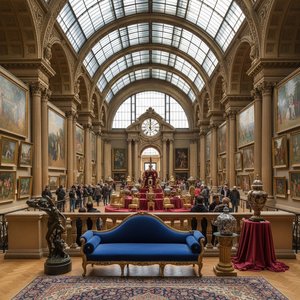
Journey through the Musée d'Orsay’s 25 most iconic artworks! Explore Impressionist & Post-Impressionist masterpieces by Monet, Van Gogh, Degas & more. Find museum-quality art reproductions and curated decor ideas to bring timeless beauty home. Discover all masterpieces on Most-Famous-Paintings.com


Stay updated with the latest art news, exclusive offers, and decoration ideas.
Tell us about your project and our art experts will provide you with 3 personalized art suggestions.
Let Us Curate 3 Options Just for You - Free!


 Preview
 Send
Send Share
Share
 Details

 Download
 Similars
 X-Ray
X-Ray Diaporama
 Read More







 Glass option is only available in size under 110 CM


