


x


 Vorticism
 1932Modern
 65.0 x 75.0 cm
 Salford Museum - Art Gallery
Hand-painted oil on canvas in your size and frame, made to order by our artists. ( Switch to Print Switch to Image)





























Pick from our preset sizes that match the artwork's original proportions.

You may enter your own dimensions to fit a specific frame or space. If your selected size does not match the original image's proportions, we will either crop the artwork or extend the painting with additional hand-painted elements. A digital mockup will be sent for your approval before production begins.
Please note that the on-screen preview does not reflect the actual cropping or extension. Only the mockup will accurately show the final composition.
While custom sizes are available, we recommend selecting a dimension from the predefined list to preserve the original proportions.
Worldwide Delivery () in 3/4 weeks instead of standard 5 weeks. (28 July). No compromise on quality.


Storm Clouds
Reproduction Size
In the evocative landscape of David Bomberg, nature is never merely a backdrop; it is a living, breathing protagonist. His 1932 masterpiece, Storm Clouds, invites the viewer into a realm where the terrestrial and the celestial collide in a breathtaking display of raw power and quietude. The painting captures a majestic mountain range, draped in lush greenery, rising with silent strength against an expansive sky. Scattered clouds drift across the firmament, acting as brushstrokes of light and shadow that lend a profound sense of depth and dimension to the composition. This is not just a depiction of scenery, but a window into the very soul of the earth, where every peak and valley tells a story of endurance and timeless beauty.
The technique employed in this work reflects Bomberg’s sophisticated command over form and atmosphere. Through a masterful application of color and texture, the artist achieves a remarkable balance between movement and stillness. The palette is carefully curated to evoke a sense of tranquility; soft greens and earthy tones ground the viewer in the physical reality of the mountains, while the shifting grays and whites of the clouds introduce a dynamic, ethereal quality. For the discerning collector or interior designer, this piece offers a unique opportunity to introduce a focal point that possesses both weight and lightness—a work that commands attention through its subtle complexities rather than through overt spectacle.
To understand Storm Clouds, one must consider the artistic lineage of David Bomberg. As a prominent figure among the 'Whitechapel Boys,' Bomberg’s journey was shaped by the radical energies of early 20th-century modernism, including the influences of Cubism and the structural lessons of Cézanne. Yet, in this particular work, we see a departure from the purely geometric toward a more organic, emotive expressionism. The painting serves as a testament to his ability to synthesize the structured lessons of his training with a deep, spiritual connection to the natural world. It captures a moment of atmospheric tension—the breath held before a storm—creating an emotional resonance that is both unsettling and deeply peaceful.
For those seeking to curate a space of reflection and inspiration, this reproduction offers more than mere decoration; it provides an atmosphere. The interplay of light through the clouds and the solid permanence of the mountains create a sanctuary of serenity within any room. Whether placed in a contemporary gallery-style living area or a classic study, Storm Clouds acts as a meditative anchor, reminding us of the sublime beauty that exists in the fleeting moments of our natural world. It is an investment in artistry that brings the enduring spirit of the landscape into the intimacy of the home.
Born to Polish-Jewish immigrant parents, Abraham and Rebecca Bomberg, initially studied at the City and Guilds Technical Art School before training as a lithographer in Birmingham.
Studied under Walter Sickert at Westminster School of Art (1908-1910), influenced by Sickert's focus on form and urban life. Significant exposure to Paul Cézanne through the 1910 Roger Fry exhibition "Manet and the Post-Impressionists." Attended the Slade School of Art (1911), winning the Tonks Prize for his drawing of fellow student Isaac Rosenberg.
Experiences as a private soldier during World War I profoundly impacted his artistic vision, leading to a move away from abstraction.
The 1920s saw Bomberg adopt a more figurative style, focusing on portraits and landscapes drawn directly from nature. Developed an increasingly expressionist technique, marked by textured impasto and emotional intensity.
Extensive travels through the Middle East (particularly Palestine) and Europe significantly influenced his later work. His depictions of Jerusalem are particularly notable.

1890 - 1957 , United Kingdom
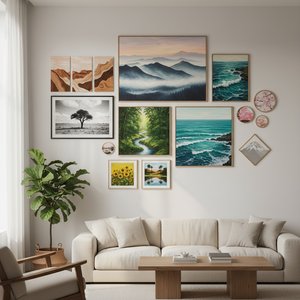
Journey through 10 breathtaking landscape paintings by Monet, Van Gogh & more! Explore iconic artworks, artistic techniques & find inspiration for your home decor. Museum-quality reproductions at Most-Famous-Paintings.com. Discover all masterpieces on Most-Famous-Paintings.com
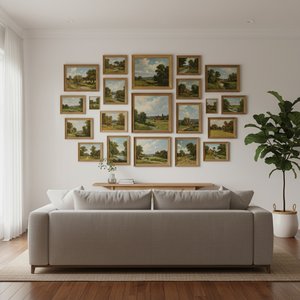
Journey through John Constable's 25 most celebrated landscapes. Explore Romanticism, Dedham Vale & his masterful use of light in iconic paintings like 'Hay Wain'. Find museum-quality art reproductions and elevate your home decor on Most-Famous-Paintings.com.

Journey through 10 Romantic landscape masterpieces by Friedrich, Turner & Cole. Explore emotional art, sublime nature scenes & iconic 19th-century paintings. Find museum-quality reproductions for your home at Most-Famous-Paintings.com – discover the full collection online!

Explore the rich history of landscape art with Most-Famous-Paintings. Discover renowned artists, movements like Impressionism & Romanticism, and expert guidance for collecting timeless pieces. Find your perfect serene escape today!
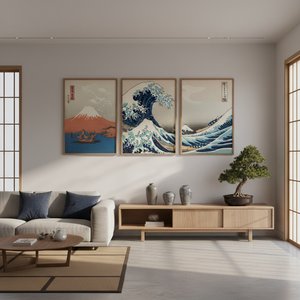
Journey through Katsushika Hokusai’s 25 most iconic artworks, including *The Great Wave*. Explore the ukiyo-e master's history, style & timeless Japanese woodblock prints. Find museum-quality reproductions for your home at Most-Famous-Paintings.com.


Stay updated with the latest art news, exclusive offers, and decoration ideas.
Tell us about your project and our art experts will provide you with 3 personalized art suggestions.
Let Us Curate 3 Options Just for You - Free!


 Preview
 Send
Send Share
Share
 Details

 Download
 Similars
 X-Ray
X-Ray Diaporama
 Read More







 Glass option is only available in size under 110 CM


