
Wishlist Shopping Cart Cart
Buy print Buy printBuy Painting Buy Painting SendSend
DetailsDetails Add to favorites Add to favorites DownloadDownload SimilarsSimilars X-RayX-Ray DiaporamaDiaporama

Architectural composition

Explore Dia al-Azzawi's 'Architectural Composition,' an abstract oil painting reflecting Iraqi heritage and modernist influences—cubism, calligraphy—with layered blues & geometric shapes.

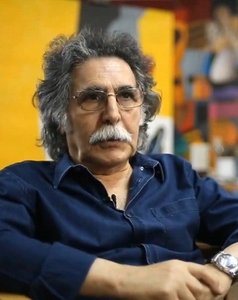
Dia al-Azzawi (b. 1939) is a pioneering Iraqi artist renowned for his fusion of Arabic calligraphy, bold colors & exploration of Arab identity, conflict & heritage. Founder of the New Vision group.

Purchase a high-resolution, enhanced digital image, far superior to the online preview.

Each file is meticulously prepared by our in-house specialists using advanced tools and expert manual retouching. We ensure every image has exceptional clarity, precise color accuracy, and fine detail.

The final file is delivered via email within 72 hours, optimized for immediate use in professional, editorial, and print environments. This is the same quality trusted by top-tier design studios, publishers, and galleries.

Digital Image

Download a high-resolution file for personal display, printing, and creative projects.

Total Price

$9.99

Included in Every Digital Image Order

Expert Digital Delivery, Guaranteed

When you choose Most-Famous-Paintings.com, you're not just getting an image - you're receiving a professionally enhanced digital artwork, crafted with precision and backed by a satisfaction guarantee. Here's everything that comes with your order, automatically:

shipping_icon
Fast Email Delivery

Your high-resolution digital image file will be emailed to you within 72 hours of ordering - ready for immediate use.

canvas_icon
AI-Enhanced Digital File

Your artwork is professionally optimized using advanced AI tools and manual editing, ensuring maximum detail, clarity, and color accuracy.

insurance_icon
Free Lifetime Re-Delivery

Accidentally deleted or lost your file? No worries - we'll resend it to you anytime, free of charge.

tax_icon
No Import Fees - Ever

Enjoy your artwork instantly with zero customs, duties, or delivery fees - digital downloads are always tax-free.

color_icon
Color Accuracy Guarantee

We ensure your digital image reflects the original colors as closely as possible using professional tools and color management.

return_icon
60-Day Satisfaction Guarantee

If you're not satisfied with your digital image, we'll revise it or refund 100% within 60 days - no questions asked.

guarantee_icon
100% Money-Back Guarantee

Not satisfied? Get a full refund within 60 days of receiving your digital file - no questions asked.

discount_icon
Bulk Order Discounts

Buy 3 images, save 10% - Buy 5, save 15% - Buy 10+, save 20%. Great for creative projects, galleries, and agencies.

Quick Facts

  • Subject or theme: Urban landscapes
  • Artist: Dia al-Azzawi
  • Title: Architectural Composition
  • Medium: Oil Painting
  • Year: 1971
  • Artistic style: Cubist influences
  • Movement: Abstract Expressionism

Art Quiz

There is only one correct answer for each question.

Question 1:
What artistic movement is most prominently influenced by Dia al-Azzawi’s ‘Architectural Composition’?
Question 2:
The predominant color palette of the artwork utilizes shades of:
Question 3:
What technique is Dia al-Azzawi employing in this painting?
Question 4:
The artwork’s composition is characterized by:
Question 5:
What cultural element contributes to the artwork’s visual vocabulary?

Collectible Description

Architectural Composition by Dia al-Azzawi: A Fragmented Echo of Mesopotamian Spirit

Dia al-Azzawi’s “Architectural Composition,” created in 1971, isn't merely a painting; it’s a distillation of Iraqi cultural memory—a visual meditation on the grandeur and complexity of Mesopotamia against the backdrop of a rapidly changing political landscape. Born in Baghdad in 1939, al-Azzawi’s artistic journey began amidst the echoes of ancient civilizations, shaping his profound understanding of symbolism and storytelling that would permeate his oeuvre. His formative years instilled within him an unwavering fascination with the monumental ruins of Sumerian and Akkadian cities, fueling a desire to translate these impressions onto canvas in ways that transcended mere representation. The artwork itself is immediately striking—a square canvas dominated by hues of blue, punctuated by bursts of crimson, saffron, violet, ivory, and charcoal. At first glance, it appears as an abstract exploration of geometric forms – rectangles, squares, circles – meticulously arranged to suggest the fractured facades of buildings or perhaps even stylized depictions of temple complexes. However, delving deeper reveals a sophisticated layering of technique that speaks volumes about al-Azzawi’s artistic sensibilities. The artist employs oil paints on canvas with a deliberate blending process, creating subtle gradations of color and texture that imbue the piece with an ethereal quality. While brushstrokes are visible, they remain restrained, prioritizing tonal harmony over dramatic impasto—a conscious decision reflecting the artist's commitment to conveying serenity and contemplation. Beyond its formal qualities lies a rich tapestry of symbolic resonance. The pervasive blue palette evokes not only the azure expanse of the Tigris River but also deeper associations with spirituality and melancholy – colors frequently employed in Islamic art to express profound emotion. Scattered amongst these dominant shades are vibrant accents—red symbolizing passion and vitality, yellow representing enlightenment—suggesting an interplay between earthly ambition and divine aspiration. Furthermore, integrated within some of the geometric shapes are fragments of Arabic calligraphy, adding layers of cultural significance and hinting at a connection to Mesopotamian traditions of monumental inscriptions. These symbols aren’t merely decorative; they actively participate in conveying the artwork's overarching theme: the enduring spirit of Mesopotamia—its resilience amidst upheaval and its capacity for breathtaking beauty. The piece’s stylistic influences are discernible in the confluence of Cubism and Modern Art movements, mirroring a broader artistic dialogue occurring during the early 1970s. Like Picasso and Braque before him, al-Azzawi dismantles traditional perspective, presenting flattened planes that prioritize visual impact over illusionistic realism. This deliberate rejection of convention underscores his desire to communicate ideas directly—to engage the viewer’s intellect as much as their emotions. “Architectural Composition” isn't simply a depiction of form; it’s an invitation to contemplate the relationship between past and present, between fragmentation and wholeness—a timeless testament to the enduring power of art to capture the essence of cultural heritage. Ultimately, this artwork transcends its technical merits to offer a poignant reflection on Iraqi identity during a period marked by political instability. It speaks to a yearning for continuity amidst change, conveying a sense of solemn beauty that lingers long after viewing. Its muted palette and carefully considered composition encourage introspection—making it an ideal choice for interior designers seeking pieces that inspire contemplation and evoke the spirit of ancient Mesopotamia.

Artist Biography

A Life Forged in Mesopotamian Echoes

Dia al-Azzawi, born in Baghdad in 1939, is more than just a painter; he’s a visual poet of the Arab world, an artist whose life and work are inextricably linked to the turbulent history and enduring cultural heritage of Iraq. His formative years unfolded amidst a period of profound political and social change, a backdrop that would deeply inform his artistic vision. From early childhood experiences steeped in Iraqi folklore and the majestic remnants of Mesopotamia’s ancient civilizations, al-Azzawi developed an acute sensitivity to the power of symbolism and narrative. This foundation led him to the Institute of Fine Arts in Baghdad, where he received formal training, mastering technical skills while simultaneously absorbing the currents of art history – a knowledge base he would later brilliantly synthesize with his own unique aesthetic language. Even then, it was clear that al-Azzawi wasn’t simply aiming to replicate existing styles; he sought to excavate and revitalize the visual culture of his ancestors.

The Birth of a Distinctive Vision

Al-Azzawi's artistic journey began with explorations in abstract expressionism, but this phase proved merely a stepping stone towards something far more distinctive. He quickly gravitated toward an innovative style that boldly integrated Arabic calligraphy into his compositions. This wasn’t mere ornamentation; it was a deliberate act of reclamation, a powerful assertion of Arab identity within the global art landscape. Al-Azzawi became a central figure in the *Hurufiyya* movement, a collective endeavor to liberate Arabic letters from their traditional linguistic function and explore their inherent aesthetic potential as abstract forms. His canvases began to pulse with the energy of ancient scripts, transformed into dynamic shapes and patterns that resonated with both historical weight and contemporary relevance. The palette he employed was often vibrant and emotionally charged, reflecting not only his personal intensity but also a deep engagement with the political realities surrounding him. He didn’t shy away from confronting difficult themes; instead, he channeled them into works of profound beauty and unsettling power.

Forging New Paths: The New Vision Group

In 1963, recognizing the need for a more progressive artistic voice in Iraq, al-Azzawi co-founded the New Vision group (Jama’at al-Ru’ya al-Jadida). This collective of Iraqi artists aimed to break free from conventional norms and modernize Arab art. It was a bold undertaking, challenging established institutions and advocating for experimentation. Al-Azzawi's leadership within the group proved instrumental in fostering a vibrant artistic community and inspiring a new generation of creatives. The New Vision group wasn’t simply about stylistic innovation; it was about redefining what it meant to be an Arab artist in a rapidly changing world, forging a path toward greater cultural autonomy and self-expression. Through exhibitions, publications, and collaborative projects, they sought to elevate the profile of modern Iraqi art both domestically and internationally.

Themes of Heritage, Conflict, and Exile

Throughout his prolific career, Dia al-Azzawi has consistently addressed themes of heritage, identity, conflict, and exile – subjects deeply resonant with the experiences of the Arab world. His work serves as a poignant reflection of the political turmoil and social upheaval that have marked Iraq’s history and continue to shape its present. He masterfully navigates diverse media—painting, sculpture, printmaking, and digital art—demonstrating an unwavering commitment to artistic innovation. Notable works like “Amin Hasanain Al-Ibrahimy,” a moving tribute to the renowned Iraqi poet, and the harrowing “Nasheed Al Jassad (Bodily Anthem) Tel el Zaatar” series, commemorating the victims of the Tel al-Zaatar refugee camp massacre in Lebanon, stand as powerful testaments to his artistic conscience. His collaborative spirit is also evident in projects like the Nabu Museum in Lebanon, a testament to his dedication to preserving and promoting Arab art and culture for future generations.

A Legacy Etched in Calligraphy and Courage

Today, Dia al-Azzawi is rightfully regarded as one of the most important and influential artists of the modern Arab world. His pioneering use of Arabic calligraphy, coupled with his unflinching exploration of complex socio-political themes, has left an indelible mark on subsequent generations of artists. Though he now resides in London, he remains a vital voice in contemporary art, continuing to advocate for Arab artistic expression on a global stage. His work is exhibited internationally and held in numerous prestigious collections, solidifying his place as a significant figure not only within the context of Middle Eastern art but also within the broader narrative of global art history. Dia al-Azzawi’s legacy isn't just about aesthetic innovation; it’s about courage—the courage to confront difficult truths, to reclaim cultural identity, and to use art as a powerful tool for social change.
Dia al-Azzawi

Dia al-Azzawi

1939 - , Iraq

Quick Facts

  • Artistic Movement Or Style: Hurufiyya, Abstract Expressionism
  • Artists Or Movements Influenced By This Artist: ['Modern Arab artists']
  • Date Of Birth: 1939
  • Full Name: Dia al-Azzawi
  • Nationality: Iraqi
  • Notable Artworks:
    • Amin Hasanain Al-Ibrahimy
    • Nasheed Al Jassad
    • Pleasure to the Eye
    • We Are Not Seen But Corpses
  • Place Of Birth: Baghdad, Iraq

