x

 Oil On CanvasWallArtContemporary Realism
 1902Modern
 25.0 x 30.0 cm
Museum-quality giclée or canvas print with fast production and flexible finish options. ( Buy Hand Made Painting Buy Image)





























Pick from our preset sizes that match the artwork's original proportions.

You may enter your own dimensions to fit a specific frame or space. If your selected size does not match the original image's proportions, we will either crop the artwork or extend the image with a mirrored or solid-fill edge. A digital mockup will be sent for your approval before production begins.
Please note that the on-screen preview does not reflect the actual cropping or extension. Only the mockup will accurately show the final composition.
While custom sizes are available, we recommend selecting a dimension from the predefined list to preserve the original proportions.
Worldwide Delivery () in 2 weeks instead of standard 4/5 weeks. (20 August)


Model sitting
Reproduction Size
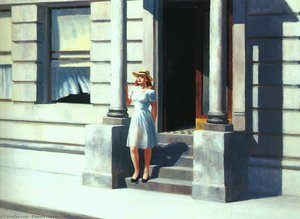
In the quiet corners of art history, few moments capture the profound weight of solitude as masterfully as Edward Hopper’s 1902 work, "Model Sitting." Long before he became the definitive chronicler of American urban alienation, a young Hopper was already experimenting with the delicate interplay of light and human presence. This intimate canvas, measuring a modest 25 x 30 cm, invites the viewer into a private, almost voyeuristic moment. A woman sits alone on a bench, her attention turned inward as she adjusts the back of her dress—a gesture that feels both mundane and deeply personal. The scene is bathed in a diffused, soft light that seems to suspend time itself, casting gentle shadows that hint at an interior world filled with reflection, perhaps aided by the presence of a mirror that serves as a silent witness to her private ritual.
The composition is far from empty; Hopper subtly weaves other figures into the periphery, including a man on the left and another figure seated nearby. Yet, these characters remain shrouded in a sense of detachment. Their faces are obscured, rendering them less like specific individuals and perhaps more like ghosts of the background, emphasizing the central subject's isolation. This deliberate lack of direct interaction between the figures creates a psychological tension—a feeling that while bodies may occupy the same physical space, their internal worlds remain entirely separate and unreachable.
Technically, "Model Sitting" serves as an exquisite example of the New Realism movement. Moving away from the fleeting, blurred impressions of his contemporaries, Hopper embraced a more disciplined approach to observation. He sought to capture the tangible, heavy reality of objects and the true weight of fabric. Through his masterful use of oil on canvas, he employs a muted, sophisticated palette dominated by earthy browns, creamy tones, and pale yellows. This restrained color scheme does not merely decorate the scene; it builds an atmosphere of subdued stillness and contemplative melancholy.
The brushwork is smooth and intentional, lending a sense of solidity to the wooden bench and the heavy folds of the woman's clothing. For the discerning collector or interior designer, this technique offers a remarkable depth that transcends simple reproduction. The way Hopper manipulates light to define form creates a three-dimensional quality that breathes life into the canvas. It is a painting that does not shout for attention but rather commands it through its quiet, unwavering accuracy and its ability to make the ordinary feel monumental.
For those looking to curate a space of reflection and sophistication, "Model Sitting" offers more than just aesthetic beauty; it provides an emotional anchor. The painting’s themes of privacy, introspection, and the quiet dignity of the individual resonate deeply within the modern home. It is a piece that invites long periods of contemplation, making it an ideal centerpiece for a study, a library, or a serene bedroom sanctuary.
Whether you are an art historian drawn to its early stylistic significance or a decorator seeking to introduce a sense of calm and historical weight into a contemporary room, this work stands as a testament to the power of the understated. Owning a high-quality reproduction of such a pivotal moment in Hopper’s career allows one to bring a fragment of American modernism's soul into their personal environment—a permanent window into a world of beautiful, silent grace.


1931 - 1967 , United States of America

Explore the raw realism of Neue Sachlichkeit. Discover how German New Objectivity artists like Otto Dix and George Grosz captured the turbulent Weimar Republic through unflinching social critique and precise detail. A definitive guide for art historians and collectors.

Explore the raw, evocative beauty of the Ashcan School. Discover how masters like Bellows and Glackens captured New York's urban soul through American Realism, and learn to bring this gritty, historical elegance into your modern art collection.


Stay updated with the latest art news, exclusive offers, and decoration ideas.
Tell us about your project and our art experts will provide you with 3 personalized art suggestions.
Let Us Curate 3 Options Just for You - Free!


 Preview
 Send
Send Share
Share
 Details

 Download
 Similars
 X-Ray
X-Ray Diaporama
 Read More







 Glass option is only available in size under 110 CM