x

 Renaissance Expressionism
 1568
1568 37.0 x 23.0 cm
 Galleria Estense
Museum-quality giclée or canvas print with fast production and flexible finish options. ( Buy Hand Made Painting Buy Image)





























Pick from our preset sizes that match the artwork's original proportions.

You may enter your own dimensions to fit a specific frame or space. If your selected size does not match the original image's proportions, we will either crop the artwork or extend the image with a mirrored or solid-fill edge. A digital mockup will be sent for your approval before production begins.
Please note that the on-screen preview does not reflect the actual cropping or extension. Only the mockup will accurately show the final composition.
While custom sizes are available, we recommend selecting a dimension from the predefined list to preserve the original proportions.
Worldwide Delivery () in 2 weeks instead of standard 4/5 weeks. (16 August)


The Modena Triptych (back panels)
Reproduction Size
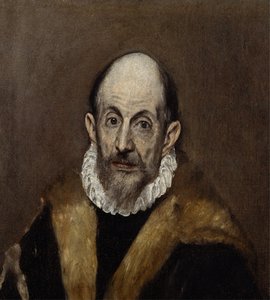
Doménikos Theotokópoulos, known universally as El Greco, was born in Crete in 1541, a world steeped in Byzantine tradition. His early training profoundly shaped his artistic sensibilities – a deep understanding of iconography and a reverence for religious subjects were ingrained from the outset. However, it wasn’t simply imitation he sought; he evolved, pushing the boundaries of representation with an almost visionary intensity. The turbulent political landscape of Spain during this period, marked by religious fervor and the rise of the Habsburg dynasty, undoubtedly influenced his work, providing a fertile ground for exploring themes of spirituality and salvation. His Greek heritage – signified by the “Krḗs” appended to his name – was a constant source of pride, informing both his artistic identity and his connection to the spiritual heartland he eventually called home in Toledo.
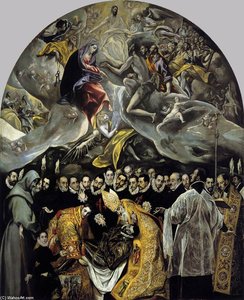
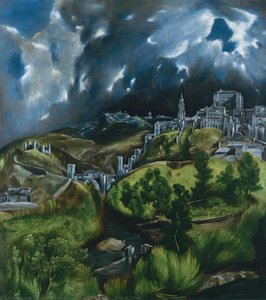
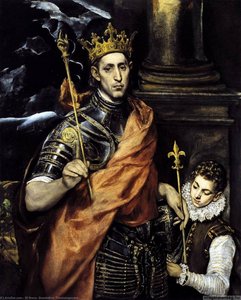
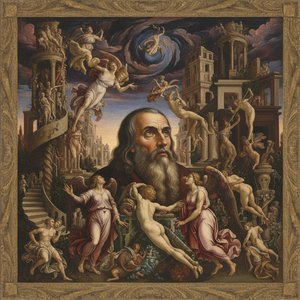
The scenes depicted on these panels are rich with symbolic meaning. While specific interpretations vary depending on scholarly analysis, the overall narrative likely draws from biblical accounts of salvation and judgment. The figures, rendered with a heightened sense of emotion, represent not just individuals but archetypes of faith – the mother and child, representing Mary’s devotion; the angelic figure, embodying divine grace; and the men standing beside each other, perhaps symbolizing humanity's struggle between good and evil. The crown worn by one of the figures could signify royalty or divine authority, adding another layer to the complex theological message.
Created in 1568, this “Modena Triptych” (back panels) stands as a testament to El Greco’s unparalleled vision and technical skill. Its emotional power transcends time, inviting contemplation on themes of faith, mortality, and the human condition. While this particular image is presented here as a photographic reproduction, it serves as a powerful reminder of the original's enduring legacy. Owning a high-quality reproduction allows you to bring this masterpiece into your own space, fostering a connection with one of art history’s most captivating figures – El Greco himself.

1541 - 1614 , Greece
Explore the dramatic transition from High Renaissance harmony to Mannerist tension. Discover how masters like El Greco redefined art through distortion and spiritual intensity. An expert guide for art enthusiasts seeking deep historical context and museum-quality inspiration.

Explore the dramatic evolution of Mannerism from High Renaissance perfection to El Greco's spiritual intensity. Discover the history, techniques, and enduring legacy of this transformative era through an expert art-history lens.

Explore the profound drama of Spanish Baroque art. Delve into the mastery of light, shadow, and realism through the legendary works of Diego Velázquez and the Spanish Golden Age with our expert-led historical guide.


Stay updated with the latest art news, exclusive offers, and decoration ideas.
Tell us about your project and our art experts will provide you with 3 personalized art suggestions.
Let Us Curate 3 Options Just for You - Free!


 Preview
 Send
Send Share
Share
 Details

 Download
 Similars
 X-Ray
X-Ray Diaporama
 Read More







 Glass option is only available in size under 110 CM