


x


Hand-painted oil on canvas in your size and frame, made to order by our artists.





























Pick from our preset sizes that match the artwork's original proportions.

You may enter your own dimensions to fit a specific frame or space. If your selected size does not match the original image's proportions, we will either crop the artwork or extend the painting with additional hand-painted elements. A digital mockup will be sent for your approval before production begins.
Please note that the on-screen preview does not reflect the actual cropping or extension. Only the mockup will accurately show the final composition.
While custom sizes are available, we recommend selecting a dimension from the predefined list to preserve the original proportions.
Worldwide Delivery () in 3/4 weeks instead of standard 5 weeks. (18 July). No compromise on quality.


The Serenade
Reproduction Size
In the tender embrace of The Serenade, we are transported to a sun-drenched corner of nineteenth-century Venice, where the air seems to vibrate with the soft strumming of a guitar. Eugen von Blaas, a master of Academic Classicism, captures more than just a musical performance; he captures a fleeting moment of communal intimacy. The scene unfolds around a central figure—a musician perched upon a stone wall, his instrument serving as the heartbeat of the gathering. As he plays, the surrounding figures are drawn into his orbit, their gazette-like focus creating a sense of shared enchantment. This is not merely a depiction of a street scene, but an invitation to witness the quiet, romantic pulse of Venetian life, where music acts as the invisible thread binding strangers together in a moment of pure, unadulterated harmony.
The composition is a masterclass in the delicate balance of genre painting. Von Blaas utilizes a sophisticated approach to light and shadow to guide the viewer's eye through the social tapestry of the piece. The man with the guitar serves as the luminous focal point, his posture and movement anchoring the surrounding characters. To the periphery, the presence of chairs and distant figures adds layers of depth, suggesting a larger, bustling world just beyond the frame. For the discerning collector or interior designer, this painting offers a profound sense of narrative depth; it is a piece that does not merely sit upon a wall but breathes life into a room, providing a window into a bygone era of elegance and grace.
Technically, The Serenade exemplifies the meticulous precision inherited from von Blaas’s illustrious lineage. Having been raised under the tutelage of his father, Karl von Blaas, the artist employed a refined technique characterized by smooth brushwork and an almost photographic attention to texture. One can almost feel the weight of the fabric in the clothing of the onlookers and the weathered grain of the stone wall upon which the musician rests. This dedication to Academic Classicism ensures that every element—from the subtle highlights on a silk sleeve to the soft, atmospheric haze of the background—contributes to an idealized yet deeply believable reality.
The emotional resonance of the work lies in its ability to evoke nostalgia and warmth. There is a profound sense of peace found in the way the characters are arranged; there is no tension here, only the gentle pull of melody. For those seeking to curate a space that inspires tranquility and sophistication, this reproduction serves as an exquisite centerpiece. It brings with it the romantic spirit of the Venetian lagoon, making it an ideal choice for grand foyers, quiet study nooks, or elegant living spaces where art is intended to spark conversation and emotional reflection.

Born in Albano, near Rome, in 1843, Eugen de Blaas (later known as Eugene von Blaas) emerged from a family steeped in artistic tradition. His father, Karl von Blaas, was himself a respected painter and professor at the Academy of Venice, providing young Eugen with an unparalleled foundation in art history, fresco techniques, and the principles of classical composition. This familial influence profoundly shaped his artistic trajectory, leading him to embrace the tenets of Academic Classicism – a style characterized by meticulous detail, idealized forms, and a reverence for historical and mythological subjects.
Eugen’s early years were spent immersed in the vibrant atmosphere of Venice, a city he would come to both paint and deeply admire. Moving with his family to the lagoon city as a child, he absorbed its unique culture, architecture, and social customs. This intimate connection to Venice became the cornerstone of his artistic output, informing his choice of subject matter and his distinctive visual language. Unlike many of his contemporaries who sought to capture fleeting moments or contemporary scenes, Blaas consistently returned to depictions of Venetian life – particularly the elegant women of its aristocratic circles – offering a carefully constructed and idealized vision of this captivating city.
Blaas’s artistic career blossomed in the late 19th century, a period marked by significant shifts in European art. While Impressionism was gaining momentum elsewhere, Blaas remained firmly rooted in Academic Classicism, producing a body of work that is both meticulously detailed and imbued with a sense of romantic nostalgia. His most celebrated works fall into the category of “genre scenes,” which capture everyday moments within Venetian society. These aren’t raw depictions of life; rather, they are carefully staged vignettes, often featuring wealthy women in elaborate costumes, engaging in leisurely activities like shopping, attending social gatherings, or simply enjoying the beauty of their surroundings.
His paintings frequently showcase a remarkable attention to detail – from the shimmering fabrics and intricate jewelry worn by his subjects to the meticulously rendered architecture and atmospheric lighting. Blaas’s use of color is particularly noteworthy; he employs rich, saturated hues to evoke the warmth and luminosity of the Venetian sun, creating scenes that are both visually stunning and emotionally resonant. He was a master of capturing the essence of aristocratic Venice, presenting an idealized image of wealth, beauty, and social grace.
Among Blaas’s most iconic paintings are “Mother’s Little Helper” (1884), which offers a charming glimpse into a rustic Venetian kitchen scene, and “On the Balcony” (1877), a vibrant depiction of a fashionable gathering on a balcony overlooking the canals. “La forma nuziale in sacrestia” is another notable example, portraying a bridal ceremony within a church sacristy with remarkable precision and elegance. These works exemplify his signature style – characterized by its meticulous realism, balanced composition, and subtle emotional depth.
His artistic development can be traced through a progression from more overtly classical subjects to increasingly intimate depictions of Venetian life. While he continued to paint portraits throughout his career, it was his genre scenes that ultimately cemented his reputation as one of the most accomplished artists of his generation. He skillfully blended historical influences with contemporary observation, creating works that are both timeless and deeply rooted in their specific context.
Eugen von Blaas’s work represents a fascinating intersection of artistic tradition and cultural identity. His commitment to Academic Classicism provided him with the technical skills and formal training necessary to excel as a painter, while his deep affection for Venice infused his art with a unique sense of place and atmosphere. His paintings offer valuable insights into the social customs, fashion trends, and aesthetic sensibilities of 19th-century Venetian society.
Despite not achieving widespread fame during his lifetime, Blaas’s work has since been recognized for its artistic merit and historical significance. His paintings are now housed in prestigious museums and private collections around the world, serving as a testament to his enduring legacy as one of Venice's most celebrated artists. His meticulous attention to detail, coupled with his evocative depictions of Venetian life, continue to captivate audiences today.

1843 - 1932 , Italy

Explore the rich history of genre painting! Discover Dutch Masters & European artists who captured everyday life with stunning realism. Learn about symbolism, techniques & lasting influence.
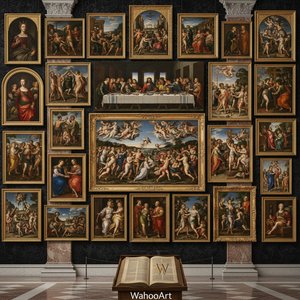
Explore 25 breathtaking masterpieces by Jacopo Tintoretto, the Venetian master of drama and light. Discover the stories behind iconic Renaissance paintings & find museum-quality art reproductions to elevate your home decor on Most-Famous-Paintings.com.
Elevate your space with bespoke wall murals & frescoes. Explore the resurgence of this luxury art form. Expert design guidance & seamless installation – .

Explore the captivating world of Pietro Longhi's Venetian scenes! Discover insightful analysis of his Rococo masterpieces & social commentary on 18th-century life. Learn about this 'Venetian Hogarth' and his lasting artistic legacy.

Explore 10 defining Academic Realism masterpieces by Bouguereau, Gérôme & Cabanel. Discover the stories behind these iconic paintings and bring timeless art into your home with museum-quality reproductions from Most-Famous-Paintings.com. Explore the full collection online!


Stay updated with the latest art news, exclusive offers, and decoration ideas.
Tell us about your project and our art experts will provide you with 3 personalized art suggestions.
Let Us Curate 3 Options Just for You - Free!


 Buy print
 Send
Send Share
Share
 Details

 Download
 Similars
 X-Ray
X-Ray Diaporama

 Read More







 Glass option is only available in size under 110 CM


