


x

Hand-painted oil on canvas in your size and frame, made to order by our artists. ( Buy Print Buy Image)





























Pick from our preset sizes that match the artwork's original proportions.

You may enter your own dimensions to fit a specific frame or space. If your selected size does not match the original image's proportions, we will either crop the artwork or extend the painting with additional hand-painted elements. A digital mockup will be sent for your approval before production begins.
Please note that the on-screen preview does not reflect the actual cropping or extension. Only the mockup will accurately show the final composition.
While custom sizes are available, we recommend selecting a dimension from the predefined list to preserve the original proportions.
Worldwide Delivery () in 3/4 weeks instead of standard 5 weeks. (25 August). No compromise on quality.


Mural, mural or composition, or abstract composition
Reproduction Size
Fernand Léger's untitled abstract composition, a vibrant explosion of color and geometric shapes, offers a compelling window into the heart of early 20th-century modernism. Executed with a bold confidence that reflects the burgeoning industrial age, this artwork transcends mere decoration; it’s a profound statement about humanity’s relationship with technology and the evolving landscape of visual expression. The painting's immediate impact lies in its dynamic arrangement – circles punctuate a field of intense hues, while polygons ground the composition with their deliberate placement. This isn’t simply random color; it’s a carefully orchestrated dialogue between organic forms and machine-like precision, a hallmark of Léger’s artistic philosophy.
Léger's work emerged from a pivotal moment in art history, directly following his groundbreaking 1915 painting, *Nude*, which shocked the Parisian art world with its depiction of a figure fragmented into geometric shapes. This radical departure from traditional representation paved the way for Léger’s own exploration of abstraction, but crucially, he didn't simply reject figuration; he sought to reinterpret it through the lens of modern technology. Influenced by the burgeoning industrial landscape – the factories, trains, and machines that were transforming Europe – Léger aimed to capture the essence of this new era in his art. His work can be seen as a visual embodiment of the machine age, reflecting both its power and its potential impact on human form.
Historical Context: The painting was created during a period of rapid industrialization and technological advancement, profoundly impacting artistic thought and practice. Léger’s work reflects this shift, anticipating later developments in Constructivism and Suprematism.Léger's technique is characterized by its bold application of paint and a deliberate avoidance of smooth blending. The colors are applied with a forceful energy, creating a sense of movement and dynamism within the composition. While seemingly abstract, there’s a clear underlying structure – a carefully considered balance between positive and negative space, and a masterful manipulation of color to create depth and visual interest. Léger often employed a technique he called “pointillé,” using small dots of color to build up layers of texture and form, contributing to the painting's vibrant intensity. The use of polygons suggests a deliberate attempt to mimic the precise lines and angles found in machine construction.
Beyond its formal qualities, Léger’s abstract mural carries significant symbolic weight. The circles, often associated with wholeness and unity, are juxtaposed against the angularity of the polygons, creating a tension that reflects the inherent conflict between organic life and mechanical forces. The overall effect is one of both fascination and unease – a recognition of the transformative power of technology while acknowledging its potential disruption of traditional values. This artwork invites viewers to contemplate humanity’s place in an increasingly mechanized world, prompting questions about progress, identity, and the future.

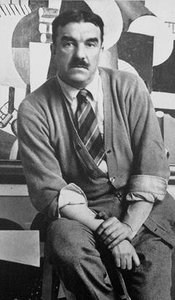
1881 - 1955 , France

Explore the profound impact of Minimalism and Geometric Abstraction. From Mondrian to Malevich, discover how stripping art to its essential forms revolutionized modern aesthetics through our expert-led historical guide.


Stay updated with the latest art news, exclusive offers, and decoration ideas.
Tell us about your project and our art experts will provide you with 3 personalized art suggestions.
Let Us Curate 3 Options Just for You - Free!


 Preview
 Send
Send Share
Share
 Details

 Download
 Similars
 X-Ray
X-Ray Diaporama

 Read More







 Glass option is only available in size under 110 CM


