


x


Hand-painted oil on canvas in your size and frame, made to order by our artists.





























Pick from our preset sizes that match the artwork's original proportions.

You may enter your own dimensions to fit a specific frame or space. If your selected size does not match the original image's proportions, we will either crop the artwork or extend the painting with additional hand-painted elements. A digital mockup will be sent for your approval before production begins.
Please note that the on-screen preview does not reflect the actual cropping or extension. Only the mockup will accurately show the final composition.
While custom sizes are available, we recommend selecting a dimension from the predefined list to preserve the original proportions.
Worldwide Delivery () in 3/4 weeks instead of standard 5 weeks. (25 July). No compromise on quality.


The acrobats polychrome
Reproduction Size
Fernand Léger's "The Acrobats," a vibrant polychrome painting, is more than just a depiction of figures engaged in a daring performance; it’s a profound meditation on the burgeoning spirit of modernity. Created by one of the most significant figures of early 20th-century art, this work encapsulates Léger’s revolutionary approach to representing the world – a synthesis of observation and abstraction that sought to capture the dynamism of industrial life and the human form within it. The painting's energy is palpable, radiating from the central interaction between the two principal acrobats, their postures suggesting both strength and vulnerability, mirroring the complex realities of a society undergoing rapid transformation.
Léger's artistic trajectory was profoundly shaped by his upbringing in rural Normandy. The stark geometries of farm machinery and the repetitive motions of agricultural labor instilled within him a fascination with form, which he later translated into a distinctly Cubist vocabulary. “The Acrobats” exemplifies this approach; the figures are not rendered with traditional representational accuracy but rather fragmented and reassembled, their bodies broken down into geometric shapes – cylinders, cones, and planes – that evoke the mechanical forms of the industrial age. This deliberate distortion isn’t merely stylistic; it's a conscious effort to convey movement and energy, capturing the fleeting moments of acrobatic performance with an unprecedented sense of immediacy. The use of bold, contrasting colors—primarily reds, blues, and yellows—further amplifies this effect, creating a visually arresting composition that demands attention.
Beyond its formal qualities, “The Acrobats” is laden with symbolic meaning. The acrobats themselves represent humanity’s adaptation to and engagement with the new industrial world. Their precarious poses – balancing on edges, defying gravity – can be interpreted as a metaphor for the challenges and uncertainties of this era. The figures are not presented as heroic or idealized; instead, they possess a raw, almost primitive quality, suggesting a return to fundamental human instincts in response to the overwhelming forces of modernity. Léger’s deliberate choice of subject matter—acrobats—was a pointed commentary on the changing role of man within society, reflecting the increasing influence of machines and technology.
Léger's technique in “The Acrobats” is characterized by its vigorous brushwork and layered application of paint. He built up his compositions through multiple layers, creating a textured surface that adds to the painting’s sense of dynamism. The artist’s use of color is particularly noteworthy, employing bright, saturated hues to heighten the visual impact and emphasize the geometric forms. “The Acrobats” cemented Léger's position as a leading figure in the development of Cubism and influenced generations of artists who followed. His bold experimentation with form and color paved the way for further explorations of abstraction and continues to resonate within contemporary art practice. This reproduction offers an exceptional opportunity to own a piece of art history, capturing the spirit of a pivotal moment in modern artistic innovation.


1881 - 1955 , France
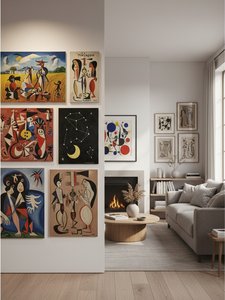
Explore 25 iconic Joan Miró paintings! Discover the stories behind his Surrealist masterpieces, vibrant colors & unique style. Find museum-quality Miro reproductions and elevate your home decor with Most-Famous-Paintings.com. Explore the full collection online.
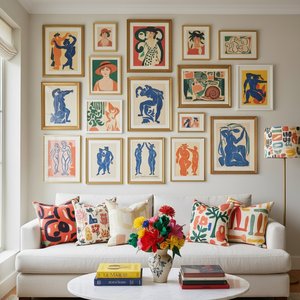
Journey through Henri Matisse's 25 most iconic paintings! Explore Fauvism, vibrant colors & the stories behind masterpieces like 'The Dance'. Find museum-quality art reproductions and curated decor ideas to elevate your space. Discover all masterpieces on Most-Famous-Paintings.com.
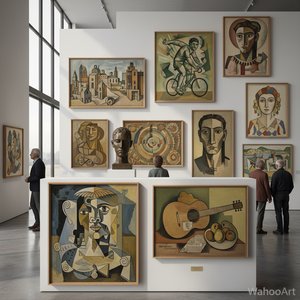
Journey through Cubism's evolution with 10 iconic masterpieces by Picasso, Braque & more. Explore the stories behind these revolutionary paintings and find museum-quality art reproductions to elevate your home decor at .
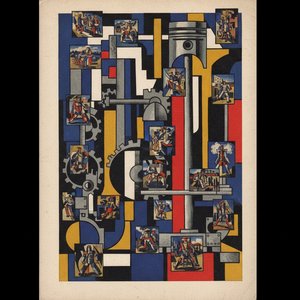
Explore 25 iconic Fernand Léger paintings that defined the Machine Age & Cubism. Discover the stories behind his bold colors, geometric forms & avant-garde style. Find museum-quality art reproductions on Most-Famous-Paintings.com.
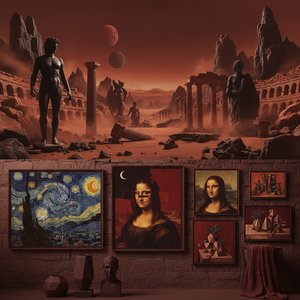
Delve into the power of 'Mars Black' with 10 iconic paintings by masters like Rembrandt & Caravaggio. Explore dramatic chiaroscuro, gothic art, and timeless beauty. Find museum-quality reproductions & elevate your home decor on .


Stay updated with the latest art news, exclusive offers, and decoration ideas.
Tell us about your project and our art experts will provide you with 3 personalized art suggestions.
Let Us Curate 3 Options Just for You - Free!


 Preview
 Buy print
 Send
Send Share
Share
 Details

 Download
 Similars
 X-Ray
X-Ray Diaporama

 Read More







 Glass option is only available in size under 110 CM


