


x

Museum-quality giclée or canvas print with fast production and flexible finish options. ( Buy Hand Made Painting Buy Image)





























Pick from our preset sizes that match the artwork's original proportions.

You may enter your own dimensions to fit a specific frame or space. If your selected size does not match the original image's proportions, we will either crop the artwork or extend the image with a mirrored or solid-fill edge. A digital mockup will be sent for your approval before production begins.
Please note that the on-screen preview does not reflect the actual cropping or extension. Only the mockup will accurately show the final composition.
While custom sizes are available, we recommend selecting a dimension from the predefined list to preserve the original proportions.
Worldwide Delivery () in 2 weeks instead of standard 4/5 weeks. (18 August)


The flower that walks
Reproduction Size
Fernand Léger's "The Flower That Walks," painted in 1953, isn’t merely a depiction of a flower; it’s an embodiment of the burgeoning modernist spirit grappling with the dynamism of the machine age. This vibrant canvas, brimming with bold geometric shapes and a playful energy, captures a pivotal moment in Léger's artistic evolution – his conscious effort to integrate the visual language of industry and technology into a distinctly personal aesthetic. Initially trained as an architect, Léger’s path shifted dramatically towards painting after arriving in Paris, drawn by the revolutionary currents swirling through the city’s avant-garde circles. Unlike many of his contemporaries who sought refuge in abstraction as a purely intellectual exercise, Léger embraced it as a means to represent the very essence of modern life – its rhythms, its structures, and its inherent movement.
The painting immediately commands attention with its audacious color palette: a joyous explosion of red, white, green, yellow, and orange. These aren’t delicate pastels; they're assertive, almost industrial hues, reminiscent of factory machinery and the vibrant signage that dominated the urban landscape of 1950s Paris. Léger deliberately avoided subtle gradations, favoring sharp contrasts and simplified forms. This stylistic choice reflects his fascination with the mechanics of the world around him – the precise angles of gears, the repetitive patterns of assembly lines, and the bold, unyielding structures of modern buildings. The central blue circle acts as a grounding element, a visual anchor amidst the swirling energy of the flower’s form.
“The Flower That Walks” is deeply rooted in the principles of Cubism, a movement that Léger championed alongside Pablo Picasso and Georges Braque. However, Léger pushed beyond the purely analytical deconstruction of traditional forms characteristic of early Cubism. Instead, he sought to synthesize fragmented perspectives into a new, unified visual experience – a concept he termed “Tubism.” This approach involved reducing objects to their essential geometric components, often depicting them as if viewed from multiple angles simultaneously. The flower itself is rendered through this lens: its petals are not smoothly curved but rather broken down into angular planes, suggesting both the organic and the mechanical.
Léger’s interest in machinery profoundly influenced his artistic vision. He saw a beauty in the precision and efficiency of industrial design, and he sought to capture that same sense of order and dynamism in his paintings. The flower's stylized form, with its simplified shapes and bold colors, echoes the aesthetic of early 20th-century automobiles and airplanes – symbols of technological progress and modernity. The suggestion of movement is particularly striking; the flower appears to be actively “walking,” a deliberate gesture that imbues the painting with a sense of life and vitality.
While Léger’s work is often associated with industrial imagery, it's crucial to recognize the underlying human element. The "flower" isn't simply an abstract form; it subtly evokes the human figure, particularly the torso and limbs. The petals can be interpreted as arms reaching out, while the central circle represents a head or chest. This deliberate ambiguity invites viewers to project their own interpretations onto the painting, fostering a sense of personal connection.
Furthermore, the flower’s “walking” action carries symbolic weight. It suggests a journey, a progression, and perhaps even a striving for something beyond the confines of its immediate surroundings. Léger himself described his work as an attempt to capture "the spirit of the machine age," but also to express a sense of optimism about the future – a belief that technology could be harnessed to create a more beautiful and fulfilling world. “The Flower That Walks” is, therefore, not just a depiction of a flower; it’s a visual manifesto for a new era.
Most-Famous-Paintings offers meticulously crafted hand-painted reproductions of Fernand Léger's "The Flower That Walks," allowing you to bring this iconic modernist masterpiece into your home or office. Our skilled artists replicate the painting’s vibrant colors, bold forms, and dynamic energy with exceptional attention to detail. Whether you are an art collector, interior designer, or simply someone who appreciates beautiful artwork, a Most-Famous-Paintings reproduction of “The Flower That Walks” is a stunning addition to any space – a testament to Léger's genius and a celebration of the spirit of modernism.

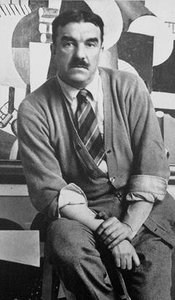
1881 - 1955 , France

Explore the revolutionary world of Cubism. Discover how Pablo Picasso and Georges Braque dismantled perspective to redefine modern art through geometric innovation and analytical mastery. An essential guide for art students, collectors, and history enthusiasts.

Explore the revolutionary world of Cubism. Discover how masters Pablo Picasso and Georges Braque dismantled reality through geometric abstraction to redefine modern art history.

Master the complexities of Cubism with our expert guide. Explore how Picasso and Braque revolutionized modern art through fragmentation, multiple perspectives, and geometric innovation. Perfect for art students and collectors seeking deep historical insight.

Explore the profound history of sculpture, from classical realism to modern abstraction. Discover the mastery of form, texture, and medium through an expert art-historical lens designed for discerning collectors and enthusiasts.


Stay updated with the latest art news, exclusive offers, and decoration ideas.
Tell us about your project and our art experts will provide you with 3 personalized art suggestions.
Let Us Curate 3 Options Just for You - Free!


 Preview
 Send
Send Share
Share
 Details

 Download
 Similars
 X-Ray
X-Ray Diaporama

 Read More







 Glass option is only available in size under 110 CM


