


x

 Acrylic On CanvasWallArtCubist Abstraction
 Late Medieval
 32.0 x 45.0 cm
Museum-quality giclée or canvas print with fast production and flexible finish options. ( Buy Hand Made Painting Buy Image)





























Pick from our preset sizes that match the artwork's original proportions.

You may enter your own dimensions to fit a specific frame or space. If your selected size does not match the original image's proportions, we will either crop the artwork or extend the image with a mirrored or solid-fill edge. A digital mockup will be sent for your approval before production begins.
Please note that the on-screen preview does not reflect the actual cropping or extension. Only the mockup will accurately show the final composition.
While custom sizes are available, we recommend selecting a dimension from the predefined list to preserve the original proportions.
Worldwide Delivery () in 2 weeks instead of standard 4/5 weeks. (16 August)


The Observatory, study for the City
Reproduction Size
Fernand Léger’s “The Observatory, Study for the City” isn’t merely a depiction of an architectural structure; it’s a vibrant, dynamic exploration of modernity itself. Created around 1912-13, this monochrome drawing – now meticulously reproduced on canvas – offers a compelling glimpse into the artist's pioneering approach to Cubism and his fascination with the burgeoning industrial world. It’s a work that simultaneously evokes a sense of disorientation and an underlying energy, reflecting the rapid transformations occurring in Europe at the time. Léger wasn’t simply interested in representing objects; he sought to capture their essence – their mechanical nature, their rhythmic movement – and translate it onto the canvas through a radical simplification of form.
The composition immediately commands attention with its swirling lines and intersecting planes. Forget traditional perspective; Léger abandons depth in favor of a simultaneous view, presenting multiple viewpoints within a single frame. This fragmentation isn’t chaotic, however. Instead, it creates a sense of controlled dynamism, as if the city itself is constantly shifting and evolving. The central circular form, reminiscent of an observatory dome, anchors the composition while surrounding angular structures – hinting at buildings, machinery, or perhaps even the skeletal framework of a futuristic cityscape – radiate outwards in a complex dance of geometric shapes. Notice how these forms aren’t sharply defined; they bleed into one another, creating a textured surface that invites close examination.
Executed primarily with ink or charcoal on paper – a technique that lends the reproduction its remarkable depth and tactile quality – “The Observatory” showcases Léger’s masterful control of line. Bold, angular lines define the core shapes, while subtle hatching and cross-hatching create tonal variations and suggest volume without relying on traditional shading. This deliberate use of line isn't about creating realistic outlines; it’s about conveying energy and movement through a carefully orchestrated network of marks. The monochromatic palette – shades of black, grey, and white against a creamy background – amplifies the dynamism of the composition, forcing the viewer to focus on the interplay of form and line.
Léger's approach aligns perfectly with the tenets of Cubism, but it’s distinct from Picasso or Braque. Léger wasn’t interested in dissecting objects into geometric fragments; he sought to synthesize them – to create a new visual language that captured the spirit of the machine age. The simplified forms, the emphasis on mechanical shapes, and the rejection of traditional perspective all contribute to this unique vision. The work feels both abstract and intensely observational, as if Léger is distilling the essence of urban life into its most fundamental components.
“The Observatory” isn’t simply a study for a larger work; it's a statement about the changing world. The title itself – “Observatory” – suggests a desire to understand, to analyze, and perhaps even to control the forces shaping modern society. The fragmented forms can be interpreted as representing the breakdown of traditional values and the rise of industrialization, while the dynamic composition conveys a sense of urgency and transformation. Léger’s work resonates with a feeling of both excitement and anxiety – a recognition of progress alongside a questioning of its consequences.
Interestingly, Léger's early life in rural Normandy provided a powerful contrast to the mechanized world he depicted. This juxtaposition likely informed his artistic vision, allowing him to approach modernity with a sense of detached observation and critical awareness. “The Observatory” is a testament to Léger’s ability to translate this complex experience into a visually arresting and emotionally resonant work of art.
Most-Famous-Paintings offers meticulously hand-painted reproductions of “The Observatory, Study for the City,” capturing the essence of Léger’s unique style with unparalleled detail and vibrancy. Each reproduction is created by skilled artists who understand the nuances of Léger's technique, ensuring that you receive a faithful representation of this iconic work. Whether adorning your living room, office, or studio, this reproduction will serve as a captivating reminder of Léger’s pioneering vision and his enduring legacy in the world of modern art.
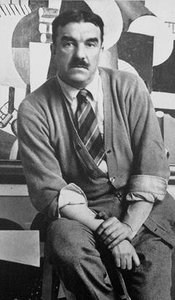
1881 - 1955 , France
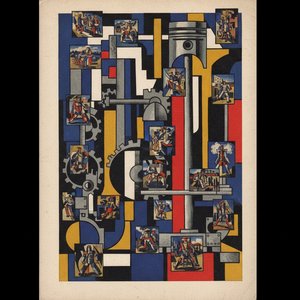
Explore 25 iconic Fernand Léger paintings that defined the Machine Age & Cubism. Discover the stories behind his bold colors, geometric forms & avant-garde style. Find museum-quality art reproductions on Most-Famous-Paintings.com.
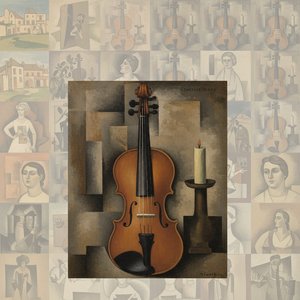
Explore 25 iconic Georges Braque paintings that revolutionized Cubism & modern art. Discover the stories behind his masterpieces, from Fauvism to Analytical Cubism. Find museum-quality reproductions & elevate your home decor with Most-Famous-Paintings.com.

Explore the evolution of geometric abstraction from Cubism to contemporary art. Discover key artists like Malevich & Mondrian, investment insights, and expert collecting advice at Most-Famous-Paintings.

Explore 10 legendary 'Acrylic on Paper' masterpieces by artists like Helen Frankenthaler & Gerhard Richter. Discover abstract expressionism, color field painting & the evolution of modern art. Find museum-quality reproductions for your home at Most-Famous-Paintings.com.

Explore the captivating world of geometric abstraction! Discover its origins, key artists like Kandinsky & Mondrian, and why this movement remains highly valued by art collectors today. Expert insights at Most-Famous-Paintings.


Stay updated with the latest art news, exclusive offers, and decoration ideas.
Tell us about your project and our art experts will provide you with 3 personalized art suggestions.
Let Us Curate 3 Options Just for You - Free!


 Preview
 Send
Send Share
Share
 Details

 Download
 Similars
 X-Ray
X-Ray Diaporama
 Read More







 Glass option is only available in size under 110 CM


