Wishlist Shopping Cart Cart
Buy print Buy printBuy Image Buy Image SendSend
DetailsDetails Add to favorites Add to favorites DownloadDownload SimilarsSimilars X-RayX-Ray DiaporamaDiaporama

Saint Cosmas and Saint Damian before Lisius (San Marco Altarpiece)

Witness Fra Angelico's 'Saint Cosmas & Damian' (1438), a stunning tempera masterpiece from the San Marco Altarpiece, showcasing religious devotion and Renaissance artistry in Munich.

Explore Fra Angelico's (c. 1395-1455) serene Renaissance art: devout frescoes, vibrant colors & spiritual depth. Discover the 'Angelic Painter' & his legacy!

Hand Made Oil Reproduction

Hand-painted oil on canvas in your size and frame, made to order by our artists.

P118B $10
P118H $10
P118W $10
P438Z $10
P508JH $12
P508YH $12
P805H $10
P805Z $10
P919BZ $10
P919G $10
P919XJ $10
P959ZH $10
P968JZ $12
W106C $8
W218G $10
W218JH $8
W218Y $10
W307PJ $10
W316G $10
W316PJ $8
W316Y $10
W398PJ $8
W4111J $10
W500HY $15
W500JH $15
W692G $12
W849H $8
W940BG $15
W953PJ $8

Standard
custom
CM
INCH

Pick from our preset sizes that match the artwork's original proportions.

width
height

You may enter your own dimensions to fit a specific frame or space. If your selected size does not match the original image's proportions, we will either crop the artwork or extend the painting with additional hand-painted elements. A digital mockup will be sent for your approval before production begins.
Please note that the on-screen preview does not reflect the actual cropping or extension. Only the mockup will accurately show the final composition.
While custom sizes are available, we recommend selecting a dimension from the predefined list to preserve the original proportions.

Examples of what can be changed: Replace face with customer photo; Add pet (e.g., replace cat with dog); Include hidden message in background; Change background landscape or elements.
After order, Most-Famous-Paintings.com team will email client for instructions and provide a mockup preview

Worldwide Delivery () in 3/4 weeks instead of standard 5 weeks. (18 July). No compromise on quality.

why_choose_icon
Free Worldwide Express Shipping
why_choose_icon
High-Quality Linen Canvas
why_choose_icon
Full Shipping Insurance
why_choose_icon
Customs Tax Refund Guarantee
why_choose_icon
True Color Matching Guarantee
why_choose_icon
60-Day Return Policy (Defects Only)
why_choose_icon
100% Money-Back Guarantee
why_choose_icon
Bulk Discount Offer

Total Price

-

reproduction

Saint Cosmas and Saint Damian before Lisius (San Marco Altarpiece)

Reproduction Medium

Reproduction Size

-

Total Price

-

Quick Facts

  • Medium: Tempera on panel
  • Location: Alte Pinakothek, Munich
  • Year: 1438-1440
  • Artist: Fra Angelico
  • Title: Saint Cosmas & Damian
  • Notable elements: Detailed figures, Classical columns
  • Subject or theme: Religious scene

Art Quiz

There is only one correct answer for each question.

Question 1:
What is the primary subject depicted in Fra Angelico’s ‘Saint Cosmas and Saint Damian before Lisius’?
Question 2:
In what year was Fra Angelico’s ‘Saint Cosmas and Saint Damian before Lisius’ created?
Question 3:
The painting is housed in which museum?
Question 4:
What artistic technique is most prominently used in ‘Saint Cosmas and Saint Damian before Lisius’?
Question 5:
The setting of the scene suggests it is located within:

Artwork Description

A Glimpse into Fra Angelico’s Devotional World

Fra Angelico's Saint Cosmas and Saint Damian before Lisius (San Marco Altarpiece), painted in 1438, is more than just a religious scene; it’s a profound meditation on faith, humility, and the divine. Housed within the venerable Museo di San Marco in Florence, Italy – a monastery steeped in centuries of artistic patronage – this tempera-on-panel work offers a rare window into the mind of one of the Renaissance's most beloved artists. Measuring a modest 38 x 45 cm, its size belies the depth of emotion and intricate detail contained within. The painting depicts Saint Cosmas and Saint Damian, revered as protectors of Florence, standing in respectful deference before Lisius, a figure representing worldly authority – perhaps a bishop or secular ruler. This dynamic interaction forms the core of the composition, prompting viewers to contemplate themes of obedience, justice, and the delicate balance between spiritual and temporal realms.

The Dance of Light and Shadow: Technique and Style

Fra Angelico’s mastery lies not just in his subject matter but also in his extraordinary technical skill. He was a devout follower of tempera paint, renowned for its luminosity and ability to retain vivid colors over time – qualities that are particularly evident in this altarpiece. Notice the subtle gradations of color, the delicate rendering of fabrics, and the meticulous detail lavished upon each figure’s expression. The artist employs a technique known as *sfumato*, creating soft transitions between light and shadow, lending an ethereal quality to the scene. The background, with its subtly receding columns and architectural elements, establishes a sense of depth and space, drawing the viewer into the narrative. Furthermore, the use of gold leaf – a hallmark of Renaissance art – highlights key figures and adds a radiant glow to the composition, symbolizing divine grace and sanctity. The overall effect is one of serene beauty and spiritual intensity.

A Monastic Sanctuary: Context and Legacy

To fully appreciate Saint Cosmas and Saint Damian before Lisius (San Marco Altarpiece), one must consider its origins within the Museum of San Marco itself. This ancient Dominican monastery served as a haven for Renaissance art, attracting some of the era’s most celebrated artists – including Donatello, Masaccio, and indeed, Fra Angelico himself. The museum houses an extraordinary collection of his works, offering a comprehensive overview of his artistic development. The altarpiece is part of a larger series, known as the San Marco Altarpiece, which includes depictions of the healing of Justinian and the martyrdom of Saint Cosmas and Saint Damian. These works collectively reveal a deep engagement with religious themes and a profound understanding of human emotion.

Symbolism and Spiritual Resonance

Beyond its aesthetic beauty, Saint Cosmas and Saint Damian before Lisius (San Marco Altarpiece) is rich in symbolic meaning. The posture of the saints – bowed in reverence – underscores their humility and submission to divine authority. Lisius’s position as a figure of power highlights the importance of justice and righteousness, while also suggesting the potential for corruption and worldly ambition. The presence of monks and a child further emphasizes the themes of faith, innocence, and the transmission of spiritual knowledge. The entire scene invites contemplation on the relationship between earthly authority and divine grace – a central concern in Renaissance art and theology.

Bringing Fra Angelico Home: Reproductions by Most-Famous-Paintings.com

Most-Famous-Paintings.com offers exquisite, handmade oil painting reproductions of Fra Angelico’s masterpieces, including The Museum of San Marco, Florence: A Haven for Renaissance Art and Fra Angelico: Entombment (San Marco Altarpiece). These meticulously crafted reproductions provide a tangible connection to this extraordinary artistic legacy, allowing art enthusiasts and collectors to experience the beauty and spiritual depth of Fra Angelico’s work in their own homes. Explore our collection today and bring a piece of Renaissance history into your space.

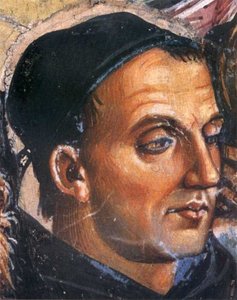
Artist Biography

Early Life and Spiritual Formation

Born Giovanni da Fiesole around 1395 in the Tuscan hills near Florence, Fra Angelico’s early life remains shrouded in a gentle obscurity that seems fitting for an artist whose work would become synonymous with ethereal beauty and devout spirituality. Little is known of his family or childhood, but it's believed he received a solid education, preparing him for a life beyond the humble origins of Rupesana. The pivotal moment arrived when the young Giovanni entered the Dominican Order at Fiesole, embracing a life of religious contemplation and service. It was within the walls of the monastery that he received the name Fra (Brother) Angelico, a moniker that would soon reflect not only his monastic vows but also the angelic quality inherent in his art. Initially tasked with illuminating manuscripts – a meticulous craft demanding precision and vibrant color – he honed skills that would later blossom into breathtaking frescoes and panel paintings. This early training instilled in him a profound respect for detail, a mastery of pigment, and an understanding of how to convey narrative through visual storytelling. The Dominican Order’s emphasis on theological study undoubtedly shaped his artistic vision, imbuing his work with a deep sense of faith and purpose.

The Blossoming of a Unique Style

Fra Angelico's artistic development wasn’t born in isolation; he absorbed the currents of Florentine painting circulating at the time. The elegant linearity and decorative patterns of Lorenzo Monaco, a leading painter of the era, are evident in his early works. However, Fra Angelico didn’t merely imitate his predecessor. He began to synthesize these influences with a burgeoning naturalism, likely sparked by exposure to the groundbreaking frescoes of Masaccio. While Masaccio revolutionized painting with his dramatic use of perspective and realistic depiction of human form, Fra Angelico charted a different course. He embraced perspective not for its own sake, but as a means to create a more immersive spiritual experience. His figures, though graceful and often idealized, possess a quiet dignity and emotional resonance that transcends mere representation. Crucially, his art was inextricably linked to his faith; he viewed painting not as a profession, but as an act of prayer – a way to contemplate the divine and make it visible to others. This deeply held belief infused every brushstroke with reverence and sincerity.

Masterpieces of Faith and Color

Fra Angelico’s artistic legacy is anchored by several monumental works that continue to inspire awe centuries later. The frescoes within the San Marco monastery in Florence are widely considered his masterpiece. Commissioned for the Dominican convent, these scenes from the life of Christ radiate a serene simplicity and emotional depth rarely encountered in Renaissance art. Each image – from the Annunciation to the Crucifixion – is imbued with a sense of quiet contemplation, inviting viewers into a personal encounter with the sacred narrative. Beyond San Marco, his *Perugia Altarpiece* showcases his evolving style, particularly in its delicate depiction of the Annunciation. The recurring theme of the Annunciation itself appears in numerous versions throughout his oeuvre, each rendered with ethereal beauty and symbolic richness. Works like *St. Lawrence Giving Alms* demonstrate his skill in narrative composition and his ability to portray human emotion with sensitivity and grace. His palette is characterized by bright, clear colors – blues, golds, and reds – that seem to glow from within, creating an atmosphere of otherworldly radiance.

Legacy and Lasting Influence

Fra Angelico stands as a pivotal figure in the Early Renaissance, embodying the era’s fusion of religious devotion and artistic innovation. He wasn't simply a painter; he was a spiritual visionary who translated his faith into visual form. His work reflects the humanist ideals of the period, emphasizing human dignity and the potential for spiritual contemplation. Giorgio Vasari, the celebrated art historian, lauded Fra Angelico in his *Lives of the Artists*, proclaiming that no amount of praise could adequately capture the beauty of his creations. This recognition cemented his place within the canon of Western art. His influence extended far beyond his own time, inspiring generations of artists with his devotional style and masterful use of color. In 1982, Pope John Paul II officially recognized Fra Angelico’s holiness by beatifying him – a testament to the profound spiritual impact of his life and work. Today, his art continues to resonate with viewers around the world, offering a timeless message of faith, hope, and beauty.

Where to Experience His Art

  • Museo di San Marco, Florence: This museum houses the largest and most significant collection of Fra Angelico’s works, including the breathtaking frescoes from the monastery.
  • The Louvre Museum (Paris): Several important paintings by Fra Angelico can be found within the Louvre's extensive collection.
  • The National Gallery (London): The National Gallery boasts a selection of his works, offering visitors a glimpse into his artistic genius.
  • Santa Maria sopra Minerva, Rome: This church contains frescoes by Fra Angelico and is the site where he was officially beatified.
  • Numerous other museums worldwide also display examples of his art, allowing a broader appreciation for his enduring legacy.
Fra Angelico

Fra Angelico

1395 - 1455 , Italy

Quick Facts

  • Artistic Movement Or Style: Early Renaissance
  • Artists Or Movements Influenced By This Artist: ['Early Renaissance artists']
  • Artists Who Influenced This Artist:
    • Lorenzo Monaco
    • Masaccio
  • Date Of Birth: c. 1395
  • Date Of Death: 1455
  • Full Name: Fra Angelico
  • Nationality: Italian
  • Notable Artworks:
    • San Marco Frescoes
    • Perugia Altarpiece
    • The Annunciation
    • St. Lawrence Giving Alms
  • Place Of Birth: Rupesana, Italy
Explore artworks organized by themes, styles, and characteristics.