


x

Purchase a high-resolution, enhanced digital image, far superior to the online preview.
Each file is meticulously prepared by our in-house specialists using advanced tools and expert manual retouching. We ensure every image has exceptional clarity, precise color accuracy, and fine detail.
The final file is delivered via email within 72 hours, optimized for immediate use in professional, editorial, and print environments. This is the same quality trusted by top-tier design studios, publishers, and galleries.
Download a high-resolution file for personal display, printing, and creative projects. ( Buy Print Buy Hand Made Painting)
When you choose Most-Famous-Paintings.com, you're not just getting an image - you're receiving a professionally enhanced digital artwork, crafted with precision and backed by a satisfaction guarantee. Here's everything that comes with your order, automatically:

Your high-resolution digital image file will be emailed to you within 72 hours of ordering - ready for immediate use.

Your artwork is professionally optimized using advanced AI tools and manual editing, ensuring maximum detail, clarity, and color accuracy.

Accidentally deleted or lost your file? No worries - we'll resend it to you anytime, free of charge.

Enjoy your artwork instantly with zero customs, duties, or delivery fees - digital downloads are always tax-free.

We ensure your digital image reflects the original colors as closely as possible using professional tools and color management.

If you're not satisfied with your digital image, we'll revise it or refund 100% within 60 days - no questions asked.

Not satisfied? Get a full refund within 60 days of receiving your digital file - no questions asked.

Buy 3 images, save 10% - Buy 5, save 15% - Buy 10+, save 20%. Great for creative projects, galleries, and agencies.
Francis Bacon’s series of paintings featuring Henrietta Moraes are not portraits in the conventional sense; they are excavations of the human condition, rendered with a brutal honesty that defines his place as one of the 20th century's most important artists. Moraes, a British artist’s model and socialite, became Bacon’s muse during the 1960s, her presence igniting a creative fervor that resulted in over a dozen paintings – studies, variations, and explorations of her form and personality. These works are not celebrations of beauty, but rather unflinching confrontations with vulnerability, physicality, and the inherent loneliness of existence. The painting simply titled “Henrietta Moraes” is a prime example of this approach, showcasing Bacon’s signature expressionistic style and his masterful manipulation of oil paint to convey profound emotional weight.
The dominant color in this particular work – a visceral, pulsating red – immediately commands attention. It isn't merely a backdrop but an all-encompassing environment that seems to both contain and consume the figure of Moraes. This use of color is characteristic of Bacon’s technique; he didn’t aim for realistic representation but rather sought to evoke emotional responses through bold chromatic choices. The red, often interpreted as representing blood, raw flesh, or even the internal landscape of pain, creates a sense of claustrophobia and intensity. Bacon's brushwork is equally crucial. He employed a variety of techniques – from broad, sweeping strokes to delicate blending – to create textures that are both unsettling and captivating. The figure isn’t sharply defined; instead, it appears to dissolve into the surrounding color field, suggesting a sense of instability and fragmentation. The distortion of form, another hallmark of Bacon's style, further emphasizes this feeling of unease. Moraes’ body is rendered with exaggerated curves and proportions, pushing beyond realistic representation towards an almost grotesque depiction of physicality.
To understand these paintings, it’s essential to consider the historical context in which they were created. The 1960s were a period of significant social and cultural upheaval, marked by anxieties about the Cold War, existentialism, and changing societal norms. Bacon's work reflects this sense of disorientation and alienation. He was deeply influenced by artists like Pablo Picasso, whose Cubist distortions challenged traditional notions of representation, and by the photography of Eadweard Muybridge, particularly his studies of movement. However, Bacon synthesized these influences into a uniquely personal style that resonated with the anxieties of his time. Henrietta Moraes herself embodied a certain bohemian spirit, moving within London’s artistic circles and becoming a symbol of freedom and unconventionality. Her willingness to be portrayed in such an unflinching manner speaks to a shared sensibility with Bacon – a rejection of societal expectations and a desire to explore the darker aspects of human experience.
The power of “Henrietta Moraes” lies not in its accurate depiction of the sitter, but in its ability to tap into universal themes of isolation, mortality, and the fragility of the human body. The pose – lying prone, with an arm outstretched – can be interpreted as a gesture of surrender or vulnerability. The emphasis on the figure’s physicality, particularly her substantial form, challenges conventional standards of beauty and forces viewers to confront their own prejudices and anxieties about the body. Bacon wasn't interested in creating flattering portraits; he was interested in revealing something deeper, more primal, and ultimately more truthful about the human condition. The painting is not meant to be comfortable or reassuring; it’s intended to provoke a visceral response, to unsettle and challenge our perceptions of ourselves and the world around us. It's a testament to Bacon’s genius that his work continues to resonate with audiences today, reminding us of the enduring power of art to confront the most difficult aspects of human existence.

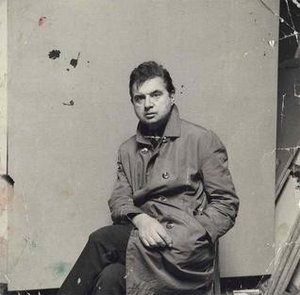
1909 - 1992 , Ireland


Stay updated with the latest art news, exclusive offers, and decoration ideas.
Tell us about your project and our art experts will provide you with 3 personalized art suggestions.
Let Us Curate 3 Options Just for You - Free!


 Preview
 Send
Send Share
Share
 Details

 Download
 Similars
 X-Ray
X-Ray Diaporama

 Read More


