x


Hand-painted oil on canvas in your size and frame, made to order by our artists.





























Pick from our preset sizes that match the artwork's original proportions.

You may enter your own dimensions to fit a specific frame or space. If your selected size does not match the original image's proportions, we will either crop the artwork or extend the painting with additional hand-painted elements. A digital mockup will be sent for your approval before production begins.
Please note that the on-screen preview does not reflect the actual cropping or extension. Only the mockup will accurately show the final composition.
While custom sizes are available, we recommend selecting a dimension from the predefined list to preserve the original proportions.
Worldwide Delivery () in 3/4 weeks instead of standard 5 weeks. (18 July). No compromise on quality.


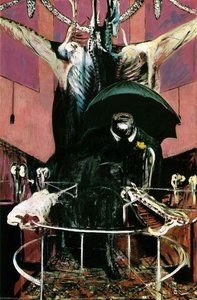
Study for a Portrait 3
Reproduction Size
Francis Bacon's "Study for a Portrait 3," painted in 1953, stands as a cornerstone of Expressionist art and embodies the artist’s relentless pursuit of portraying human emotion with unflinching honesty. More than just a depiction of a head—though it is undeniably dominated by a strikingly rendered visage—the painting operates on multiple levels, inviting contemplation about vulnerability, fear, and the inescapable presence of death.
Bacon’s distinctive style hinges upon deliberate distortion. Unlike traditional portraiture aimed at capturing likeness, he abandons representational accuracy in favor of conveying psychological states. The head is fractured into angular planes, reminiscent of shattered glass or bone fragments—a visual metaphor for the disintegration of identity under pressure. Thickly applied paint—often described as “squeeze” paint—creates a textured surface that pulsates with energy and resists easy categorization. Bacon meticulously builds up layers of pigment, employing a technique he termed "pressure," applying paint directly to the canvas with his hands or palette knife.
"Study for a Portrait 3" emerged from the aftermath of World War II, a period marked by profound disillusionment and anxiety. Bacon’s artistic vision reflects this pervasive mood of uncertainty—a response to the horrors witnessed during the conflict and an acknowledgement of the inherent fragility of human existence. The painting speaks to the anxieties surrounding nuclear weapons proliferation and the looming threat of existential dread that gripped intellectuals and artists alike in the mid-century.
The open mouth, rendered with unsettling detail, is arguably the most arresting element of the composition. It’s not merely a passive orifice; it's an active gesture—a futile attempt to expel something unbearable. The closed eyes suggest a profound surrender to darkness and oblivion, hinting at the inevitability of mortality. Bacon deliberately avoids offering comforting illusions or reassuring narratives; instead, he presents viewers with confronting images that force them to confront uncomfortable truths about human nature.
"Study for a Portrait 3" transcends mere visual representation—it’s an emotional distillation. The painting evokes feelings of terror and vulnerability, prompting viewers to grapple with anxieties about loss and decay. Bacon's masterful manipulation of form and color achieves this profound effect by bypassing rational thought altogether, tapping directly into primal instincts and subconscious fears. It remains a powerfully unsettling artwork, demonstrating Bacon’s unwavering commitment to exploring the darkest recesses of the human psyche.
This evocative study exemplifies Bacon’s groundbreaking approach to portraiture, cementing his legacy as one of the most influential artists of the 20th century. Its enduring power lies in its ability to provoke introspection and confront viewers with the unsettling beauty of confronting existential anxieties.

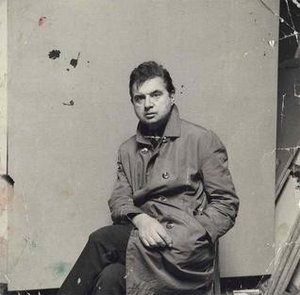
1909 - 1992 , Ireland

Explore the captivating world of Francis Sartorius II (1734-1804), a leading British painter renowned for his exquisite equestrian portraits and hunting scenes. Discover his life, techniques & enduring legacy.

Explore the profound existential anguish of Francis Bacon's art. Discover how trauma shaped his iconic paintings & lasting influence on modern expressionism. A guide for discerning collectors.

Delve into the haunting world of Francis Bacon with Most-Famous-Paintings. Explore 25 iconic paintings, from his visceral portraits to powerful triptychs. Discover the stories behind these masterpieces & find museum-quality art reproductions for your home. Explore the full collection online!
Explore the life & work of Thomas Hudson, a leading 18th-century British portraitist. Discover his mastery of the 'Grand Manner,' influential style, and lasting impact on British art. Learn about his notable portraits like Judge William Noel & Alexander Van Aken.

Explore the captivating art of Sir Francis Ferdinand Maurice Cook – a British artist bridging Victorian traditions & Aestheticism. Discover his landscapes, collection history, and unique style. Expert analysis for collectors.


Stay updated with the latest art news, exclusive offers, and decoration ideas.
Tell us about your project and our art experts will provide you with 3 personalized art suggestions.
Let Us Curate 3 Options Just for You - Free!


 Buy print
 Send
Send Share
Share
 Details

 Download
 Similars
 X-Ray
X-Ray Diaporama
 Read More







 Glass option is only available in size under 110 CM