x


 Oil On CanvasWallArtBaroque
 180519th Century
 125.0 x 207.0 cm
Hand-painted oil on canvas in your size and frame, made to order by our artists.





























Pick from our preset sizes that match the artwork's original proportions.

You may enter your own dimensions to fit a specific frame or space. If your selected size does not match the original image's proportions, we will either crop the artwork or extend the painting with additional hand-painted elements. A digital mockup will be sent for your approval before production begins.
Please note that the on-screen preview does not reflect the actual cropping or extension. Only the mockup will accurately show the final composition.
While custom sizes are available, we recommend selecting a dimension from the predefined list to preserve the original proportions.
Worldwide Delivery () in 3/4 weeks instead of standard 5 weeks. (18 July). No compromise on quality.


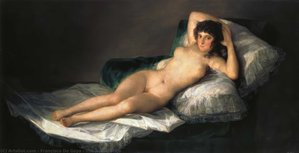
Portrait of Joaquina, nee Tellez Giron y Alfonso Pimental, 10th Marquesa de Santa Cruz
Reproduction Size
Francisco José de Goya y Lucientes’s “Portrait of Joaquina, nee Tellez Giron y Alfonso Pimental, 10th Marquesa de Santa Cruz,” painted in 1805, is more than a mere depiction of a Spanish noblewoman; it's a carefully constructed tableau brimming with subtle symbolism and the masterful manipulation of light and shadow that defines Goya’s genius. Executed on canvas measuring 125 x 207 cm, this oil painting offers a rare glimpse into the private world of a woman of considerable status during the early 19th century, while simultaneously revealing Goya's profound understanding of human psychology and his ability to capture fleeting moments with remarkable intensity. The work’s current location within the Museo del Prado in Madrid underscores its significance as a cornerstone of Spanish art history.
Goya’s compositional choices are deliberate and layered, inviting contemplation rather than simple observation. Joaquina is presented reclining on a bed, a pose that immediately suggests both vulnerability and aristocratic ease. The arrangement of objects within the room – a violin resting on the left side of the bed, accompanied by its bow – speaks volumes about her cultivated tastes and leisure activities. These aren’t merely decorative elements; they are carefully placed symbols reinforcing her position as a woman of refinement and intellectual curiosity. The sparsely furnished space, with its couch and smaller couch, contributes to an atmosphere of intimacy and informality, subtly challenging the rigid conventions of portraiture at the time. The careful positioning of the chair near the right edge further enhances this sense of connection, creating a feeling that Joaquina is engaged in a private conversation – perhaps even with the viewer.
Goya's technical skill is immediately apparent in his masterful use of light and shadow. He employs chiaroscuro—the dramatic contrast between light and dark—to sculpt Joaquina’s face, drawing the viewer’s eye to her expression with an almost magnetic force. Her serene countenance, subtly tinged with engagement, suggests a quiet intelligence and perhaps even a hint of melancholy. The loose brushwork, characteristic of Goya's later style, adds to the painting’s dynamism and emotional intensity. This technique wasn’t simply about creating a realistic likeness; it was about conveying mood and psychological depth – a hallmark of Goya’s artistic vision.
"Portrait of Joaquina" is inextricably linked to the broader context of Goya's career, particularly his work during the Napoleonic era. While this portrait reflects the opulence of the Spanish aristocracy, it also subtly foreshadows the social and political turmoil that would soon engulf Spain. Goya’s ability to capture a moment in time with such psychological acuity cemented his legacy as one of the most important artists of his age, influencing generations of painters to come. The painting's enduring appeal lies not only in its technical brilliance but also in its profound exploration of human character and emotion – qualities that continue to resonate with viewers today.


1746 - 1828 , Spain
Delve into the world of Francisco Goya with Most-Famous-Paintings. Explore 25 iconic paintings – from 'The Third of May' to his haunting Black Paintings. Discover the stories, techniques & emotions behind these Spanish masterpieces. Find museum-quality art reproductions for your home at Most-Famous-Paintings.com!

Explore 10 iconic portrait paintings – from Mona Lisa to Van Gogh’s self-portraits. Discover the stories behind these masterpieces, artistic techniques & find museum-quality art reproductions for your home at Most-Famous-Paintings.com.

APS ofrece reproducciones de bellas artes y encargos personalizados desde 2004. Confían en nosotros corporaciones, hoteles y coleccionistas selectos para obras de arte de calidad museística, servicio discreto y soluciones artísticas completas. ¡Póngase en contacto con nosotros para obtener un presupuesto personalizado!

Commission a timeless oil portrait from skilled artists at Most-Famous-Paintings. Preserve your family's legacy with museum-quality paintings, crafted to cherish for generations. Expert guidance & personalized service.

Explore the life & works of Francisco Goya, Spain's Romantic master. Discover his evolution from court painter to a visionary chronicler of war and social injustice. A comprehensive guide for art enthusiasts.


Stay updated with the latest art news, exclusive offers, and decoration ideas.
Tell us about your project and our art experts will provide you with 3 personalized art suggestions.
Let Us Curate 3 Options Just for You - Free!


 Buy print
 Send
Send Share
Share
 Details

 Download
 Similars
 X-Ray
X-Ray Diaporama
 Read More







 Glass option is only available in size under 110 CM