


x


Hand-painted oil on canvas in your size and frame, made to order by our artists.





























Pick from our preset sizes that match the artwork's original proportions.

You may enter your own dimensions to fit a specific frame or space. If your selected size does not match the original image's proportions, we will either crop the artwork or extend the painting with additional hand-painted elements. A digital mockup will be sent for your approval before production begins.
Please note that the on-screen preview does not reflect the actual cropping or extension. Only the mockup will accurately show the final composition.
While custom sizes are available, we recommend selecting a dimension from the predefined list to preserve the original proportions.
Worldwide Delivery () in 3/4 weeks instead of standard 5 weeks. (18 July). No compromise on quality.


Tiger in Jungle
Reproduction Size
Franz Marc's 1912 painting, ‘Tiger in Jungle’, is more than just a depiction of an animal in its habitat; it’s a vibrant exploration of life force, spiritual connection, and the burgeoning anxieties of a world on the brink of change. The canvas pulsates with color – a deliberate departure from traditional naturalism – immersing the viewer in a lush, almost hallucinatory jungle environment. The tiger itself isn't presented as a fearsome predator in the conventional sense, but rather as a powerful being deeply interwoven with the energy of its surroundings. Its gaze is intense, focused on something beyond the frame, suggesting an awareness that transcends mere instinct. Marc’s choice to render the foliage and background not as realistic representations, but as dynamic arrangements of color and form, creates a sense of heightened emotionality. The painting feels less like a snapshot of nature and more like a window into its soul.
To understand ‘Tiger in Jungle’, one must consider the artistic climate of early 20th-century Germany. Marc was a pivotal figure in the German Expressionist movement, specifically as a founding member of *Der Blaue Reiter* (The Blue Rider). This group sought to move beyond mere representation and instead convey inner emotional experiences through bold colors, distorted forms, and symbolic imagery. Marc’s journey towards this style wasn't immediate; his early work showed influences of Impressionism and academic painting. However, encounters with artists like Vincent van Gogh proved transformative, igniting a passion for using color as a vehicle for expressing profound feelings. He believed that animals possessed an inherent spirituality untainted by human complexities, making them ideal subjects for exploring these themes. This belief is powerfully evident in ‘Tiger in Jungle’, where the animal isn’t simply *in* the jungle, but seems to embody its very essence.
Marc's technique in ‘Tiger in Jungle’ is characterized by a deliberate simplification of form and an almost Fauvist use of color. He doesn’t strive for photographic accuracy; instead, he employs flat planes of vibrant hues – reds, greens, oranges, and yellows – to create a sense of energy and movement. The tiger's stripes are not meticulously rendered but suggested through bold black markings against the animal’s ochre body. This simplification isn’t about artistic laziness, but rather a conscious effort to distill the essence of the subject. The jungle itself is less a specific location than a symbolic representation of untamed nature and primal instinct. The tiger, in this context, can be interpreted as a symbol of power, vitality, and perhaps even impending danger – a reflection of the anxieties simmering beneath the surface of European society at the time. Some scholars also suggest that Marc imbued animals with synesthetic qualities, associating specific colors with particular emotions or sounds.
Though tragically short-lived – Franz Marc died in 1916 during World War I at the age of 36 – his artistic legacy continues to resonate. ‘Tiger in Jungle’ stands as a testament to his unique vision and his profound connection to the natural world. The painting's enduring appeal lies not only in its aesthetic beauty but also in its emotional depth and symbolic richness. For collectors, it represents a significant piece of Expressionist history; for interior designers, it offers a bold statement piece capable of transforming any space with its vibrant energy. More broadly, ‘Tiger in Jungle’ invites us to contemplate our own relationship with nature, the power of instinct, and the enduring search for spiritual meaning in a rapidly changing world.

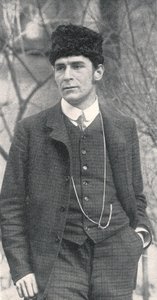
1880 - 1916 , Germany
Journey into the dreamlike world of Marc Chagall! Explore 25 iconic paintings, from 'I and the Village' to his vibrant surrealist masterpieces. Discover the stories & techniques behind these timeless artworks – find museum-quality Chagall reproductions on Most-Famous-Paintings.com.

Journey through 25 iconic artworks at the Metropolitan Museum of Art! Explore Van Gogh, Monet, Rembrandt & more. Discover art history, inspiring stories, and museum-quality reproductions to elevate your home decor. Explore the full collection on Most-Famous-Paintings.com.
Delve into the haunting world of Egon Schiele with our curated selection of his 25 most iconic Expressionist paintings. Explore the artist's life, technique & emotional depth. Find museum-quality Schiele reproductions and elevate your home decor on Most-Famous-Paintings.com.
Explore 10 defining German Expressionism masterpieces – from Munch's 'The Scream' to Kandinsky’s abstracts. Discover the artists, stories & bold colors behind this powerful art movement. Find museum-quality reproductions at Most-Famous-Paintings.com.
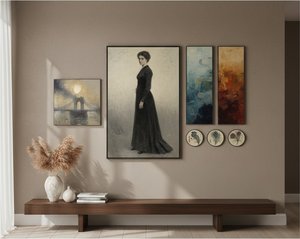
Journey through 25 iconic James Abbott McNeill Whistler paintings! Explore his masterpieces of Aestheticism, from 'Nocturne in Black and Gold' to captivating portraits. Find museum-quality art reproductions & elevate your home decor with Most-Famous-Paintings.com. Discover the full collection online.


Stay updated with the latest art news, exclusive offers, and decoration ideas.
Tell us about your project and our art experts will provide you with 3 personalized art suggestions.
Let Us Curate 3 Options Just for You - Free!


 Buy print
 Send
Send Share
Share
 Details

 Download
 Similars
 X-Ray
X-Ray Diaporama

 Read More







 Glass option is only available in size under 110 CM


