


x

 Oil On CanvasWallArtRomanticism
 1839
1839 60.0 x 86.0 cm
 Leeds Art Gallery
Museum-quality giclée or canvas print with fast production and flexible finish options.





























Pick from our preset sizes that match the artwork's original proportions.

You may enter your own dimensions to fit a specific frame or space. If your selected size does not match the original image's proportions, we will either crop the artwork or extend the image with a mirrored or solid-fill edge. A digital mockup will be sent for your approval before production begins.
Please note that the on-screen preview does not reflect the actual cropping or extension. Only the mockup will accurately show the final composition.
While custom sizes are available, we recommend selecting a dimension from the predefined list to preserve the original proportions.
Worldwide Delivery () in 2 weeks instead of standard 4/5 weeks. (23 July)


Landscape
Reproduction Size
Frederick Waters Watts (1800 - 1862) stands as a quietly influential figure in Victorian landscape painting, largely overshadowed by the towering presence of Constable but undeniably vital to establishing the aesthetic sensibilities of his time. Born in Bath, Somerset, Watts dedicated his artistic life to capturing the serene beauty of rural England—a pursuit that yielded paintings imbued with a contemplative spirit and an unwavering commitment to portraying nature’s grandeur with remarkable realism.
Watts' artistic endeavors coincided with the burgeoning Aesthetic Movement in Britain—a cultural reaction against industrialization and materialism that championed beauty as an end in itself. Influenced by thinkers like John Ruskin and William Morris, Watts sought to infuse his paintings with spiritual symbolism, reflecting a desire for moral upliftment alongside visual delight. His compositions often convey themes of hope, innocence, and reverence for the divine—concepts central to Victorian sensibilities.
The muted color palette—dominated by greens, browns, and yellows—further underscores Watts’ artistic intention. These hues evoke associations with pastoral landscapes and symbolize fertility, harmony, and spiritual contemplation. The diffused lighting contributes to the painting's serene atmosphere, fostering a feeling of calm introspection. Watts’ masterful depiction of light and shadow imbues his canvases with emotional depth, inviting viewers to contemplate the sublime beauty of nature.
Watts achieved considerable renown during his lifetime for paintings such as “Classical Scene from ‘Tasso’” and “Landscape,” demonstrating his ability to synthesize Romantic ideals with meticulous observation. His enduring influence can be seen in subsequent generations of landscape artists who embraced Constable’s expressive style—solidifying Watts' position as a pivotal figure in shaping Victorian artistic taste.


1800 - 1870 , United Kingdom

Journey through 10 Romantic landscape masterpieces by Friedrich, Turner & Cole. Explore emotional art, sublime nature scenes & iconic 19th-century paintings. Find museum-quality reproductions for your home at Most-Famous-Paintings.com – discover the full collection online!
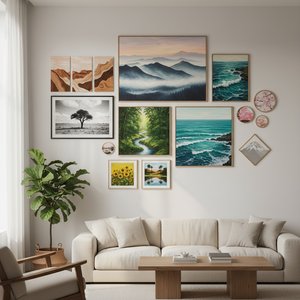
Journey through 10 breathtaking landscape paintings by Monet, Van Gogh & more! Explore iconic artworks, artistic techniques & find inspiration for your home decor. Museum-quality reproductions at Most-Famous-Paintings.com. Discover all masterpieces on Most-Famous-Paintings.com

Explore the captivating world of Frederick Watts, a key Victorian painter blending aestheticism & spiritual symbolism. Discover his allegorical masterpieces like 'Hope' and delve into his artistic journey with Most-Famous-Paintings.

Explore the rich history of landscape art with Most-Famous-Paintings. Discover renowned artists, movements like Impressionism & Romanticism, and expert guidance for collecting timeless pieces. Find your perfect serene escape today!

Explore the emotional power of Romantic landscape painting! Discover the sublime & picturesque traditions, key artists like Friedrich & Cole, and find your perfect artwork at Most-Famous-Paintings.


Stay updated with the latest art news, exclusive offers, and decoration ideas.
Tell us about your project and our art experts will provide you with 3 personalized art suggestions.
Let Us Curate 3 Options Just for You - Free!


 Preview
 Buy Painting
 Send
Send Share
Share
 Details

 Download
 Similars
 X-Ray
X-Ray Diaporama
 Read More







 Glass option is only available in size under 110 CM


