x

Museum-quality giclée or canvas print with fast production and flexible finish options.
Pick from our preset sizes that match the artwork's original proportions.

You may enter your own dimensions to fit a specific frame or space. If your selected size does not match the original image's proportions, we will either crop the artwork or extend the image with a mirrored or solid-fill edge. A digital mockup will be sent for your approval before production begins.
Please note that the on-screen preview does not reflect the actual cropping or extension. Only the mockup will accurately show the final composition.
While custom sizes are available, we recommend selecting a dimension from the predefined list to preserve the original proportions.
Worldwide Delivery () in 2 weeks instead of standard 4/5 weeks. (25 July)


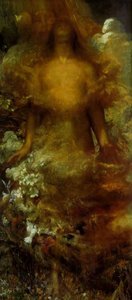
The Lock
Reproduction Size

In the annals of Victorian art, few names evoke the quiet, breathing essence of the English countryside quite like Frederick Waters Watts. Born in the historic city of Bath in 1800, Watts emerged as a painter whose work served as a profound bridge between the rugged naturalism of the early nineteenth century and the refined aestheticism of the later Victorian era. While much of his personal history remains shrouded in the soft mists of time—with biographical details regarding his parentage and exact death date often debated by historians—his artistic presence is unmistakable. He was an artist who did not merely paint landscapes; he captured the very soul of the rural landscape, imbuing every riverside bend and sun-drenched meadow with a sense of enduring peace.
The foundation of Watts’s greatness lay in his deep, almost spiritual connection to the works of John Constable. Entering the Royal Academy Schools in London in 1817, Watts sought to master the subtle complexities of light and atmosphere that had defined the Constableian tradition. His early triumphs, including silver medals won between 1819 and 1821, signaled the arrival of a talent capable of profound observation. He embraced the practice of painting en plein air, working directly from nature to translate the fleeting nuances of a passing cloud or the shimmering reflection on a stream into permanent oil and canvas. This dedication to direct observation allowed him to move beyond mere imitation, developing a style that felt both intimately connected to the earth and elevated by a poetic sensibility.
Watts’s oeuvre, comprising approximately 380 paintings, serves as a vast gallery of England's most idyllic moments. His technical prowess is most evident in his ability to manipulate light to create depth and emotional resonance. Whether depicting the tranquil waters of the River Medway or the rugged beauty of Cumberland, Watts utilized a palette that celebrated the organic tones of the natural world. His compositions often feature:
Beyond the purely naturalistic, there is an undercurrent of symbolism within his work that hints at a deeper, more contemplative spirit. Some scholars view his later explorations through the lens of Aestheticism, noting how his landscapes can transcend mere topography to become allegorical meditations on peace, hope, and the cyclical nature of life. This duality—the ability to be both a precise observer of nature and a dreamer of poetic truths—is what distinguishes his work from that of his contemporaries.
Throughout his long career, which saw him exhibiting at the Royal Academy and the British Institution until the 1860s, Watts maintained a consistent presence in the London art scene. His ability to navigate the shifting tastes of the Victorian era—from the heavy romanticism of the early century to the more delicate, symbolic approaches of the later years—ensured his lasting relevance. Though he lived through a period of rapid industrialization that threatened the very landscapes he loved, his paintings remain a sanctuary of a lost, pre-industrial England.
Today, the legacy of Frederick Waters Watts lives on in the collections of prestigious institutions like the Tate, where his works continue to inspire awe. He remains a vital figure for anyone seeking to understand the evolution of British landscape painting. His life’s work stands as a testament to the power of observation and the enduring beauty of the natural world, reminding us that even in the most fleeting moment of light upon a river, there exists a profound and eternal dignity.

1800 - 1870 , United Kingdom

Explore the life & art of Rosa Bonheur, a pioneering Realist painter who redefined women's roles in 19th-century France. Discover her iconic animal paintings and lasting influence on art history. Learn more at Most-Famous-Paintings.

Explore the emotional depth of Romantic landscape painting (18th-19th century). Discover key artists like Friedrich & Cole, and the concepts of the sublime. Expert insights for art lovers & collectors.

Explore the captivating world of Romantic Realism! Discover key artists like Courbet & Millet, masterpieces, and the social context behind this influential art movement. Expert insights for collectors at Most-Famous-Paintings.

Explore the captivating Orientalist paintings of John Frederick Lewis! Discover his mastery of detail, genre scenes & influence on 19th-century British art. Learn about his life, techniques & legacy at Most-Famous-Paintings.

Explore the captivating genre scenes of Thomas George Webster, a Victorian painter bridging British traditions with American themes. Discover his style, influences & legacy in 19th-century art history.


Stay updated with the latest art news, exclusive offers, and decoration ideas.
Tell us about your project and our art experts will provide you with 3 personalized art suggestions.
Let Us Curate 3 Options Just for You - Free!


 Preview
 Buy Painting
 Send
Send Share
Share
 Details

 Download
 Similars
 X-Ray
X-Ray Diaporama
 Read More




































 Glass option is only available in size under 110 CM