x

Hand-painted oil on canvas in your size and frame, made to order by our artists. ( Buy Print Buy Image)





























Pick from our preset sizes that match the artwork's original proportions.

You may enter your own dimensions to fit a specific frame or space. If your selected size does not match the original image's proportions, we will either crop the artwork or extend the painting with additional hand-painted elements. A digital mockup will be sent for your approval before production begins.
Please note that the on-screen preview does not reflect the actual cropping or extension. Only the mockup will accurately show the final composition.
While custom sizes are available, we recommend selecting a dimension from the predefined list to preserve the original proportions.
Worldwide Delivery () in 3/4 weeks instead of standard 5 weeks. (20 August). No compromise on quality.


untitled (8840)
Reproduction Size
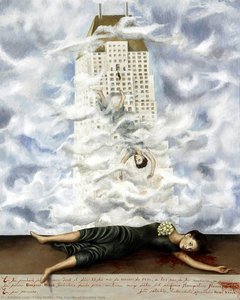
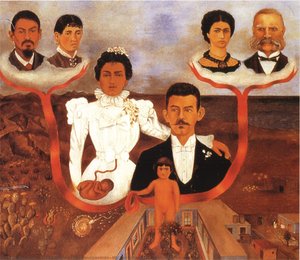
In the evocative depths of Frida Kahlo’s Untitled (8840), viewers are transported into a realm where the boundaries between the human psyche and the natural world dissolve. This captivating work presents a dramatically staged scene, featuring a reclining nude female figure nestled alongside a seated male within a lush, almost primordial jungle landscape. The composition is masterfully orchestrated through strong diagonal lines created by interwoven vines and branches that dominate the foreground, acting as organic conduits that guide the eye through a complex, intimate arrangement of forms. It is a world that feels simultaneously inviting and unsettling, pulling the observer into a dreamlike state where every leaf and limb seems heavy with unspoken narrative.
Kahlo’s signature style—a profound blend of expressionistic realism—is powerfully evident in the way she renders these figures. While they are stylized rather than captured with photographic precision, their emotional weight is palpable, vibrating with a raw, visceral energy. The technique employed here utilizes visible brushstrokes and a rich impasto that invites tactile engagement, lending a physical presence to the tropical setting. Through a flattened perspective, Kahlo achieves a sense of depth that eschews strict realistic spatial relationships, instead enhancing the surreal, dreamlike quality of the scene. This deliberate manipulation of space ensures that the viewer is not merely looking at a landscape, but is instead submerged within an emotional atmosphere.
To encounter this painting is to engage with a complex web of symbolic layers deeply rooted in Kahlo’s personal history and the broader cultural landscape of Mexico. The reclining woman, often interpreted as a symbol of vulnerability or sacrifice, stands in poignant contrast to the seated male figure, who may embody protection, authority, or even a looming shadow of destiny. Adding a layer of primal instinct to this human drama is the presence of a monkey—a recurring motif in Kahlo’s oeuvre that frequently introduces elements of trickery, mischief, or the untamed nature of the subconscious. The jungle itself serves as more than just a backdrop; it is a living, breathing character representing the fertile yet often chaotic intersection of life and death.
Created during a period of intense personal and political upheaval in Mexico, the work reflects Kahlo’s lifelong exploration of identity, postcolonialism, and the female experience. Her ability to weave Mexican folk art traditions with the avant-garde influences of Surrealism allows this piece to function as a visual autobiography. For the collector or interior designer, this artwork offers much more than aesthetic beauty; it provides a profound focal point of intellectual and emotional depth. It is a piece that demands contemplation, making it an extraordinary addition to any curated space seeking to evoke mystery, resilience, and the enduring power of the human spirit.

Magdalena Carmen Frida Kahlo y Calderón, known to the world simply as Frida Kahlo, was more than an artist; she was a force of nature, a defiant spirit whose life became inextricably woven into her art. Born on July 6, 1907, in Coyoacán, Mexico City, her existence was marked by physical suffering and emotional turbulence, experiences that would ultimately fuel the intensely personal and symbolic imagery for which she is celebrated. Her father, Guillermo Kahlo, a German-Mexican photographer, fostered her intellectual curiosity and artistic inclinations from an early age. However, Frida’s childhood was shadowed by illness; at six years old, she contracted polio, leaving her with a permanent limp and impacting her physical development. This early encounter with vulnerability and limitation would become a recurring theme in her work, shaping her perspective on the body, pain, and resilience. Even before the devastating accident that defined much of her artistic trajectory, Frida possessed a keen awareness of her own physicality and its inherent fragility.
In 1925, at the tender age of eighteen, Frida’s life irrevocably changed. A horrific bus accident left her with catastrophic injuries – fractures to her spine, pelvis, and leg, among others. Confined to a lengthy period of recovery, often bedridden and encased in plaster casts, she turned inward, finding solace and expression through painting. Her mother provided an easel adapted for use while lying down, transforming the confines of her physical limitations into a space for artistic exploration. It was during this time that Frida began to explore self-portraiture with relentless intensity. Unable to venture out into the world, she turned her gaze inward, meticulously documenting her own image as a means of understanding and confronting her pain, both physical and emotional. These early works were not merely representations of her likeness; they were visceral explorations of identity, vulnerability, and the enduring power of the human spirit. The accident wasn’t simply a tragedy; it was a catalyst that unlocked her artistic potential, forcing her to confront her own mortality and find meaning in suffering.
Frida's life took another pivotal turn in 1929 when she married the renowned Mexican muralist Diego Rivera. Their relationship was a passionate but tempestuous affair, marked by intense love, infidelity, artistic rivalry, and periods of separation and reconciliation. Despite the emotional turmoil, Rivera proved to be a significant influence on Frida’s artistic development. He encouraged her unique vision, offering constructive criticism while recognizing the raw power and originality of her work. Under his guidance, and through her own relentless experimentation, Frida's style began to coalesce, blending elements of Mexican folk art, realism, and surrealism into a distinctive visual language. Her paintings became increasingly symbolic, exploring themes of identity, the human body, pain, death, and the complexities of female experience. She didn’t shy away from depicting her own suffering; instead, she embraced it as a central theme in her work, transforming personal trauma into universal statements about the human condition.
Frida Kahlo is perhaps best known for her self-portraits, which are characterized by their unflinching honesty and symbolic depth. Works like The Two Fridas (1939), a powerful depiction of her dual identity following her divorce from Rivera, showcase her ability to externalize internal conflict through striking visual metaphors. Self-Portrait with Thorn Necklace and Hummingbird (1940) is laden with symbolism – the thorns representing pain, the hummingbird symbolizing hope and resilience, and the black cat a harbinger of bad luck. The Broken Column (1944), a harrowing portrayal of her physical suffering, depicts Frida’s torso split open to reveal a crumbling Ionic column in place of her spine, held together by straps and pierced with nails. Even Henry Ford Hospital (1932), a raw and deeply personal depiction of her miscarriage, demonstrates her willingness to confront taboo subjects with unflinching honesty. These paintings are not simply representations of pain; they are acts of defiance, assertions of selfhood in the face of adversity.
Frida Kahlo’s influence extends far beyond the realm of art. She was a cultural icon who challenged traditional gender roles and societal expectations through her life and work. Her embrace of Mexican culture and identity helped to elevate its profile on the international stage, and her unflinching portrayal of pain resonated with audiences worldwide, making her a symbol of resilience and strength. She became an important figure for Chicanos in the United States, representing their cultural heritage and struggles. Though she resisted being categorized as a Surrealist, her work shares affinities with the movement’s exploration of the subconscious and dreamlike imagery. Today, Frida Kahlo is celebrated as one of the most important artists of the 20th century, whose legacy continues to inspire generations to embrace their identities, confront adversity, and express themselves authentically. Her art remains a testament to the enduring power of the human spirit to find beauty and meaning even in the darkest of times.

1907 - 1954 , Mexico
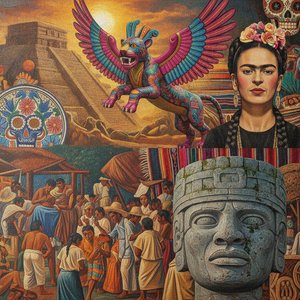
Explore the profound legacy of Mexican art history, from the monumental murals of 'The Big Three' to the intimate surrealism of Frida Kahlo. A scholarly guide for art lovers seeking deep historical context and the beauty of masterwork reproductions.

Explore the profound beauty of oil on canvas. Discover how impasto textures, masterful brushwork, and light create unparalleled depth in fine art reproductions and custom commissions for discerning collectors.


Stay updated with the latest art news, exclusive offers, and decoration ideas.
Tell us about your project and our art experts will provide you with 3 personalized art suggestions.
Let Us Curate 3 Options Just for You - Free!


 Preview
 Send
Send Share
Share
 Details

 Download
 Similars
 X-Ray
X-Ray Diaporama

 Read More







 Glass option is only available in size under 110 CM